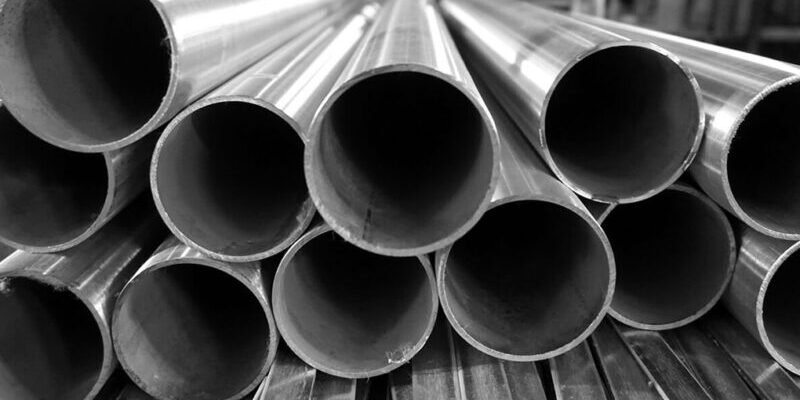
Nigeria Bets on Steel to Diversify Economy and Slash $4B in Annual Imports
Nigeria is intensifying efforts to revive its long-stagnant steel industry as part of a broader strategy to diversify its oil-dependent economy.
At the core of this push are plans to overcome decades of operational and financial setbacks, accelerate industrialization, and achieve self-sufficiency in steel production.
On April 14, 2025, Nigerian firm Chart & Capstone Integrate Ltd signed a memorandum of understanding (MoU) with China’s Sinomach-HE to construct a $2.5 billion steel plant in Kogi State.
This marks one of the largest initiatives yet in Nigeria’s ongoing campaign to reduce its reliance on steel imports, which currently stand at $4 billion annually.
This agreement follows a wave of recent announcements aimed at revitalizing the sector. In September 2024, Nigeria signed a deal with a consortium of Russian firms to complete and manage the Ajaokuta Steel Company, along with the state-owned National Iron Ore Mining Company (NIOMCO).
In October 2024, China’s Inner Galaxy Steel Company pledged a $300 million investment in a new facility in Ogun State.
In response, the government has begun structuring its steel industry policy. A 5-to-10-year development roadmap is being finalized by Minister of Steel Development Shuaibu Audu, designed to introduce global best practices.
Alongside this, a new Metallurgical Industry Act is under parliamentary review, aimed at bolstering regulatory support for the sector.
Despite holding an estimated 200 million tonnes of iron ore—graded at around 36%—Nigeria has struggled to process its resources locally. Out of 74 registered steel plants, only 40 are operational.
As a result, domestic production lags far behind demand: Nigeria consumes about 10 million tonnes of steel annually but produces just 2.2 million tonnes.
Minister Audu has set a national target to scale up production to 10 million tonnes annually—a milestone that could significantly reduce imports and support economic diversification.
In 2023, oil and gas accounted for 81% of Nigeria’s exports and over 5% of its GDP.
However, many of the steel sector’s planned projects remain in early stages, with significant investment still pending.
Infrastructure deficiencies, unstable policies, and limited financing continue to slow progress. Research from Nigerian consultancy 234Intel identifies regulatory uncertainty, inadequate technical capacity, and poor infrastructure as major constraints.
Wigmore Trading, a West African commercial trading firm, echoes these concerns. In its report “The Rise of the Steel Industry in Nigeria – Challenges and Opportunities,” it points to intense competition from imports and policy inconsistency as major barriers.
Both firms urge the government to accelerate stalled legacy projects like Ajaokuta, modernize infrastructure, and strengthen public-private partnerships.
Promoting local steel use and ensuring policy continuity are also key recommendations.
Successfully scaling up steel production could have far-reaching economic benefits. It would reduce the trade deficit, enable local value addition, and support growth in critical sectors like construction, automotive, and transportation.
Importantly, it could also generate thousands of direct and indirect jobs in a country grappling with high youth unemployment.
To realize these gains, the Nigerian government will need to convert bold policy declarations into concrete, operational outcomes—moving beyond plans to actual steel in the ground.