DRC’s Economic Rise Gains Momentum as Mining Boom and Currency Reforms Reshape Growth
Democratic Republic of Congo Set to Become Fifth-Largest Economy in Sub-Saharan Africa as GDP Nears $123 Billion
The Democratic Republic of the Congo is poised to become the fifth-largest economy in sub-Saharan Africa, with projected gross domestic product (GDP) of approximately $123 billion in 2026, according to estimates from the International Monetary Fund.
This anticipated expansion is being driven by a three-pillar macroeconomic strategy: sustained growth in the mining sector, stronger inflows of foreign currency, and the appreciation of the Congolese franc.
Beyond the immediate boost to economic output, ongoing monetary reforms could reshape the country’s long-term economic stability and financial governance.
Economic Restructuring: Growth Combined with Structural Change
The Democratic Republic of the Congo’s rise in the regional economic hierarchy reflects both genuine economic expansion and favorable external dynamics.
With nominal GDP expected to reach $123 billion, the country is projected to surpass Ethiopia and move closer to middle-income regional economies such as Kenya and Angola.
Real economic growth has remained robust, averaging 6% to 8% annually in recent years, supported primarily by expansion in the extractive industries.
However, the increase in GDP measured in U.S. dollars has been further amplified by the strengthening of the national currency, which enhances the country’s relative standing in international comparisons.
This combination of strong real growth and exchange-rate appreciation largely explains the Democratic Republic of the Congo’s rapid economic repositioning in the region.
Extractive Sector: A Powerful but Concentrated Growth Engine
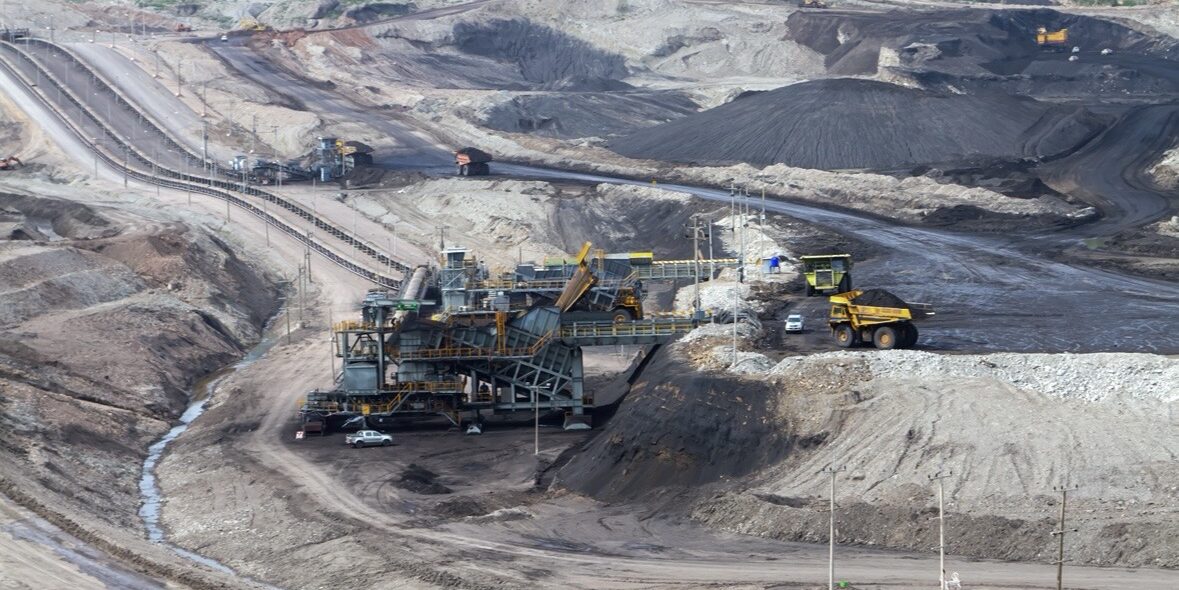
Economic growth in the Democratic Republic of the Congo remains heavily dependent on the mining sector.
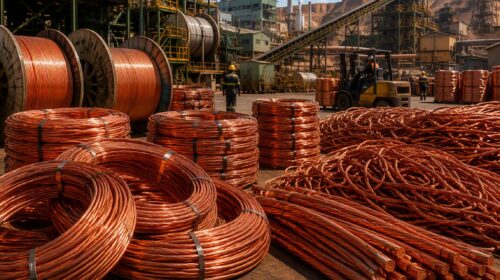
The country accounts for roughly 70% of global cobalt production and produced more than 2.5 million tonnes of copper in 2024, according to data from the International Energy Agency.
The macroeconomic weight of the mining industry is substantial:
- Approximately 25% of GDP
- More than 80% of export earnings
- Nearly 90% of foreign direct investment inflows
According to the World Bank, combined copper and cobalt export revenues exceeded $25 billion in 2023, directly contributing to the accumulation of foreign exchange reserves.
These trends are occurring within a broader global upcycle in demand for critical minerals driven by the energy transition.
The International Energy Agency projects that demand for strategic minerals could increase fourfold by 2040, positioning the Democratic Republic of the Congo as a central player in global supply chains for clean energy technologies.
Congolese Franc Appreciation: A Key Macroeconomic Transmission Channel
One of the most significant recent developments has been the appreciation of the Congolese franc, which strengthened by roughly 25% against the U.S. dollar between 2025 and 2026, according to the Central Bank of the Congo.
This currency movement has produced several important macroeconomic effects:
External valuation effect:
A stronger exchange rate increases the value of GDP when expressed in U.S. dollars, improving the country’s position in global economic rankings.
Disinflationary effect:
Currency appreciation reduces the cost of imported goods. As a result, inflation has declined significantly, falling to about 7% in 2025, compared with more than 20% in 2021.
Macroeconomic credibility effect:
A stable currency signals improved coordination between monetary policy and foreign exchange inflows, helping to reduce perceived country risk.
Reserve accumulation:
Foreign exchange reserves have exceeded $7 billion, strengthening the central bank’s ability to stabilize the currency and manage financial shocks.
Together, these factors indicate that exchange-rate dynamics are playing a central role in the country’s current economic trajectory.
Monetary Policy and Financial Stability: Strengthening Control Over Financial Flows
In response to these developments, the Central Bank of the Congo has launched a series of reforms aimed at reinforcing monetary sovereignty and improving financial transparency.
Two major policy measures were announced on April 9, 2026:
- Centralization of foreign currency imports
- A ban on cash transactions in foreign currencies, scheduled to take effect on April 9, 2027
Authorities have adopted a gradual implementation strategy, including a one-year transition period designed to help businesses and consumers adapt through financial education and public awareness campaigns.
The core objective is to improve the traceability of financial flows, which is expected to strengthen the effectiveness of monetary policy in an economy historically characterized by high levels of dollarization.
This strategy represents a deliberate effort to re-anchor the national currency a key prerequisite for stable macroeconomic management.
Expected Outcomes: Financial Formalization and Institutional Strengthening
If successfully implemented, the reforms could generate several structural benefits:
- Expansion of financial inclusion beyond traditional banking access indicators
- Growth of electronic payment systems
- Improved tax revenue collection
- Reduction of informal economic activity
- Stronger anti-money-laundering and counter-terrorism financing controls
Over the medium term, these changes could deepen the financial system and increase the overall resilience of the Congolese economy.
A Window of Opportunity for Structural Transformation
Current economic conditions present a rare opportunity for long-term transformation. Rising mining revenues combined with monetary stabilization provide fiscal space to invest in sectors with high economic multiplier effects.
Key priority areas include:
- Energy infrastructure, as more than 60% of the population lacks access to electricity
- Agriculture, to reduce reliance on food imports
- Transport and logistics infrastructure
- The digital economy
The central policy challenge is to convert resource revenues into productive capital that supports diversified growth.
Risks and Constraints: Persistent Structural Dependence
Despite recent progress, the economic structure remains highly concentrated in the extractive sector.
Dependence on commodity exports exposes the country to global price volatility, while diversification into manufacturing and services remains limited.
Major structural constraints continue to include:
- Weak infrastructure
- Limited human capital development
- Governance and institutional capacity challenges
These factors could slow the transition toward a more balanced economic model if not addressed through sustained policy reforms.
Conclusion: Toward a New Growth Model
The Democratic Republic of the Congo is entering a pivotal phase in its economic development.
The convergence of strong mining revenues, currency stabilization, and monetary reform is creating the foundation for a new growth trajectory.
The central question is sustainability:
Can current economic expansion be transformed into long-term structural development?
If monetary reforms are accompanied by productive investment and gradual economic diversification, the country could emerge as a major economic hub in sub-Saharan Africa.
Without diversification, however, growth will remain closely tied to the volatility of commodity markets.
For now, the underlying economic signals are broadly positive and, for a country with a history of instability, the alignment of key macroeconomic fundamentals represents a notable turning point.