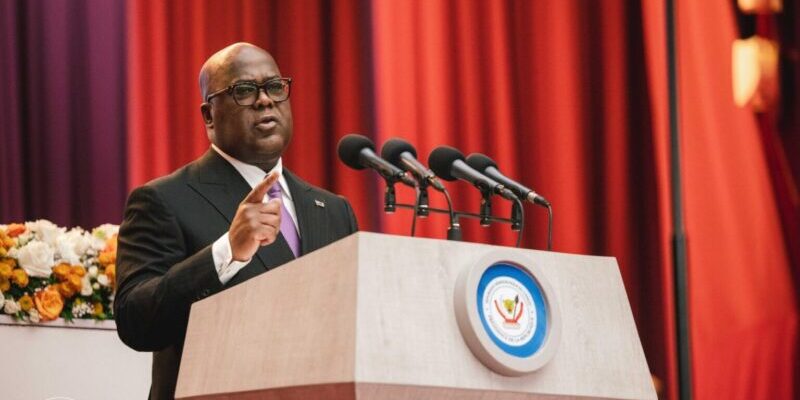
Tshisekedi Launches Strategic Overhaul to Reclaim and Reshape the Congolese Mining Sector
DRC Recovers 30,000 Mining Sites and Introduces Cobalt Export Quotas to Boost Strategic Control
President Félix Tshisekedi has announced a sweeping restructuring of the Democratic Republic of Congo’s mining sector—an economic pillar and a crucial strategic resource in the global shift toward clean energy.
His objective is clear: regain control of a fragmented industry, long undervalued and dominated by speculative interests, and turn it into a genuine engine of national development.
The government has reclaimed nearly 30,000 mining concessions previously held by inactive operators or land hoarders. The move signals a break with years of opacity and aims to return viable sites to the market, clean up the mining cadastre, and maximize the strategic value of the national subsoil.
At the same time, authorities have dedicated 36,000 km² to new geological research. This investment in knowledge—rather than extraction alone—is designed to improve mineral mapping and attract serious investors capable of deploying modern technology that aligns with international standards.
One of the most significant policy shifts is the planned introduction of export quotas on cobalt, a resource for which the DRC remains the world’s leading producer. Inspired by strategies used in other critical commodity markets, these quotas aim to strengthen the country’s negotiating power, reduce dependence on external price fluctuations, and promote domestic processing that captures more industrial value.
Security is another priority. The classification of Masisi and Kamas as “red zones” seeks to protect strategic deposits, curb illegal mining networks, and prevent parallel economies that deprive the state of much-needed revenue.
Tshisekedi’s broader ambition is to transform mining income into a long-term driver of national development—financing infrastructure, supporting industrial diversification, and strengthening state finances.
Analysts estimate that reclaiming 30,000 mining titles could expand exploitable resources by 10–15% over the coming years. Meanwhile, cobalt export quotas, if effectively enforced, could boost the DRC’s influence in markets essential to electric vehicles, batteries, and green technologies.
Yet experts also caution that the success of these reforms will depend on transparent governance and rapid implementation. Without that, the reforms risk remaining symbolic rather than transformative.