

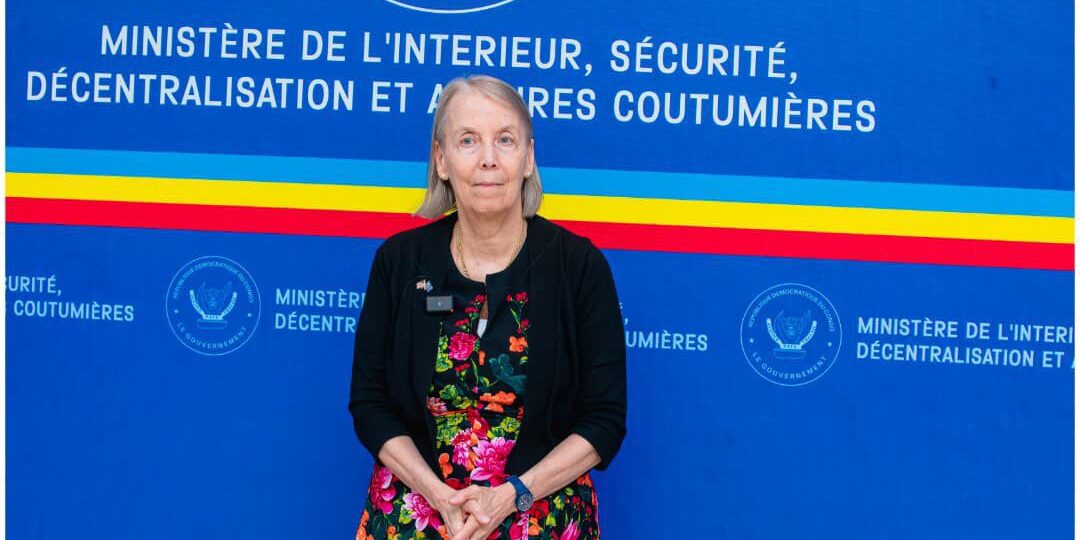
US Ambassador Defends Strategic Minerals Partnership Between Washington and Kinshasa
US Ambassador Lucy Tamlyn Says DRC–US Minerals Agreement Is a Strategic Partnership, Not a Concession
In Kinshasa, US Ambassador to the Democratic Republic of Congo Lucy Tamlyn did more than respond to questions—she sought to shape the narrative. Confronted with growing suspicions over a potential sell-off of Congolese mineral resources, the ambassador delivered a firm and unequivocal message on December 15, 2025: the agreement between Washington and Kinshasa is not a concession, but a strategic partnership.
Tamlyn highlighted the complexity of the framework, explaining that it is not a single agreement but a combination of regional and bilateral arrangements in which the United States acts both as a mediator and an economic partner. According to the ambassador, this structure is designed to ensure mutual benefits for both the Democratic Republic of Congo and the United States.
However, behind the carefully calibrated messaging lies a more direct strategic reality. Tamlyn openly acknowledged that the United States is seeking to secure reliable access to critical minerals—resources that are increasingly essential to its industrial base, energy transition, and defense sector. In this context, the DRC is not simply a partner, but a key link in a global supply chain under growing pressure.
The American offer centers on investment promises, including local mineral processing, job creation, and broader industrial development.
While attractive, these commitments remain largely prospective. For now, they represent a bet on trust in a country whose mining history has been shaped by agreements often viewed as unbalanced or unfavorable.
Recent public remarks by former US President Donald Trump, which underscored American interest in Congolese minerals, have further intensified public unease.
For some analysts, the heightened media attention reflects less a commitment to transparency than the weight of strategic necessity.
Ultimately, the core issue is no longer whether the agreement appears mutually beneficial on paper, but whether the Democratic Republic of Congo will be able to assert its own conditions in a partnership where the balance of power remains fundamentally asymmetrical.