
Resource Matters Calls on DRC to Enforce Copper Processing Laws and Ban Concentrate Exports
NGO Urges DRC to End Copper Concentrate Export Exemptions to Boost Local Processing
In a white paper published in December 2025, the non-governmental organisation Resource Matters has called on the Democratic Republic of Congo (DRC) to end export exemptions for copper concentrates, arguing that the move would significantly accelerate local processing of a mineral that is critical to the global energy transition.
According to the organisation, the continued granting of exemptions undermines Article 342 of the revised Mining Code, which has formally prohibited the export of copper concentrates since March 2021.
Resource Matters said the provision should now be enforced strictly, following more than a decade of successive moratoria.
“At this stage, no operator should be able to invoke ‘regulatory surprise’ to avoid the obligation to process locally,” the organisation stated. “Mining companies have had sufficient notice for more than twelve years. By removing exemptions and enforcing existing legislation, the State would create the conditions for 100% of copper to be processed locally into cathodes.”
The push for local beneficiation is not new. In 2010, the provincial government of Haut-Katanga introduced a tax of USD 60 per tonne on copper concentrate exports, which was increased to USD 100 per tonne in 2013.
These measures encouraged several mining companies to invest in domestic processing capacity.
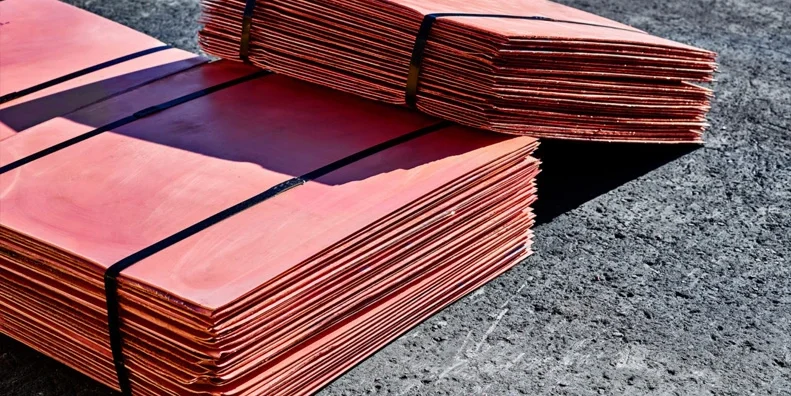
As a result, the Congolese copper belt has seen a rapid expansion of Solvent Extraction–Electrowinning (SX-EW) plants, enabling the production of high-purity copper cathodes with grades of up to 99%.
Observers say this experience demonstrates that, with stronger enforcement and policy consistency, further downstream transformation beyond cathode production is achievable.
Copper produced in the DRC remains highly sought after on global markets, driven by strong demand from industries worldwide.
The metal is essential for electrical infrastructure, including power cables, transformers, and distribution networks, and plays a central role in renewable energy systems and electric vehicles.
Demand is being further reinforced by the energy transition, as electric vehicles typically require around four times more copper than conventional internal combustion engine vehicles.
The additional copper is used mainly in electric motors, batteries, and charging infrastructure, underlining the strategic importance of maximising value addition within the DRC.