
Rubaya Landslide Kills Hundreds as Illegal Mining and Armed Groups Fuel DRC’s Resource Plunder
Rubaya Landslide: A Human Tragedy Fueled by Illegal Mining and Armed Occupation
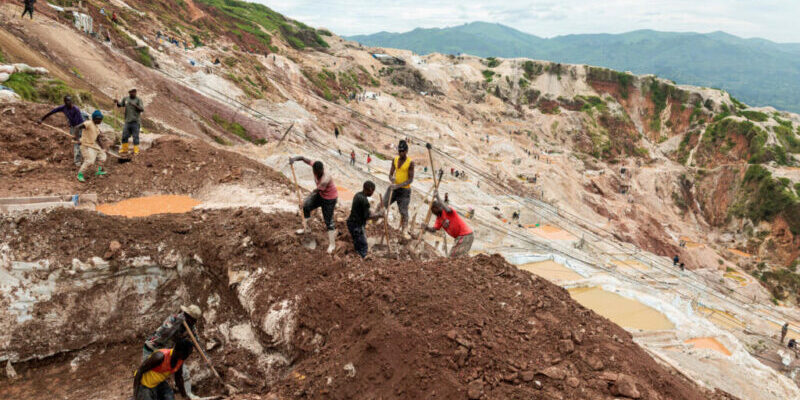
A massive landslide in Rubaya, located in Masisi territory, has claimed the lives of hundreds of civilians, the majority of them artisanal miners forced into extremely dangerous working conditions amid rampant and illegal exploitation of the Democratic Republic of Congo’s natural resources.
According to the Congolese Government, this exploitation is orchestrated by Rwanda and the M23/AFC armed groups.
In a statement released on Saturday, January 31, 2026, the Central Government reported that preliminary field assessments indicate at least 200 fatalities.
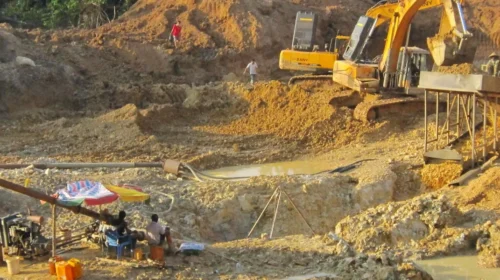
Many victims were buried inside or near mining pits, in an environment characterized by a total absence of safety standards.
This tragedy follows a grim and recurring pattern. In June 2025, more than 300 civilians lost their lives under similar circumstances in the same mining zone, underscoring the persistent dangers faced by artisanal miners operating in illegally controlled areas.
In response, the Government expressed its deepest condolences to the bereaved families and extended its solidarity to the affected communities.
It paid tribute to the memory of the victims and reaffirmed its support for the people of Rubaya and the entire Masisi territory, which has endured repeated violence and humanitarian tragedies.
The Government recalled that the Rubaya mining area has been officially classified as a “red zone” under Ministerial Decree No. 00031/CAB.MIN/MINES/01/2025 of February 12, 2025, a designation later extended by Ministerial Decree No. 00734/CAB.MIN/MINES/01/2025 of November 3, 2025.
This classification strictly prohibits all mining, exploitation, and commercialization of mineral substances, including artisanal mining.
Despite this legal prohibition, mining activities continue in Rubaya in blatant violation of national law and without any respect for safety or labor standards.
According to the Government, these activities are carried out within a context of armed occupation and form part of a structured system of plunder and illegal exploitation of Congolese natural resources.
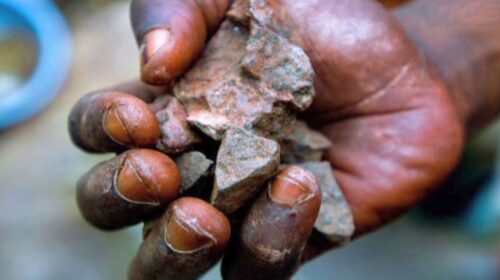
Available data indicate that between 112 and 125 tons of coltan are extracted monthly from the Rubaya area and transported exclusively to Rwanda, without administrative authorization or traceability.
These operations directly fuel a war economy. This reality is further corroborated by regional statistics showing an increase of more than 200% in Rwanda’s coltan exports between January and June 2025, a surge that cannot be explained by Rwanda’s known domestic reserves.
According to the Government, these figures reveal well-established mechanisms for laundering minerals originating from Congolese territories under armed occupation.
The Government also denounced the failure of international and regional mineral traceability systems, including the ITRI/ITA mechanisms and the certification framework of the International Conference on the Great Lakes Region (ICGLR).
These mechanisms have proven ineffective in preventing the circulation and fraudulent certification of minerals from sites officially designated as “red zones.”
Additionally, the Government condemned the conduct of international buyers and economic actors who continue to source minerals from Rubaya through Rwanda, despite official prohibitions and repeated warnings.
Such practices, it warned, indirectly contribute to the financing of armed groups and the violent exploitation of artisanal miners.
These acts constitute violations of international humanitarian law, notably Article 47 of the Regulations annexed to the 1907 Hague Convention and Article 33 of the Fourth Geneva Convention of 1949, which prohibit pillage.
They also amount to war crimes under Article 8 of the Rome Statute of the International Criminal Court and contravene United Nations Security Council resolutions, including resolutions 1952 (2010), 2293 (2016), and 2773 (2025).
The Government of the Democratic Republic of Congo reaffirmed its intention to continue documenting these crimes rigorously and to intensify legal action through appropriate national and international mechanisms to ensure accountability for all those responsible.
It reiterated its commitment to restoring state authority and definitively ending the illegal exploitation of the country’s natural resources.
While reaffirming its commitment to lasting peace particularly through the Washington Agreements and the Doha process the Government stressed that peace efforts cannot justify impunity or the concealment of grave crimes committed on Congolese territory.
Finally, the Government called on the international community to recognize the full magnitude of this tragedy, which it described as a direct consequence of armed occupation and an organized system of plunder and illegal exploitation of the Democratic Republic of Congo’s natural resources.