
DRC Moves to Reassert Control Over Kakanda Mine After Deadly Landslide
DRC Government Orders Evacuation of Illegal Miners from Kakanda Following Fatal Landslide
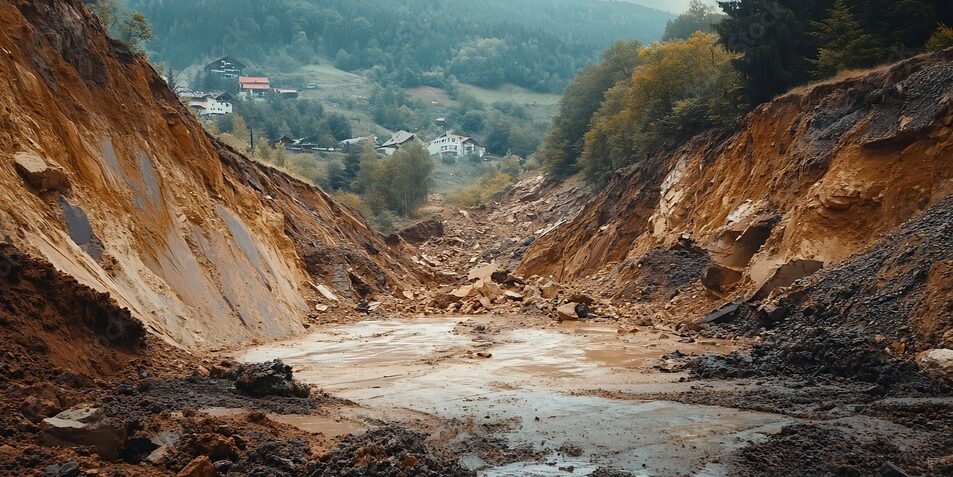
The government of the Democratic Republic of Congo has initiated decisive steps to regain authority over a contested mining concession in Kakanda, after a tragic landslide claimed the lives of 11 people during the night of March 10–11, 2026.
The site, operated by Boss Mining, had been taken over by unauthorized artisanal miners following the suspension of industrial operations.
Authorities now aim to restore order, improve safety, and reestablish formal mining activities.
Government Launches Evacuation and Relocation Strategy
In a statement issued on March 17, officials outlined a coordinated intervention plan centered on clearing the concession, relocating informal miners, and strengthening security controls around the site.
A key component of the strategy involves transferring artisanal miners to officially designated zones known as Zones d’Exploitation Artisanale (ZEA) areas specifically set aside for small-scale mining outside industrial concessions.
The relocation process will be managed by Service d’Assistance et d’Encadrement des Mines Artisanales et à Petite Échelle in collaboration with provincial authorities.
Government officials say the objective is twofold: to provide safer and legally recognized working conditions for artisanal miners while allowing industrial operators to resume operations without interference.
Security forces are expected to maintain a permanent presence once the evacuation is complete.
Economic and Operational Impact on Mining Activities
Illegal mining has posed persistent challenges for operators in the region, particularly for Eurasian Resources Group, the parent company of Boss Mining.
After operations were halted in 2023 due to safety and security incidents, large numbers of informal miners moved onto the site.
Company estimates suggest that unauthorized extraction and transport activities have involved hundreds of vehicles daily, leading to substantial financial losses and operational disruptions.
The situation has also raised concerns among investors about the stability and security of mining assets in the country’s copper- and cobalt-rich provinces.
Formalization Efforts Gain Momentum
In an effort to bring artisanal mining into the formal economy, Eurasian Resources Group signed a cooperation agreement in February 2026 with Entreprise Générale du Cobalt.
The partnership seeks to regulate small-scale production through supervised mining zones, traceability systems, and improved safety standards.
By separating artisanal output from industrial supply chains, authorities hope to reduce illegal mining while maintaining transparency in mineral exports.
Restoring State Authority in the Mining Sector
Senior officials acknowledge that uncontrolled artisanal mining has become a national challenge, affecting worker safety, environmental management, and the country’s international reputation.
Fatal accidents involving informal miners have increased in recent years, prompting calls for stronger oversight and enforcement.
The Ministry of Mines is working alongside security agencies and regional administrations to dismantle illegal mining networks and reestablish government authority over strategic concessions.
Authorities have also referred cases linked to illicit mining activities to the judicial system, signaling a tougher stance on violations.
Slow Progress on Designated Mining Zones
Despite renewed efforts, the rollout of official artisanal mining zones has progressed more slowly than anticipated.
Dozens of ZEAs were announced in late 2025 following earlier fatal accidents in the region, but only a limited number have been fully identified and prepared for operation.
Officials say accelerating the development of these zones is essential to reducing conflicts between industrial operators and artisanal miners, improving safety standards, and stabilizing production in one of the world’s most important cobalt and copper regions.
A Turning Point for Mining Governance
The government’s intervention in Kakanda reflects a broader shift toward stricter regulation and formalization of the mining sector.
By combining relocation programs, enforcement measures, and partnerships with industry stakeholders, authorities aim to prevent future tragedies while protecting investment and ensuring sustainable mineral production.
The success of these reforms will likely shape the future of mining governance in Lualaba Province, a region central to the global supply of critical minerals.