

DRC introduces quarterly mining sector monitoring to boost accountability and revenue oversight
DRC Ministry of Mines Launches Quarterly Reporting to Improve Transparency and Combat Mining Fraud
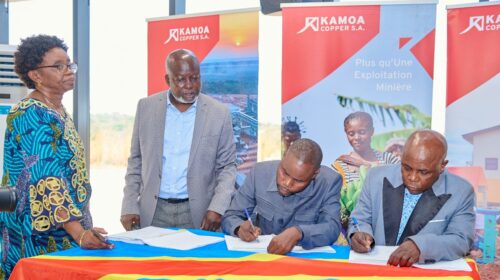
On Tuesday, April 7, 2026, Minister of Mines Louis Watum Kabamba convened the heads of all structures under his ministry, launching a new quarterly accountability mechanism for the Democratic Republic of Congo’s (DRC) mining sector.
Under the new system, each entity will submit regular reports detailing its activities, challenges encountered, and future outlook.
Addressing fragmentation in the mining administration
The measure comes as the Congolese mining sector continues to face challenges stemming from a fragmented administrative structure.
Multiple departments often operate in overlapping sectors, complicating performance monitoring and limiting the State’s ability to obtain a consolidated overview of sector activities.
The new approach emphasizes regular data collection. Effectiveness will depend on the centralization and analysis of this information, as descriptive reports alone do not inform decision-making.
The importance of such monitoring is underscored by the Extractive Industries Transparency Initiative (EITI), which reported that the DRC’s extractive sector generated over $7 billion in revenue in 2022, mostly from mining.
Improving coordination and combating fraud
During the meeting, Jean-Paul Kapongo stressed the organizational value of the initiative:
“It is important to bring together all the Heads of the Corps around the same table to strengthen cohesion, coordination, and efficiency in the implementation of public policies in the sector.”
Mining fraud remains a central challenge. A portion of mineral flows continues to bypass official channels, reducing public revenue.
UN Group of Experts reports highlight organized smuggling networks to Rwanda and Uganda, with illegal taxation by armed groups in areas such as Rubaya generating between $300,000 and $800,000 per month.
Regional trade statistics show Rwanda’s gold exports at over $650 million and Uganda’s at over $2 billion, suggesting significant mineral transfers from the DRC. Rubaya alone is estimated to supply nearly 15% of the world’s coltan.
Monitoring artisanal mining and revenue redistribution
Artisanal mining, largely informal and overseen by SAEMAPE, mobilizes hundreds of thousands of workers and supports millions of livelihoods but often escapes regulatory control and taxation. Local economic benefits remain limited in several production areas, with African Development Bank analyses indicating weak oversight of revenue transfer mechanisms.
Promoting exploration and investment
The ministry also highlighted the resumption of geological exploration by Congolese experts to improve resource knowledge and reduce investor uncertainty. Sector attractiveness remains tied to regulatory stability, legal certainty, and clear procedural frameworks.
Toward a data-driven sector
The quarterly monitoring system will enable the DRC to map all mining projects, using key performance indicators (KPIs) designed specifically for the Congolese context.
By strengthening monitoring and evaluation, the initiative aims to improve governance, reduce fraud, and ensure that the country’s significant mineral potential is managed predictably and sustainably.