

ARSP Orders Major Cement Companies in Kongo Central to Remove 408 Non-Compliant Subcontractors
DRC’s ARSP Directs CIMKO, PPC Barnet, CICO, and CILU to Cancel Contracts with 408 Ineligible Subcontractors
Investment momentum in renewable energy in the Democratic Republic of the Congo has reached a new milestone following a new strategic partnership aimed at expanding solar power infrastructure in the country’s mining heartland.
The National Agency for Rural Electrification and Energy Services (ANSER) has signed an agreement with Propav Infrastructure Limited for the development of two large-scale solar power plants in Lualaba.
Major solar capacity planned
The project will deliver a combined installed capacity of 120 megawatts-peak (MWp), split between two sites:
- Kyamasumba: 55.4 MWp
- Kapanga: 65.2 MWp
This configuration reflects the government’s strategy to diversify the national energy mix and accelerate electrification in economically strategic regions that remain underserved in terms of power supply.
Financing structure backed by UK export credit
The project’s financial framework is based on a British export credit mechanism supported by financial institutions in the United Kingdom.
This structure is designed to reduce investment risk while enabling the transfer of technology, technical expertise, and operational know-how.
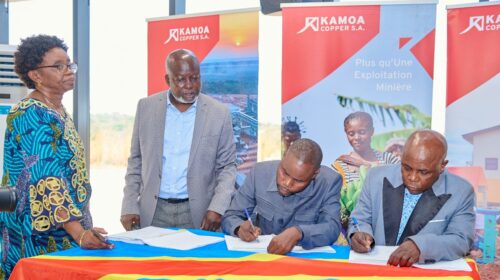
The agreement was signed in the presence of Rob Dewar and now moves into the next phase of detailed financial structuring, which is required before construction can begin.
Strengthening investor confidence in the DRC energy sector
Beyond its energy implications, the deal highlights the growing attractiveness of the renewable energy market in the Democratic Republic of the Congo to international investors.
Following increasing engagement from partners in Germany and the United States, the involvement of British-backed financing further strengthens confidence in the country as an emerging clean energy hub in Central Africa.
Addressing chronic electricity shortages
In a country facing persistent electricity deficits particularly in mining-intensive provinces such as Lualaba these solar power installations are expected to play a critical role in improving grid stability and supporting industrial growth.
The project sends a strong signal to both private operators and technical partners, underscoring the significant untapped potential of the Congolese renewable energy sector and its growing importance in regional energy development.