

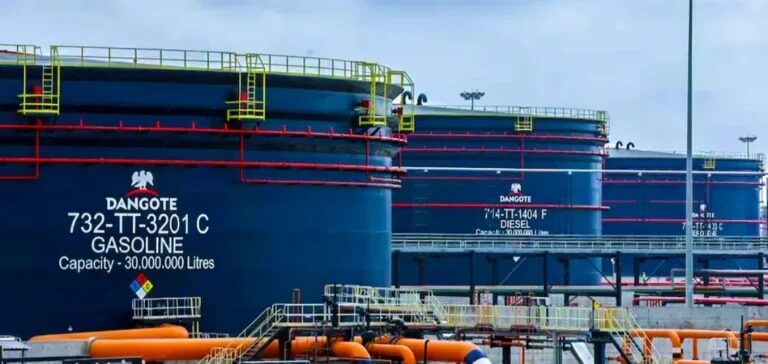
DRC Moves to Secure Fuel Supply from Dangote Refinery Amid Global Market Pressures
Democratic Republic of Congo explores fuel imports from Dangote refinery as it seeks to diversify petroleum supply sources and strengthen energy security
The Democratic Republic of Congo is exploring the possibility of sourcing petroleum products from Nigeria’s Dangote refinery as it moves to strengthen fuel supply security amid ongoing pressures in global refined product markets, according to the Ministry of National Economy.
Deputy Prime Minister and Minister of Economy Daniel Mukoko Samba recently visited Nigeria as part of efforts to secure stable fuel imports for the country.
The ministry said the mission is aimed at reinforcing supply resilience and diversifying procurement sources.
During the visit, Mukoko Samba met Nigerian industrialist Aliko Dangote to discuss potential direct fuel supply arrangements for the Congolese market.
He also held discussions with United Bank for Africa (UBA) leadership, including Chairman Tony Elumelu and CEO Oliver Alawuba, focusing on financing mechanisms for petroleum imports.
The initiative is part of a broader strategy by the DRC government to reduce dependence on limited supply chains and improve resilience against fluctuations in international energy markets.
Global oil and refined product markets have remained volatile in recent months due to geopolitical tensions and supply disruptions.
Africa’s largest refinery
The Dangote refinery, located in Lekki, Nigeria, has a refining capacity of around 650,000 barrels per day, making it the largest in Africa.
Despite its scale, a significant portion of output is directed toward Nigeria’s domestic demand, limiting the volume available for export markets.
Several African countries are already competing for supply from the refinery. South Africa and Kenya have also pursued arrangements, while shipments of refined products have reportedly been delivered to countries including Ghana, Togo, Cameroon, Tanzania, and Côte d’Ivoire.
These existing commitments mean available export volumes remain constrained, leaving limited room for additional buyers such as the DRC.
According to central bank data, the DRC consumed approximately 2.8 million cubic meters of petroleum products in 2023, equivalent to about 17.6 million barrels or more than 48,000 barrels per day on average. Authorities say domestic consumption has continued to rise, although updated official figures have not yet been released.
Source:bankable.africa