
DRC’s Cobalt Export Delays Continue Despite New Quota System
Cobalt Exports from DRC Still on Hold as New Quota System Faces Delays, Disrupting Global EV Supply Chains
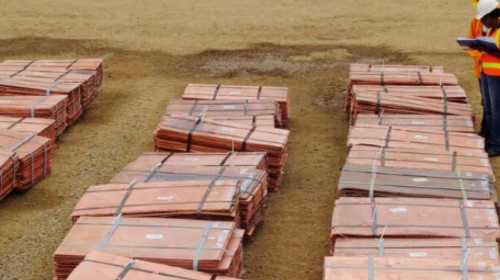
Cobalt producers in the Democratic Republic of Congo (DRC) are still waiting for government approval to resume exports, despite the introduction of a new quota system on October 16.
Industry sources confirmed that the long-anticipated system—designed to restart shipments after a seven-month suspension—has yet to be fully implemented, prolonging uncertainty in global supply chains.
Background: Seven-Month Export Freeze Disrupted Global Markets
The DRC, which supplies over 70% of the world’s cobalt, imposed a temporary export freeze earlier this year to limit supply and drive up prices. The move disrupted shipments to key markets, particularly China, the world’s largest cobalt consumer and a major player in electric vehicle (EV) battery production.
Under the new framework, companies must obtain monthly export quotas from the Authority for the Regulation and Control of the Market for Strategic Mineral Substances (ARECOMS). Before shipping, they must prepay royalties based on approved volumes and current market prices.
New Quota Rules: Prepayment, Traceability, and Oversight
Exporters are now required to validate their quotas and cobalt quality, secure traceability and conformity certificates, and permit ARECOMS oversight during sampling.
For October and November, ARECOMS has combined prepayments for both months to streamline quota activation. Although allocations have been made, producers are still waiting for final approvals, expected by the end of October.
Neither ARECOMS nor the Ministry of Mines has yet issued a public statement regarding the delay.
Export Limits and Market Impact
ARECOMS has set export caps at 18,125 tonnes for the fourth quarter of 2025 and 77,400 tonnes for 2026. Unused volumes may be rolled over within the same year but will expire at year-end. From 2026 onward, quotas will reset monthly and cannot be carried over.
President Félix Tshisekedi defended the export controls, noting that the freeze had driven cobalt prices up by 92% since March. He described the quota mechanism as “a real lever to influence this strategic market” after years of “predatory practices.”
Industry Reactions: Glencore Supports, CMOC Pushes Back
Global mining major Glencore has expressed support for the new quota system, while China Molybdenum (CMOC) has opposed it.
CMOC’s Tenke Fungurume and Kisanfu mines received the largest allocations, with 6,650 tonnes for the last quarter of 2025 and 31,920 tonnes for 2026. Glencore’s Kamoto Copper Company and Mutanda Mining were allocated 3,925 tonnes and 18,840 tonnes, respectively. ARECOMS also retained a 10% strategic allocation for national interests.
Cobalt Prices Surge Amid Continued Delays
Since the export freeze began, cobalt prices have jumped by 90%, rebounding from a nine-year low of $10 per pound in February. Analysts say the DRC’s export restrictions have once again demonstrated the country’s pivotal role in shaping global cobalt prices—a metal essential to the rapidly expanding electric vehicle industry.