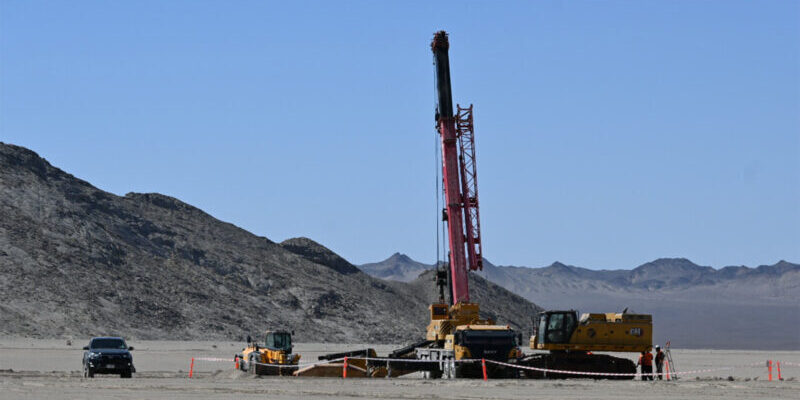
Barrick’s $10-Billion Reko Diq Project Gathers Momentum Ahead of 2028 Production Target
Barrick Mining CEO Mark Bristow says momentum is building at the company’s Reko Diq copper-gold project in Pakistan, with construction progressing steadily, exploration yielding promising results, and production slated to begin by the end of 2028.
“This is a world-class copper-gold project that will generate immense value—not just for Barrick, but also for our partners in Pakistan, especially in Balochistan,” Bristow said on Wednesday.
“It’s one of the largest undeveloped porphyry copper-gold systems globally, and its potential is not yet reflected in our share price.”
The project will be developed in two phases, requiring an estimated total capital investment of $10 billion.
Phase 1 alone is expected to cost between $5.6 billion and $6 billion (on a 100% basis), with expenditure spread between 2025 and 2029.
Barrick’s share of the equity contribution is projected at $1.4 billion to $1.7 billion.
Last month, joint venture shareholders approved an updated feasibility study, revising earlier plans from 2010 and 2011.
As of year-end 2024, Barrick’s share of Reko Diq’s probable reserves includes 7.3 million tonnes of copper and 13 million ounces of gold.
Once operational, Phase 1 of Reko Diq is expected to produce 240,000 tonnes of copper and 297,000 ounces of gold annually.
In Phase 2 (2034–2043), production is forecast to rise to 460,000 tonnes of copper and 520,000 ounces of gold per year, supported by a doubling of ore throughput from 45 million to 90 million tonnes per year.
“The project is really taking shape now—it’s all systems go,” Bristow said. “We’ve begun mobilizing heavy equipment, and we’ve appointed Fluor as our lead engineering, procurement, and construction management partner, working alongside our internal team and other collaborators.”
Bristow emphasized Barrick’s disciplined, phased investment strategy and strong local partnerships—an approach that has proven successful in earlier ventures in Mali and the Democratic Republic of Congo.
“Disciplined investment, phased development, and strong partnerships formed before construction—that’s how we operate,” he noted.
Hiring and mobilization efforts are accelerating, with most personnel being recruited from Balochistan.
The project also secured environmental clearance in Q1 2025 from the Balochistan Environmental Protection Agency.
To date, $228 million has been spent (on a 100% basis), including $100 million in Q1 2025. Total capital expenditure for the year is expected to remain under $1 billion, thanks to revised project timelines in collaboration with Fluor.
While the feasibility study outlines a 37-year reserve life, Bristow sees even greater long-term potential.
“The real story is that this project could extend well beyond 2060, possibly out to the end of the century.”
Further supporting this outlook is a promising new discovery, Bukit Pasir, located just 4 km north of the main Western Porphyries orebody.
Early drilling results point to significant upside.
“Even before we’ve begun production, we’re already adding life and value to the project,” Bristow added.