
Gold Rush Transforms Zimbabwe’s Filabusi Amid Record Prices
In Filabusi, a small town in southeastern Zimbabwe, the streets are lined with gleaming BMW X5s and Land Rover Defenders.
Modern houses—paid for in cash—are springing up across the landscape, and whisky in local bars is sold exclusively by the bottle.
This transformation has been fueled by a surge in gold prices over the past three years, culminating in a historic high in 2025.
The rally, spurred in part by global economic uncertainty and intensified during former U.S. President Donald Trump’s trade war, has turned gold into a safe-haven asset—and a lifeline for Zimbabwe’s 700,000 informal miners.
These artisanal miners, many operating in remote gold belts, have doubled their deliveries to the country’s state refinery in just the first five months of the year, surpassing 11 metric tons. If the pace continues, Zimbabwe could earn $1 billion more from gold exports this year than in 2024.
“The prices have been very favorable to the miners, which is something we’re very happy about,” said Wellington Takavarasha, president of the Zimbabwe Artisanal and Small-Scale for Sustainable Mining Council. “This year is looking very good. We must capitalize on this rally.”
Zimbabwe isn’t alone. Across Africa, high gold prices are reshaping economies. Ghana, the continent’s top producer, expects to double its small-scale gold output to $12 billion by next year.
In Ethiopia, record deliveries are bolstering central bank reserves. However, the boom has darker sides, such as in the Democratic Republic of Congo, where rebel groups are forcing civilians into gold mining.
In Zimbabwe, where roughly 4% of the population is directly involved in gold mining, the sector has become a crucial economic pillar.
After a disastrous land reform program in 2000 triggered a cascade of famine, hyperinflation, and currency collapse, formal employment plummeted, forcing millions to emigrate. Today, gold offers a rare glimmer of hope—one tied closely to global prices.
So far, there’s little sign the rally is slowing. Since Trump’s 2017 inauguration, gold prices have surged 60%, reaching a record $3,432 per ounce in May. Goldman Sachs forecasts prices will hit $3,700 by year’s end.
In response, Zimbabwe’s central bank is paying cash for gold, targeting a record 40 tons in purchases for 2025 after earning $2.5 billion from gold exports in 2024—a 37% increase from the previous year.
In April, artisanal miners supplied three-quarters of the gold delivered, a dramatic turnaround from previous years when much of their production was smuggled out of the country.
For miners like 33-year-old Mxolisi Dube, the boom has been life-changing. Once an illegal “makorokoza”—a Ndebele term for gold panner—Dube now works legally under agreements with mine owners who are inviting artisanal miners onto their land to boost output.
“You’re assured of something at the end of the month,” said Dube, dressed in navy overalls with a headlamp strapped on. “You’re protected. If you’re not under a company, you always have to run.”
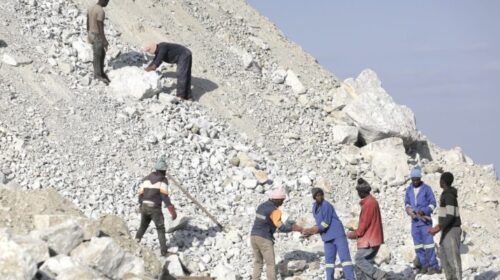
Mine owners, often short on capital and equipment, benefit from the arrangement as well. At Macoomber 7 mine, 12 miles west of Filabusi, artisanal miners use picks and shovels to extract ore.
The plant, managed by Meli Nkulumo, uses Elon Musk’s Starlink satellite service to monitor global gold prices via websites like Goldprice.org.
“Higher gold prices are better for everyone,” said Thulani Ndlovu, acting mine manager. “We can also look forward to a raise in salaries.”
Still, the work is grueling. Miners operate around the clock, smashing rocks underground with hand tools and hauling them to the surface. During eight-hour shifts, their only sustenance is maheu, a fermented cornmeal drink.
The economic windfall is most visible in Bekezela, a Filabusi suburb where brick homes with solar panels, electric fences, and water tanks now dominate the skyline.
The town council is rezoning land to accommodate the building boom. At local car washes, 4x4s queue up, caked in the dust of surrounding savannah.
Bars are booming. At the Next Generation bar, manager Thabo Mpofu said patrons often splurge on bottles of Hennessy Cognac—sometimes pouring them out on the ground as a show of wealth.
The mining boom has even reduced crime. Illegal takeovers of formal mines have declined as more artisanal miners gain legal access to mining shafts, some as deep as a kilometer.
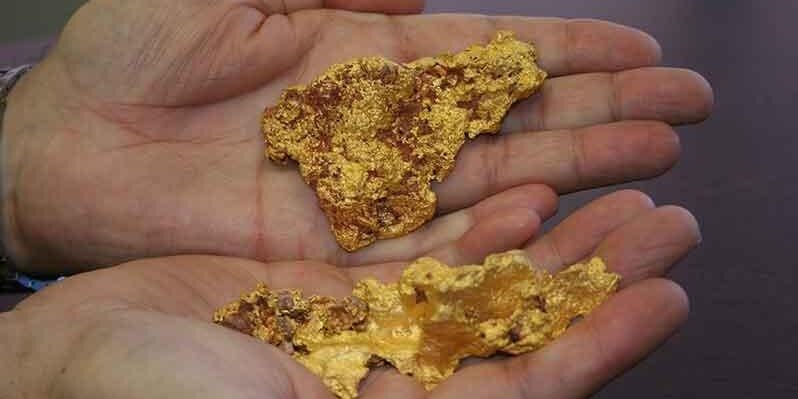
“There’s nothing bad here that happens,” said Melusi Nyoni, manager of Fred and Fernando mines near Filabusi. “There is gold just all over.”
Despite the prosperity, the work remains perilous. Informal miners accounted for 87% of the 186 mining fatalities recorded in Zimbabwe last year, according to the Chamber of Mines. In May, four miners died when a mine wall collapsed near Chegutu.
“With the high prices, in the near future I will also be seen in a car,” said Dube, a father of four. “I want a Toyota Hilux 4×4 with a 2.7-liter engine.”