

DRC Mining Minister Defines What Qualifies as Mine Development and Construction Work
Louis Watum Clarifies the Definition of Development and Construction Works in the DRC Mining Sector
On September 8, 2025, the Minister of Mines, Louis Watum Kabamba, signed a decree specifying the types of activities considered as “development and construction works” under mining exploitation rights and permanent quarry operation permits in the Democratic Republic of Congo.
Until now, the Mining Code and its Regulations required mining and quarry rights holders to prove the start of operations within specific time limits — one year for exploration permits and one to three years for exploitation authorizations — without clearly defining what activities counted as a real commencement of work.
The new decree fills that gap by providing a concrete definition of the operations that mark the effective start of a mining project. These include activities planned in the approved feasibility study and the environmental and social impact assessment.
The text specifies that the holder of a mining or quarry right “must comply with the work schedule set out in the approved feasibility study.”
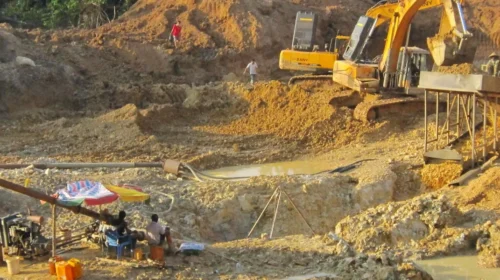
Article 1 of the decree includes, among development and construction works: access to the deposit, preparatory work, extraction, hauling, storage, and the installation of processing facilities.
It also covers the construction of buildings and infrastructure directly linked to mining operations.
Articles 5 and 6 detail recognized works such as overburden removal, construction of buildings, shafts, ramps, roads, camps, power and water networks, as well as processing and refining plants.
Underground works are also covered, including shaft sinking, installation of mining equipment, underground electrification, ventilation and dewatering systems, and crushing or loading stations.
Additionally, Article 4 lists as preliminary works: perimeter marking, site security, and access road development.
Stronger Oversight of Inactive Titles
This decree comes amid tighter monitoring of inactive mining titles. On August 20, 2025, the Mining Cadastre (CAMI) published a list of 93 titles at risk of cancellation for failure to start operations.
Among the companies cited were Tenke Fungurume Mining, with two titles covering six mining squares in Lubudi (Lualaba), and Cimenterie de Lukala (Cilu), with a title covering five squares in Songolo (Kongo Central).
On September 5, 2025, CAMI clarified that affected titleholders had 45 days to present their defense and prove effective commencement of work — a deadline expiring on October 20, 2025. After this date, companies that fail to demonstrate compliance with the ministerial decree risk forfeiture of their mining rights.
According to Articles 561 to 563 of the Mining Regulations, the decision of forfeiture is made by the Minister of Mines — either national or provincial, depending on the material extracted.
Titleholders have 30 days to file an administrative appeal. Without appeal, the decision becomes final, and the areas revert to the public domain as Geological Research Zones (ZRG).
The signing of this decree is part of a broader initiative to modernize and reorganize the mining sector. Before Louis Watum Kabamba’s appointment in August 2025, a major clean-up of the mining cadastre had already released 594 mining and quarry titles, representing 37,253 mining squares — roughly 31,648 km² — made available for new investors.
With over three decades of experience in the mining industry and leadership roles in major projects, Louis Watum aims to continue this rationalization. By promoting modern governance and sector transparency, he seeks to foster a more stable and investor-friendly mining environment in the Democratic Republic of Congo.
SOURCE:bankable.africa