Zambia Mining & Investment Insaka 2025: A Turning Point for Local Content and Sustainable Growth
The 2025 edition of the Zambia Mining & Investment Insaka (ZAMII 2025) will be remembered as a defining moment in the nation’s mining and economic history.
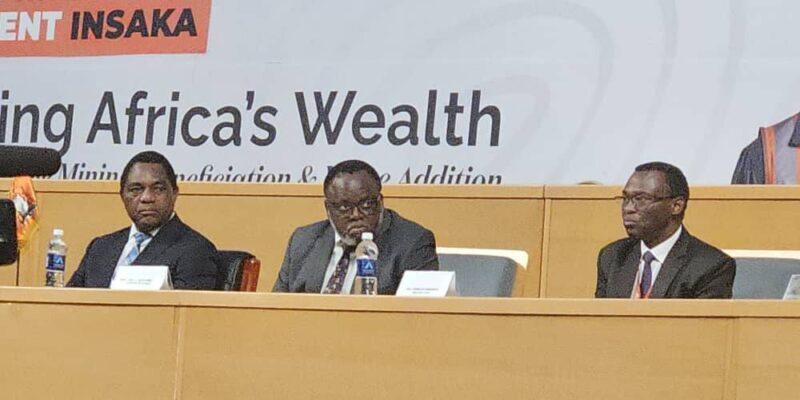
Held at the Mulungushi International Conference Centre under the theme “Unlocking Africa’s Mineral Wealth: Advancing Sustainable Mining, Beneficiation and Value Addition,” the summit attracted over 1,000 delegates from across Africa and beyond.
For decades, Zambia’s mining industry one of Africa’s largest has been the backbone of its economy, contributing around 70% of export earnings but with limited benefits retained domestically.
ZAMII 2025 sought to change that narrative by laying the groundwork for a new era: one where Zambia’s vast mineral wealth drives inclusive, homegrown industrialization.
A Defining Moment: The Birth of the Local Content SI
In a move widely described as historic, President Hakainde Hichilema officially authorized the Mining Local Content Statutory Instrument (SI) during the opening of the Insaka.
The Minister of Mines and Minerals Development, Paul Kabuswe, formally signed the SI, marking the beginning of a new legal framework designed to increase Zambian participation in the mining value chain.
The announcement was met with resounding applause from local entrepreneurs, contractors, and community leaders who have long called for stronger domestic inclusion in the mining sector.
What the SI Entails
The Local Content SI legally requires mining firms to:
Source at least 40% of goods and services from Zambian-owned suppliers over the next five years, starting with a 20% baseline within the first six months of implementation.
Prioritize employment of Zambian nationals, particularly in skilled, technical, and managerial roles.
Invest in supplier development programmes that build capacity, improve quality standards, and enhance competitiveness among local businesses.
Report annual compliance with penalties for firms that fail to meet the prescribed thresholds.
According to Minister Kabuswe, “This regulation is not about exclusion; it’s about empowerment. We want Zambians to be part of the mining story not as bystanders, but as key participants and beneficiaries.”
Why This Matters: From Extraction to Industrialization
For years, Zambia has grappled with the “paradox of plenty” — vast mineral resources but limited domestic benefit. Most mining inputs, from machinery to chemicals, have been imported, while value addition such as refining and manufacturing remained minimal.
The new regulation aims to change the structure of Zambia’s mining economy, ensuring that more of the wealth generated in the sector circulates within the country.
Economists view SI as a cornerstone of the government’s broader economic transformation agenda, which seeks to create jobs, develop industries, and support SMEs.
It also aligns with President Hichilema’s pledge to make Zambia a regional hub for sustainable mining and green mineral processing, particularly in the production of copper, cobalt, manganese, and lithium — critical minerals for the global energy transition.
Potential Impacts on the Economy and Local Suppliers
Opportunities
Business expansion: Thousands of Zambian-owned companies stand to gain new contracts across supply chains.
Job creation: Increased local sourcing and beneficiation could generate new employment opportunities, especially in mining towns and rural areas where some of the mines are situated.
Capacity building: The SI encourages collaboration between mining firms and local suppliers, fostering skills transfer and technical development.
Economic retention: Keeping a larger share of mining expenditure within Zambia could boost GDP and strengthen local currencies.
However, experts warn of several hurdles that could hinder implementation:
Local firms must upgrade their technical capacity and quality standards to compete effectively.
The government will need to ensure transparent procurement processes to prevent favoritism or corruption.
Without adequate oversight and support, enforcement could prove difficult, risking weak compliance.
As one mining analyst noted during a panel discussion, “The SI is ambitious and transformative — but its success depends on both sides. The government must enforce it fairly, and local businesses must rise to the challenge.”
A Broader Vision for Sustainable Mining
ZAMII 2025 was more than a policy event it was a showcase of Zambia’s evolving mining vision.
Discussions covered emerging opportunities in critical minerals for clean energy, digital innovation in mine operations, environmental stewardship, and the transition toward renewable energy-powered mining.
Panels also explored community engagement models, urging mining houses to build stronger, long-term partnerships with the communities where they operate.
President Hichilema emphasized this broader vision in his keynote address:
“Our goal is not just to mine minerals — it is to mine opportunity. This Local Content law ensures that every tonne of copper we export leaves behind a legacy of skills, jobs, and enterprise for our people.”
The Mining Local Content SI will come into effect on January 1, 2026, giving mining companies a short window to align operations with the new requirements. The Ministry of Mines has pledged to roll out capacity-building initiatives, conduct nationwide consultations, and provide guidance to ensure smooth adoption.
While challenges remain, ZAMII 2025 sent a clear signal: Zambia is charting a bold new course where mining is not just an extractive activity but a cornerstone of inclusive, sustainable, and innovation-driven development.
As the dust settles from this year’s Insaka, one message stands out — Zambia is open for investment, but on terms that ensure Zambians share in the prosperity their natural wealth creates.