DRC’s 9th Mining Indaba Highlights Global Rush for Strategic Minerals
Lubumbashi Hosts 9th Alternative Mining Indaba Focused on DRC’s Strategic Minerals and Sustainable Development
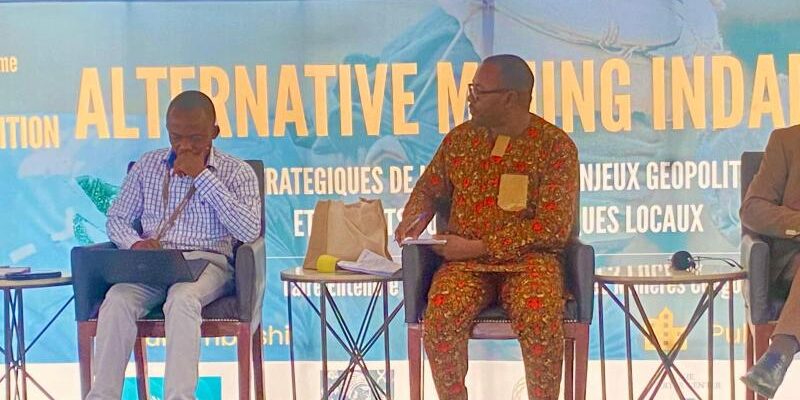
Nearly 200 people participated in the 9th edition of the Alternative Mining Indaba, held in Lubumbashi, Haut-Katanga Province, in southeastern Democratic Republic of Congo (DRC), from October 29 to 31, 2025.
The participants came from various provinces across the country and represented civil society organizations, local communities, and government institutions.
This year’s event carried special significance under the theme “Strategic Minerals of the DRC: Between Global Geopolitical Stakes and Local Socio-Economic Impacts.”
Claude Muteba, Executive Director of the Southern Africa Resource Watch (SARW)—a non-governmental organization promoting the transparent and responsible use of natural resources in Africa—explained that the DRC stood at the heart of global discussions on strategic minerals, especially as the world pursued decarbonization.
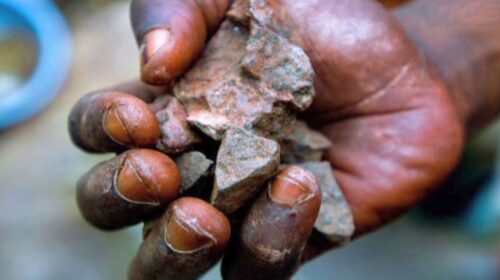
“This edition took place in a global context marked by an unprecedented geostrategic race for critical minerals such as cobalt, copper, lithium, and manganese,” Muteba said. “These resources, of which our country is richly endowed, have become the beating heart of the global energy transition.
The challenge for the DRC is to balance growing global demand for its minerals with the protection of its communities and environment.”
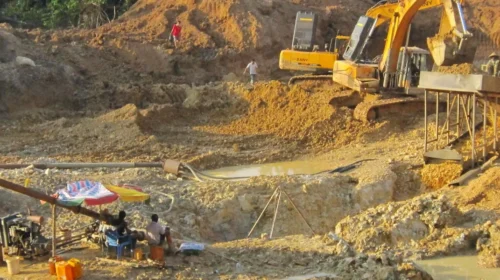
He noted that mining in the DRC had historically enriched foreign companies at the expense of local populations and ecosystems.
“It has inflicted immense suffering, particularly on women, and damaged relations between mining companies and communities,” Muteba said. “The true value of a mine lies not in the quantity of copper or cobalt it produces, but in its accountability to people, the planet, and future generations.
While major powers compete for access to critical minerals, communities continue to face pollution, social inequality, poverty, and a lack of essential services such as clean water, healthcare, and education.”
Over the three-day conference, discussions focused on redefining mining governance to ensure that it primarily served the Congolese people.
“Our responsibility is twofold: to redefine mining governance so that it benefits the Congolese population and to amplify the voices of the mining communities who live with the daily realities of exploitation,” Muteba emphasized.
“The DRC must not remain merely an extraction platform serving foreign economies. Our strategic minerals must drive industrialization, job creation, innovation, and local processing. Only then can the wealth of our subsoil become the wealth of our nation.”
He added that the Alternative Mining Indaba served as “a space for dialogue, listening, and joint solutions—where communities and civil society speak, decision-makers listen, and together we build a fairer, more sustainable, and sovereign mining future.”
The forum also encouraged participants to recognize that a mine’s true value lay in its humanity—in its capacity to serve people, the planet, and future generations.
The event was organized by the Southern Africa Resource Watch in partnership with the Natural Resource Governance Institute (NRGI), Resources Matters, the Carter Center, LITRASE, Afrewatch, NorChurchAid, EITI-DRC, and GIZ.