DRC and China Sign Strategic Minerals Cooperation Pact to Boost Mining Value and Industrialization
DRC–China Mining Deal Targets Duty-Free Exports, Local Processing, and $28.9 Billion Iron Corridor Development
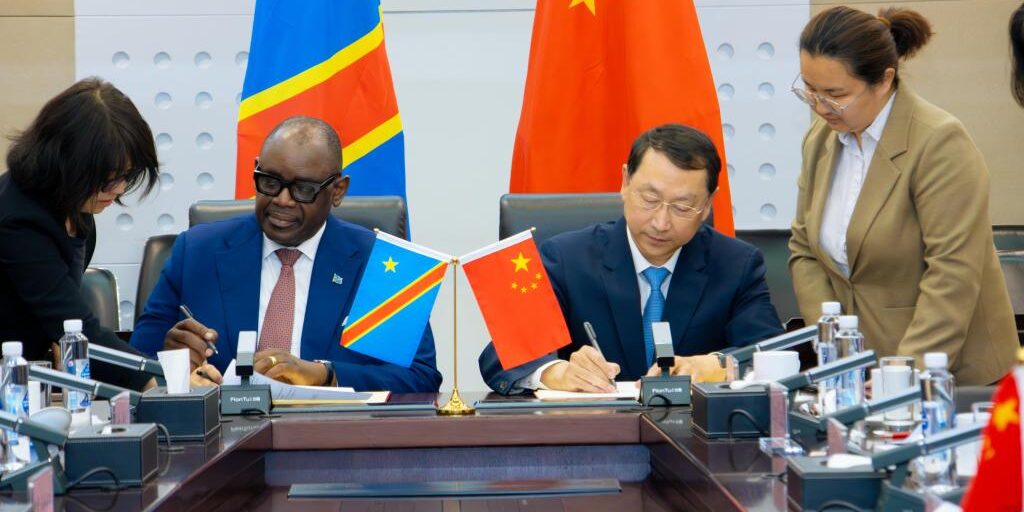
The Democratic Republic of Congo and China have advanced their strategic partnership by signing a Memorandum of Understanding (MoU) on geology and mineral resources in Beijing on March 26.
The agreement forms part of broader efforts to deepen economic cooperation and maximize value creation in the Congolese mining sector.
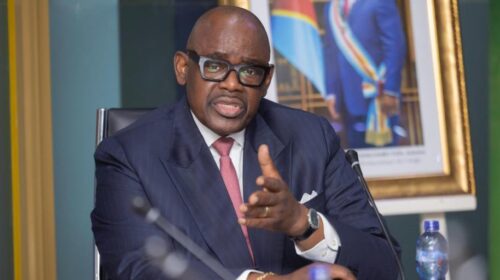
The MoU was signed by the Congolese Minister of Mines, Louis Watum Kabamba, and China’s Minister of Natural Resources, Guan Zhi’ou, in the presence of senior officials from both countries.
Participants included Ambassador François Balumuene and representatives from the national mining registry and geological survey authorities.
Agreement Builds on High-Level Political Commitments
The cooperation framework follows high-level engagements between President Félix Tshisekedi and President Xi Jinping in 2023. It reflects a shared objective to build a balanced and pragmatic partnership that delivers measurable economic benefits to both nations.
The Memorandum establishes guiding principles for collaboration, including:
- Continuous bilateral consultation
- Respect for Congolese mining and investment laws
- Protection of investor interests
- Promotion of local processing of mineral resources
- Transparent monitoring and implementation mechanisms
These provisions are designed to strengthen governance and ensure that mining development aligns with national industrialization goals.
Duty-Free Access to Boost Mining Competitiveness
A key provision of the agreement is that, beginning May 1, 2026, exports from the DRC to China will benefit from duty-free market access.
This measure is expected to:
- Improve the price competitiveness of Congolese mineral exports
- Expand trade volumes with China
- Support economic growth and foreign exchange earnings
Congolese authorities view the initiative as a step toward deeper integration into global mineral value chains, particularly by encouraging domestic beneficiation and processing rather than exporting raw materials.
MIFOR Iron Corridor Project at the Core of Cooperation
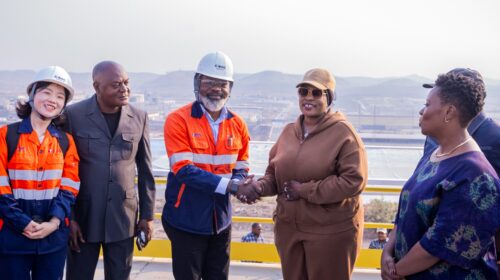
A central pillar of the agreement is the development of the Greater Eastern Iron Mines Project (MIFOR) a large-scale infrastructure and mining initiative designed to transform regional mineral logistics.
The project aims to establish a strategic transport corridor linking the Indian Ocean to the Atlantic Ocean, enabling more efficient export of mineral resources from central Africa.
Key project metrics include:
- Initial production: 50 million tonnes of iron ore per year
- Long-term capacity: Up to 300 million tonnes annually
- Estimated investment: Approximately $28.9 billion
Chinese companies are expected to play a significant role in providing financing, engineering, and industrial processing expertise, particularly in the development of large-scale beneficiation and smelting facilities.
Strategic Push for Industrialization
The agreement underscores the DRC’s broader ambition to transform its mining industry into a driver of industrial development and economic sovereignty.
Minister Louis Watum Kabamba is scheduled to participate in the International Forum of Mining Ministers in September, where he will engage with global policymakers and investors on strategies to expand value-added mineral production.
The initiative is being coordinated under the government led by Prime Minister Judith Suminwa Tuluka.
Through this partnership, the DRC is signaling a shift from a traditional resource-export model toward a more integrated industrial strategy focused on:
- Local mineral processing
- Infrastructure development
- Technology transfer
- Job creation
- Long-term economic resilience
Ultimately, Kinshasa aims to position the mining sector not only as a source of revenue, but as a cornerstone of sustainable industrial growth and improved living standards for its population.