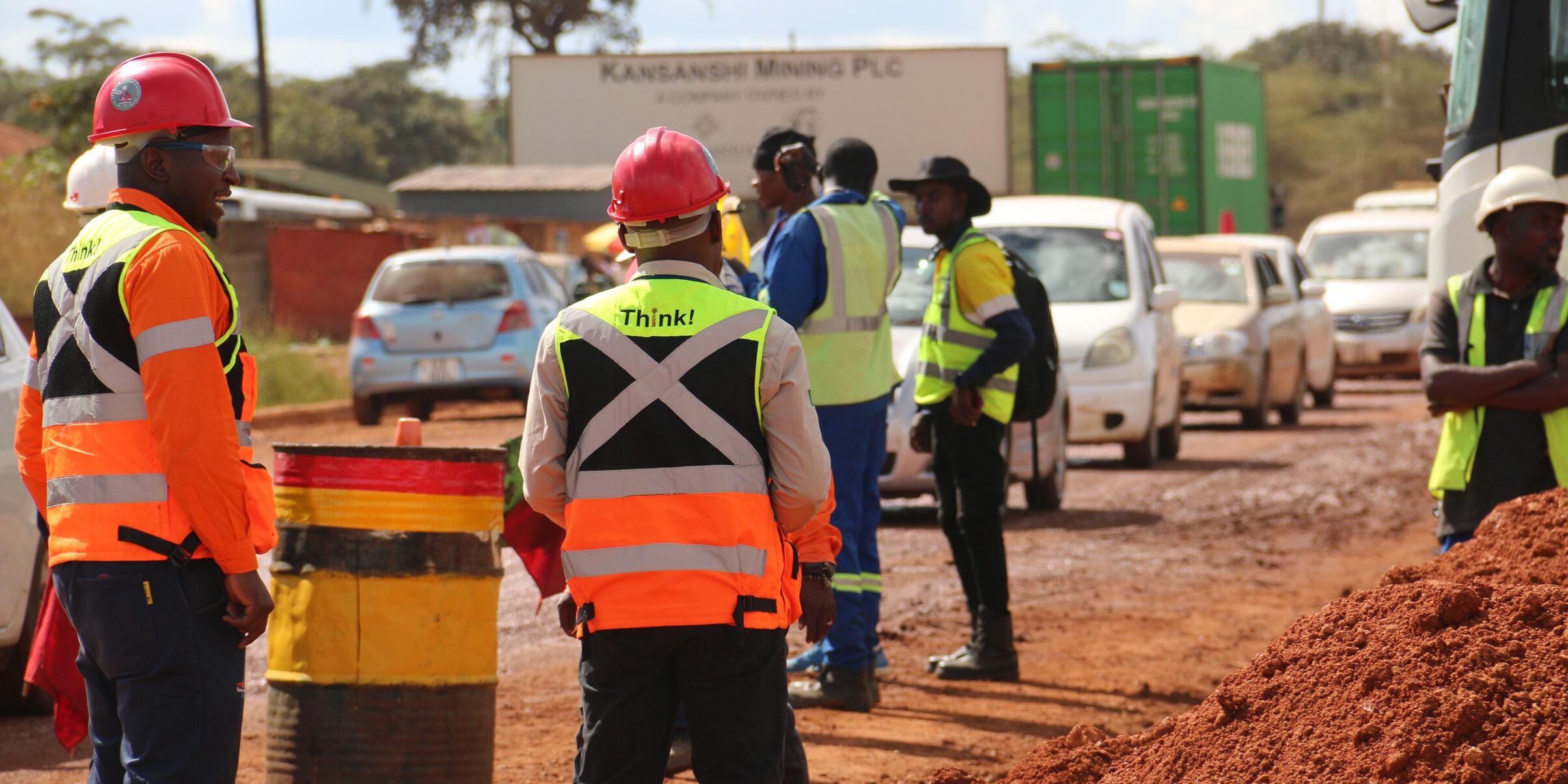
FQM Leads Solwezi’s Infrastructure Revolution with Mitech–Boom Gate Road Upgrade
Solwezi Rising: The Mitech–Boom Gate Road Upgrade and the New Face of Urban Growth
Over the past decade, Solwezi has undergone a steady transformation from a quiet provincial town into one of Zambia’s fastest-growing economic centres.
At the heart of this growth has been the sustained presence and investment of First Quantum Minerals (FQM), whose operations have increasingly extended beyond mining into infrastructure development that supports the town’s expansion.
As economic activity rises, so too does the demand for modern infrastructure capable of sustaining industry and a growing population.
FQM has positioned itself as a key partner, working alongside government and local authorities to address these needs.
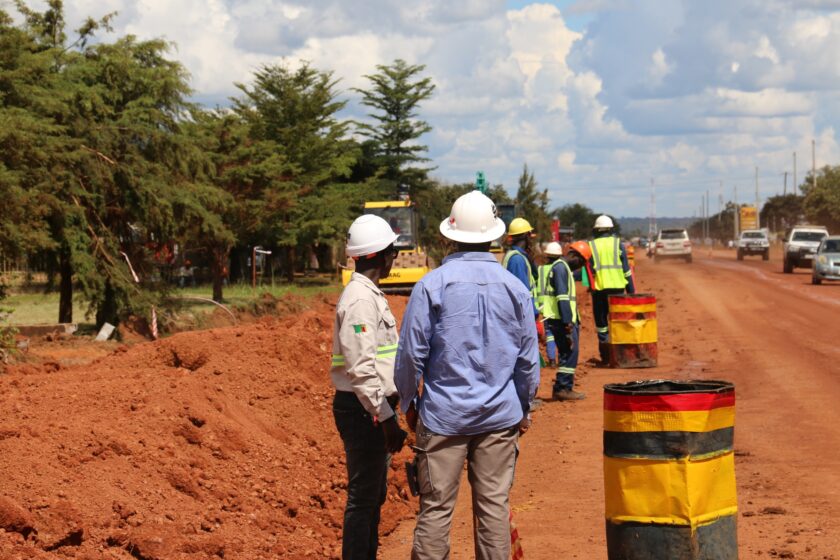
The most visible example is the Mitech–Boom Gate Road upgrade, a strategic project reshaping mobility, improving safety, and laying the foundation for long-term urban growth in Solwezi.
A Partnership Forged in Concrete
Implemented through Kansanshi Mining PLC, a subsidiary of FQM, the project represents a K104 million joint investment between the mining company and the Government of the Republic of Zambia.
Each party is contributing K52 million to transform a 4.91-kilometre (3.05-mile) stretch of road into a modern dual carriageway.
This collaboration highlights the power of public-private partnerships in delivering infrastructure that benefits both industry and community.
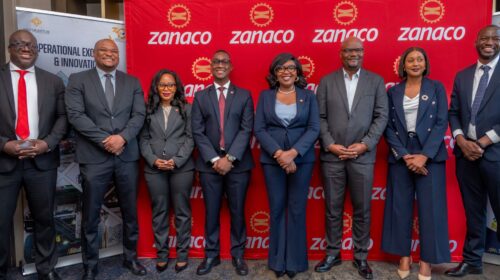
North-Western Province Minister Robert Lihefu welcomed the initiative:
“This event is a clear demonstration of the partnership that exists between the Government of the Republic of Zambia and the private sector.”
A Critical Corridor Under Pressure
The Mitech–Boom Gate Road has become a vital artery for Solwezi’s transport network, serving commuters, businesses, service vehicles, and heavy-duty mining logistics. But congestion, seasonal deterioration, and safety challenges have made an upgrade urgent.
The decision to reconstruct the road into a dual carriageway marks a shift from incremental maintenance to full-scale infrastructure planning.
Once complete, it will feature two lanes in each direction, improved drainage, reinforced structural layers, and formalised traffic management systems.
For residents, this means shorter travel times and safer journeys. For businesses, it means smoother logistics and reduced costs. For the mining sector, it ensures reliable transport capacity to sustain operations.
Engineering for Heavy-Duty Use
Operations Superintendent Site Services at Kansanshi Mining PLC, Leonard Kabwiku, explained the phased approach:
“We are widening the road first and then building it up in layers until we reach the underside of the surface. After that, the surfacing team will complete the final stage, followed by drainage works, finishing, and installation of signage.”
This layered construction ensures durability, while integrated drainage systems protect against seasonal rainfall.
Safety and sequencing remain central, given the need to manage traffic flows in a live community environment.
The engineering design mirrors standards used in other major infrastructure projects in Zambia, ensuring that Solwezi’s road network is built to withstand decades of use.
Safety and Community Interface
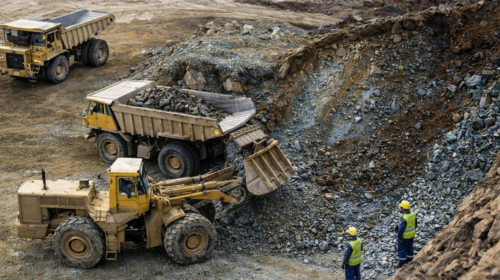
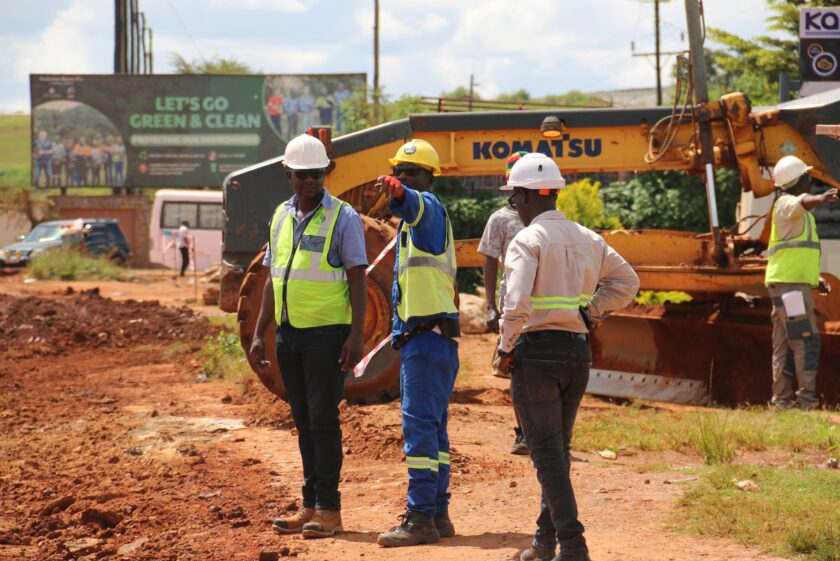
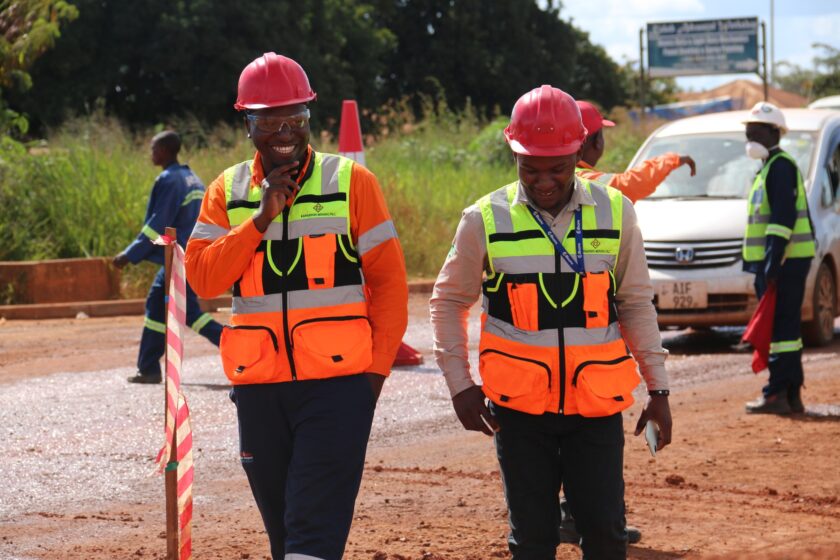
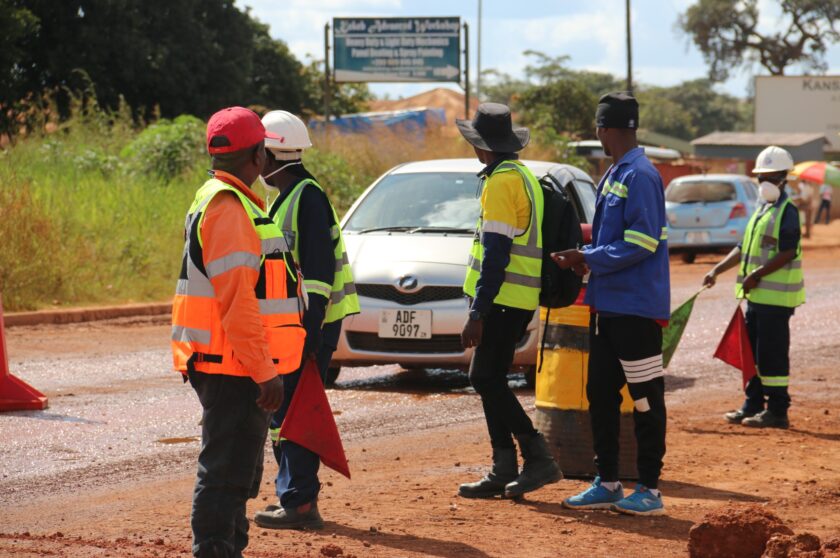
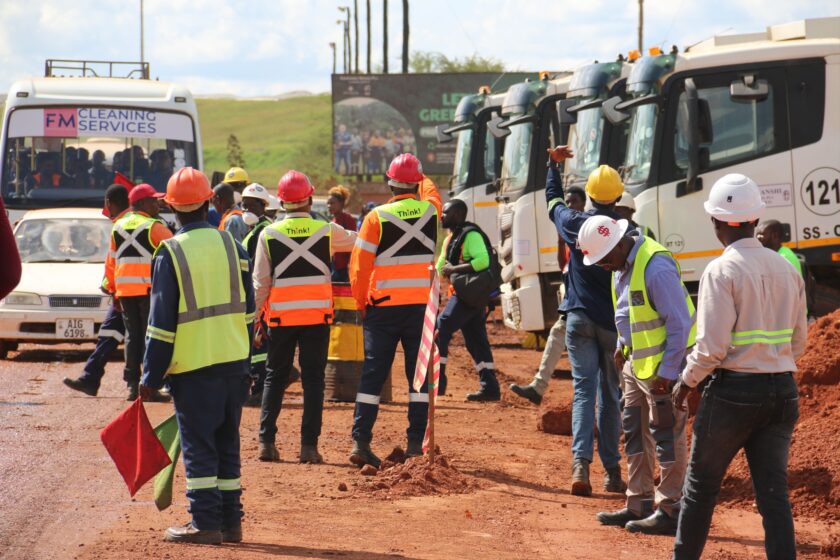
The project unfolds within an active urban setting, requiring careful coordination with residents. Heavy equipment is transported along a designated 16-kilometre haulage route, with strict safety protocols in place.
Kabwiku stressed:
“We do not compromise on safety. We are working in the community, and we expect the community to support us as we bring heavy equipment to the site.”
This emphasis reflects industry best practice, where community engagement and risk management are inseparable from engineering execution.
For Solwezi’s residents, the project is not just about a road it is about trust. Ensuring that construction integrates smoothly with daily life is critical to maintaining community support.
Local Participation and Economic Inclusion
A defining feature of the project is its emphasis on local participation. Up to eight Zambian subcontractors are engaged across disciplines such as earthworks, drainage, and finishing.
Kabwiku noted:
“This project is proudly Zambian the contractors are Zambian, the workforce is Zambian, and the road is being built by Zambians.”
This model spreads economic benefits across multiple firms and strengthens skills within Zambia’s construction sector.
It also ensures that expertise is retained locally, building capacity for future projects.
For young engineers and construction workers, the project is a training ground. For local businesses, it is an opportunity to grow.
For Solwezi, it is a chance to prove that development can be both inclusive and sustainable.
Quality Assurance: Built to Endure
Kansanshi Mining PLC Assistant General Manager Axel Kottgen underscored the importance of durability:
“Our standard here is the same as the smelter bypass. We’re talking about a stone-based dual carriageway with proper drainage, curbing, and a central divider made to last.”
This reflects a philosophy of long-term resilience, critical in a rapidly growing urban environment where industrial transport demands are high.
By setting high engineering standards, FQM and its partners are ensuring that Solwezi’s infrastructure can support growth for decades to come.
Government and Local Authority Perspectives
At the municipal level, Solwezi Mayor Remmy Kalepa reinforced community inclusion:
“We will work hand in hand to ensure that the people of Solwezi feel part and parcel of the development taking place in their district.”
This sentiment captures the essence of modern governance: development must be participatory, not imposed.
The government’s involvement in the 50:50 funding arrangement reflects a shared commitment to infrastructure development as a driver of regional growth.
Timeline and Delivery
The project is expected to be completed within 12 months, with initial stages focused on earthworks, widening, and foundation preparation.
Once finished, maintenance will be handed over to municipal authorities, embedding the road within Solwezi’s public infrastructure network.
The phased delivery approach ensures continuous progress while maintaining safety and quality standards throughout the construction cycle.
A Road Within a Larger Transformation
The Mitech–Boom Gate Road upgrade is part of a broader transformation sweeping across Solwezi.
Mining-led growth has created unprecedented demand for modern infrastructure systems roads, utilities, and public services all under pressure to adapt.
FQM’s role has expanded accordingly. Beyond mining, it has become a key infrastructure partner, investing in projects that support operational efficiency while uplifting communities.
This dual role operator and developer positions FQM as a central actor in shaping Solwezi’s future.
Infrastructure as a Driver of Urban Growth
As Solwezi continues its transition into a major economic hub, infrastructure will remain the backbone of its trajectory.
The 4.91 km Mitech–Boom Gate Road upgrade is more than a transport solution it is a symbol of partnership, resilience, and foresight.
Through collaboration between government, mining companies, contractors, and local authorities, Solwezi is building the foundation for a more connected and resilient urban environment.
At the centre of this transformation, First Quantum Minerals stands as both miner and builder, contributing to the long-term development of Solwezi and the wider North-Western Province.