
Copper Prices Slip Again as Mixed Performance Hits Key DRC Mineral Exports
Copper, cobalt, and gold prices show mixed trends as DRC export basket weakens amid global metals market correction
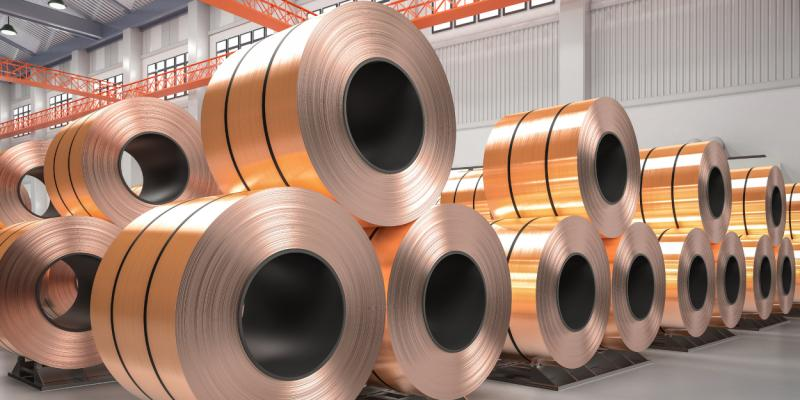
Copper, the Democratic Republic of Congo’s most important export commodity, is expected to extend its downward trend on international markets during the week of June 1–6, 2026, according to the latest official price bulletin for exported mineral products.
The benchmark copper price is set at $13,524 per tonne, down from $13,558 the previous week a decrease of $34. Although relatively modest, this marks a second consecutive weekly decline and reinforces a broader correction across several key commodities.
Copper remains a critical global industrial metal, widely used in electricity networks, construction, renewable energy systems, and electric vehicle manufacturing. Its price is often viewed as an indicator of global economic momentum.
Broad weakness across several strategic minerals
The downward pressure is not limited to copper. Several other minerals in the DRC export basket also recorded declines.
Gold is expected to fall slightly to $147.63 per gram, down from $149.49 the previous week, reflecting softer, precious metals demand.
Nickel shows one of the sharpest declines, dropping from $17,152 to $16,395 per tonne a reduction of $757 highlighting volatility in industrial metals markets.
Wolframite also weakens, falling to $77,742 per tonne from $78,650, continuing a subdued trend in certain specialty minerals.
These corrections follow months of strong performance across industrial commodities, driven by expectations of long-term demand from the energy transition, supply constraints, and sustained industrial consumption, particularly in Asia.
Select minerals show resilience
Despite the broader decline, some commodities in the DRC’s export mix are showing resilience or modest gains.
Tin recorded the strongest weekly increase, rising from $50,223 to $53,440 per tonne an increase of $3,217 supported by steady industrial demand.
Cobalt, a critical battery metal in which the DRC is the world’s dominant producer, posted a marginal increase to $55,608 per tonne from $55,600, indicating relative price stability in a volatile market.
Zinc also edged higher to $3,539 per tonne, up slightly from $3,536, while silver rose from $2.40 to $2.55 per gram.
Importance for the DRC economy
For the Democratic Republic of the Congo, Africa’s leading copper producer and the world’s top supplier of cobalt, fluctuations in commodity prices have direct implications for national revenue, export earnings, and fiscal stability.
Copper alone accounts for the largest share of the country’s mining exports. Even small price movements can significantly affect foreign exchange inflows and government budget projections.
While the current decline is relatively mild, it reflects a broader phase of market consolidation following periods of elevated prices across most base and precious metals.
Market outlook: correction, not reversal
Analysts suggest that the recent weakness does not necessarily signal a structural downturn.
Long-term fundamentals for copper and other energy-transition metals remain strong, driven by rising demand from electrification, renewable energy infrastructure, and electric mobility.
However, short-term price movements continue to be influenced by global macroeconomic conditions, including interest rate policies in major economies and fluctuating industrial demand, particularly from China the world’s largest metals consumer.
Strategic positioning amid volatility
The DRC remains strategically positioned within global critical mineral supply chains due to its vast reserves of copper, cobalt, and other essential resources.
However, ongoing price volatility underscores the importance of strengthening domestic value addition and expanding local processing capacity.
Reducing reliance on raw mineral exports could help cushion the economy against external price shocks and improve long-term revenue stability, even as global demand for transition metals continues to grow.