

Bank of Zambia Introduces Phased Currency Regulations to Reinforce Kwacha Stability
Zambia Strengthens Kwacha with Phased Currency Regulations
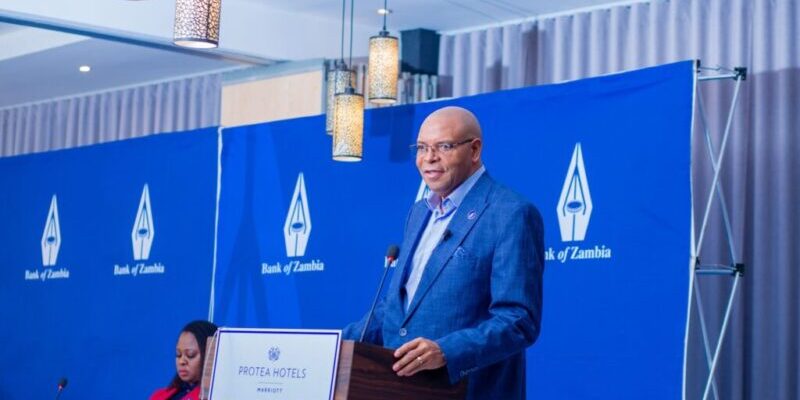
Bank of Zambia Governor Dr. Denny H. Kalyalya has reaffirmed the central bank’s commitment to reinforcing the Kwacha as Zambia’s sole legal tender, announcing that new Currency Regulations will be implemented in a phased and simplified manner.
Speaking at the final round of consultative stakeholder engagements in Ndola under the Public Private Dialogue Forum (PPDF), Dr. Kalyalya highlighted the risks of dollarisation, warning that excessive reliance on foreign currencies undermines the Kwacha, limits the effectiveness of monetary policy, and exposes banks and borrowers to significant financial risks.
“These new regulations are designed to reinforce the Kwacha’s role as the unit of measure, medium of exchange, and store of value,” he said, noting that the directives align with the Bank of Zambia Act (2022).
Dr. Kalyalya acknowledged concerns from stakeholders in sectors including mining, agriculture, real estate, tourism, and manufacturing.
Issues raised included fears of indirect exchange controls, heightened exchange rate risk, supply chain disruptions, and implementation challenges amid high inflation and tight liquidity. Stakeholders also requested clear exemption criteria and a phased enforcement approach.
In response, Dr. Kalyalya emphasized that the Bank had carefully weighed these concerns against macroeconomic imperatives.
“The regulations will be rolled out gradually to maintain investor and business confidence, while exemptions have been designed to preserve market stability and prevent economic disruption,” he explained.
The new directives build on earlier reforms, including the Electronic Balance of Payments System (2019), the Export Proceeds Tracking Framework (2024), and updated Foreign Exchange Market Guidelines.
These measures are part of broader efforts to strengthen Zambia’s foreign exchange market, supported by enhanced reserves and hedging instruments such as Non-Deliverable Forwards.
Dr. Kalyalya assured stakeholders that the Bank will continuously review the regulations and address implementation challenges.
“Your support and pragmatic participation are deeply appreciated as we work towards a stable and resilient financial future for Zambia,” he concluded.
Role of the Public Private Dialogue Forum (PPDF)
Speaking at the engagement, PPDF Secretariat representative Kanja Ilunga said the Forum, established in April 2022 by President Hakainde Hichilema, provides a neutral platform for evidence-based dialogue between government and the private sector.
“The PPDF ensures that reforms reflect both government priorities and private sector realities,” Ilunga said, adding that the Forum has helped resolve approximately 93 policy, taxation, and regulatory issues since its inception.
The Forum operates through Technical Working Groups (TWGs) across sectors such as finance, mining, agriculture, manufacturing, energy, tourism, ICT, and soon health, each co-chaired by public and private sector representatives.
The Secretariat consolidates submissions, benchmarks proposals against global best practices, and monitors reform progress.
Ilunga stressed that clear and predictable currency directives are essential for export earnings, import costs, and SME competitiveness.
“This engagement here in the Copperbelt is exactly the type of dialogue we aim to strengthen,” he said.
The PPDF emphasises the mutual benefits of dialogue: providing the government with structured private sector input, offering businesses a credible channel to raise concerns, and boosting investor confidence through predictability.
Closing the session, Ilunga urged stakeholders to provide candid feedback:
“The Copperbelt is a critical hub for Zambia’s economy, and your input on these directives is not just welcome—it is vital. Together, we can build a competitive and resilient Zambian economy.”