
Copper and Cobalt Outlook Brightens for the DRC as Supply Risks Shape 2026 Markets
Copper Hits Record Highs and Cobalt Surges as DRC Supply Decisions Shape 2026 Price Outlook
Amid operational disruptions and policy-driven supply constraints, market specialists expect the balance between global supply and demand to remain the key driver of copper and cobalt price trends in 2026.
These developments are being closely monitored by the Democratic Republic of Congo (DRC), one of the world’s leading producers of both metals.
Copper prices reached new all-time highs at the start of 2026, extending a strong upward trajectory that began in 2025. While cobalt has not surpassed its historical peak, it has nonetheless recorded a sharp price increase in recent months.
Supported by resilient demand and persistent supply risks, the price outlook for both metals remains favourable for the DRC, which is among the world’s largest exporters.
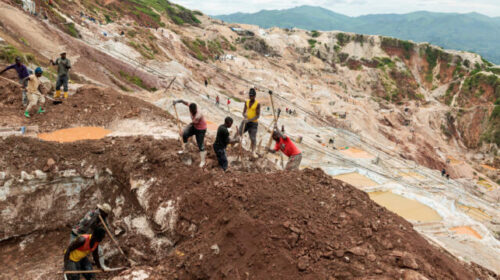
The country accounts for more than 70% of global cobalt production and is the second-largest producer of copper. Together, copper and cobalt represent more than 90% of the DRC’s annual export revenues, according to the Central Bank of Congo.
Diverging Price Drivers
Both metals posted strong gains in 2025, albeit for different reasons. Copper prices rose by more than 40%, while cobalt prices more than doubled year-on-year, exceeding $56,000 per tonne in January 2026.
The surge in cobalt prices followed several months of export restrictions imposed by the Congolese authorities. In February 2025, the DRC suspended cobalt exports in an effort to curb a global surplus that had depressed prices.
In previous years, rapid production growth—driven largely by Indonesia and China’s CMOC operations in the DRC—had flooded the market, weighing heavily on prices for the battery metal.
As a result, cobalt prices fell from a record high of around $82,000 per tonne in 2022 to a historic low of approximately $20,000 per tonne by mid-February 2025, shortly before the export ban was introduced.
Export Quotas and Market Impact
In October 2025, the DRC lifted the export suspension and replaced it with a quota-based system. For 2026 and 2027, annual export quotas have been set at 96,600 tonnes—below the country’s cobalt export volumes in 2024.
Initial shipments under the new regime are expected to reach China, the main destination for Congolese cobalt, by the end of the first quarter of 2026.
Cobalt price dynamics in 2026 are therefore likely to remain closely tied to administrative processes and potential adjustments to export quotas.
CMOC has maintained its 2026 production forecast of between 100,000 and 120,000 tonnes, following a record output of 117,549 tonnes in 2025, although its authorised export quota for 2026 currently stands at 31,200 tonnes.
According to analysts at price reporting agency Fastmarkets, the arrival of new volumes should ease market tightness and push prices lower from current levels, even as they forecast a global supply deficit of about 10,700 tonnes this year.
Copper: Supply Disruptions and Strong Demand
While the DRC did not impose restrictions on copper exports in 2025, it has nonetheless contributed indirectly to rising prices.
A seismic event in May 2025 at the Kamoa-Kakula complex—the country’s largest copper mine—raised concerns over supply availability.
Operated by Ivanhoe Mines, the complex produced 388,838 tonnes in 2025, well below the initial target of at least 520,000 tonnes. For 2026, Ivanhoe projects maximum output of around 420,000 tonnes.
Elsewhere, Indonesia’s Grasberg mine, the world’s second-largest copper operation, also faced disruptions that led to downward revisions in production forecasts.
These supply-side pressures have been compounded by market concerns over potential US tariffs on refined copper. As a result, the three-month benchmark copper contract on the London Metal Exchange climbed to more than $13,400 per tonne in mid-January 2026, an unprecedented level.
Demand fundamentals remain robust, driven by the rapid expansion of artificial intelligence infrastructure—particularly data centres—and the accelerating deployment of renewable energy technologies.
Cautious Forecasts
Despite these bullish factors, major forecasters remain cautious. In early January 2026, BMI, a subsidiary of Fitch Solutions, projected an average copper price of $11,000 per tonne for the year, broadly in line with Goldman Sachs’ December forecast of between $10,000 and $11,000 per tonne.
While BMI aligns with the International Copper Study Group (ICSG) in expecting a supply deficit in 2026, Goldman Sachs anticipates a broadly balanced market.
“Although our much more modest surplus of 160,000 tonnes in 2026 brings the market closer to equilibrium, this means we do not anticipate a shortage in the global copper market in the near future,” said Eoin Dinsmore, an analyst at Goldman Sachs.
Overall, while the DRC exerts significant influence over cobalt prices through policy decisions, copper prices remain more exposed to global supply disruptions and external market forces.
In both cases, export volumes in 2026 will be critical in determining the country’s export revenues.
According to figures from the Ministry of Mines, Congolese copper exports fell by 17% year-on-year during the first nine months of 2025, underscoring the importance of production and logistics performance in the year ahead.