

DRC Aims to Boost Local Cobalt Refining by Targeting Fairer Prices and Long-Term Market Stability
Congo Eyes Cobalt Price Rebound to Drive Local Refining, Reduce China’s Dominance
The Democratic Republic of Congo (DRC) is pushing for a sustainable cobalt price to encourage domestic processing, as the government charts its course following a suspension of cobalt exports.
The move, part of a broader strategy to stabilize global markets and attract local investment, comes amid shifting dynamics in the critical battery metal industry.
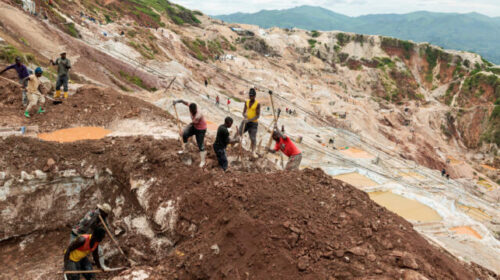
Congo, responsible for nearly 75% of the world’s cobalt supply, first halted exports on February 22 for four months.
In June, the government extended the ban by another three months. This decision followed a prolonged price slump driven by surging production, particularly from two major mines operated by China’s CMOC Group.
“No one can invest in a refinery in the country because the price was not sustainable,” said Guy-Robert Lukama, chairman of state-owned mining company Gécamines, during a recent discussion hosted by the Center for Strategic and International Studies in Washington, D.C.
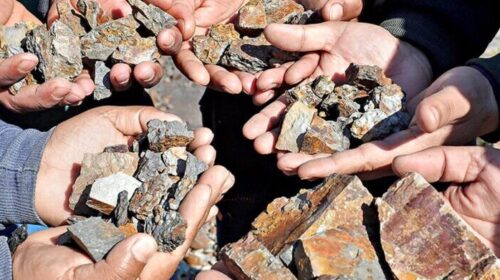
Most of Congo’s cobalt is exported as cobalt hydroxide — an intermediate product later refined into battery-grade material, primarily in China.
The export suspension was enacted shortly after benchmark cobalt prices dropped to near-record lows below $10 per pound.
Since then, prices have rebounded sharply, with cobalt hydroxide prices more than doubling and benchmark cobalt increasing nearly 60%, according to data from Fastmarkets.
While Congo does not seek a return to the extreme highs of over $40 per pound seen in 2018 and 2022, Lukama emphasized the government’s responsibility to stabilize the market.
He attributed the recent volatility to “totally insane” growth in supply, which resulted in more than a year’s worth of unsold inventory accumulating outside Congo.
The pressure on supply chains is mounting. In June, CMOC’s trading arm declared force majeure on cobalt hydroxide deliveries, citing constraints from the ongoing ban.
Meanwhile, miners continue to export copper — which is often mined alongside cobalt — while cobalt is being stockpiled.
Chinese imports of cobalt intermediates dropped more than 60% in June compared to May, marking the first significant monthly decline since the ban was implemented, according to recent customs data.
Aside from CMOC, other major cobalt producers operating in Congo include Glencore Plc and Eurasian Resources Group, backed by Kazakhstan. Gécamines holds minority stakes in joint ventures with all three companies.
The export ban comes at a pivotal time for Congo, which is strengthening ties with the United States to attract more American investment in critical minerals such as cobalt, copper, lithium, and tantalum.
The initiative aligns with broader efforts by the U.S. to reduce reliance on China for key components in electric vehicle and energy storage technologies.
“We want cobalt to be available for everyone, not just controlled by one jurisdiction,” Lukama said.
Looking ahead, Congo’s government is considering longer-term market management tools, including potential export quotas after the ban is lifted.
Such measures aim to support local refining, stabilize global supply, and maintain fair prices.
“We are very pragmatic about our goals,” Lukama added, suggesting that carefully designed export controls “could make sense.”
However, analysts caution that excessive restrictions and rapid price increases could accelerate a shift toward cobalt-free battery technologies — particularly in the electric vehicle industry, which is the single largest consumer of the metal.