
DRC Governor Uncovers 1,600 Illegal Mining Operations in South Kivu
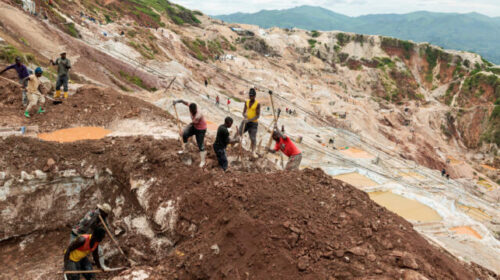
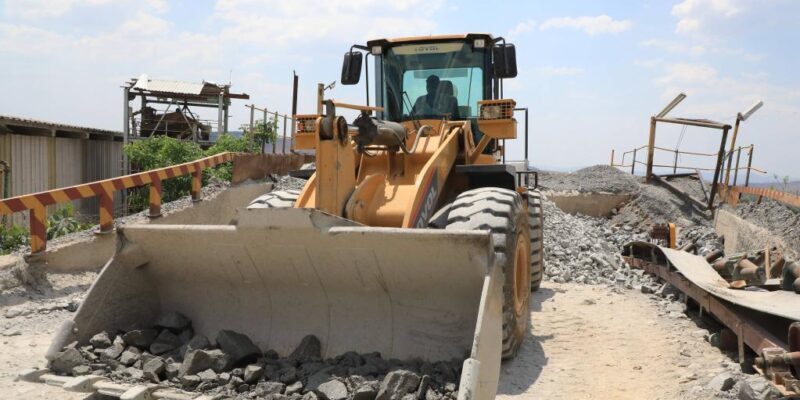
Jean-Jacques Purusi Sadiki, Governor of South Kivu, revealed that at least 1,600 companies are illegally mining minerals in eastern Democratic Republic of Congo (DRC).
He made the disclosure on April 2, 2025, during a hearing before the French National Assembly’s Foreign Affairs Committee focused on regional security and economic issues.
After taking office in June 2024, Sadiki launched a sweeping reform of the province’s mining sector. A month later, he suspended all mining activities to identify unauthorized operators.
“We expected 400 companies to come forward, but 1,600 appeared—many of them active for 8 to 10 years without permits, taxes, or legal registration,” he stated.
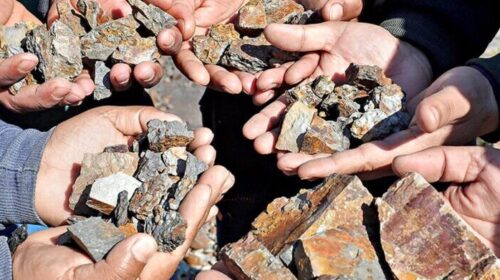
According to Sadiki, most of these companies are Chinese-owned and involved in illegal extraction of gold, coltan, cassiterite, copper, and diamonds.
He and UN experts assert that these operations form part of a larger smuggling network that benefits Rwanda, which serves as a gateway for multinationals due to its advanced infrastructure and logistics.
This setup enables companies to bypass the DRC’s fragmented system and funnel minerals through Rwanda.
Governor Sadiki accused smugglers of exporting roughly 750,000 kilograms of gold every six months for refining in Rwanda. “Refineries have been set up right on the border,” he noted.
On March 17, 2025, the European Union sanctioned Rwanda’s Gasabo Gold Refinery for processing gold illegally sourced from the DRC. Kigali denies the allegations but has failed to provide documentation verifying the origin of its minerals.
Sadiki said most of the smuggled gold ends up in the Middle East—67% goes to Dubai, the UAE, and Saudi Arabia. Less than 2% is exported to Europe, with the remainder going to China.
He contends that the ongoing conflict in eastern DRC is economically motivated, with Rwanda allegedly seeking territorial control, commercial influence, and mineral dominance. He claimed the M23 rebels, backed by Rwanda, often advance in alignment with key mining site locations.
Rwanda maintains it has acted only in self-defense to protect its sovereignty and counter the threat posed by the Democratic Forces for the Liberation of Rwanda (FDLR), a militia that took refuge in the DRC following the 1994 genocide.
To restore peace, Governor Sadiki advocates for a “mining for peace, security, and development” initiative. This would encourage greater participation of European and American companies in the DRC’s mining sector, aiming to displace illicit networks and reduce the influence of armed groups.
Both President Félix-Antoine Tshisekedi and Governor Sadiki believe that increased Western involvement could help stabilize the region. Negotiations are currently underway between Kinshasa and Washington for a new mineral cooperation agreement.
Still, Sadiki’s early months in office have highlighted internal obstacles. The country’s mining sector is plagued by corruption and a burdensome tax system that includes over 1,400 different levies, 147 of which are considered unnecessary.
Despite these challenges, Sadiki claims reforms have already increased provincial mining revenues from $500,000 to $1.75 million within a single month.