
DRC Govt Defines 2026 Strategic Roadmap to Modernize the Mining Sector
DRC Mining Sector Reform: Government Sets 2026 Priorities and Accelerates Digital Transformation
The Minister of Mines, Louis Watum, chaired a strategic planning meeting this week with Directors General of public services and agencies operating under his ministry, in the presence of the Secretary General for Mines.
The meeting aimed to define priority actions for 2026 to revitalize the mining sector—one of the main pillars of the Congolese economy, yet one that continues to face significant structural challenges.
According to a statement from the Ministry of Mines, the discussions focused on identifying and presenting performance indicators that will be used to assess the effectiveness of managers across the sector.
Minister Watum emphasized the need for closer coordination among departments and agencies in order to deliver actions that are both “concerted” and “measurable.”
Several strategic orientations were adopted, including the development of an operational roadmap aligned with the Government’s overall action plan.
This approach follows guidance issued by Prime Minister Judith Suminwa during the 72nd meeting of the Council of Ministers held last Friday, where she reaffirmed that the Government Action Program serves as the sole reference framework for all public policy initiatives.
Digital transformation featured prominently in the meeting’s agenda, being identified as a key driver of modernization, transparency, and operational efficiency. Minister Watum called for accelerated implementation efforts to improve sector governance and profitability.
In this context, a major digital project known as the “Data Warehouse” was presented, with deployment expected in the coming days. The project is designed to centralize, analyze, and leverage mining sector data in a transparent and efficient manner.
Despite its exceptional geological potential, the Democratic Republic of the Congo continues to face persistent challenges in the mining sector, particularly in the management and transparency of mining titles.
In 2025, a comprehensive review of the mining registry enabled the Congolese state to recover 594 mining and quarrying titles. These titles correspond to 37,253 mining blocks—approximately 31,648 square kilometers—returned to state control for management in accordance with national legislation.
In addition, 210 mining rights previously classified under prolonged force majeure were regularized. Covering 18,709 mining areas, these rights were reclassified as active assets, thereby restoring the fiscal, social, and technical obligations of their holders.
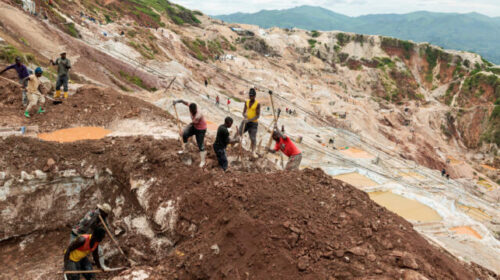
Other major obstacles affecting the sector include weak traceability of financial flows, unregulated artisanal mining, recurring conflicts between local communities and mining companies, and insufficient local processing of mineral resources.
In response to these challenges, the Minister of Mines recently adopted a firm measure by suspending artisanal mining activities. As stated in the official decision, the minister has “provisionally and preventively suspended the activities of all entities involved in the processing of mineral substances derived from artisanal mining in the copper-cobalt value chain, across the entire territory of the Democratic Republic of the Congo.” This decision is primarily intended to curb the encroachment of artisanal miners into industrial mining concessions.
The mining sector accounts for more than 90 percent of the country’s exports and represents a substantial share of public revenues. Its modernization is therefore a critical lever for economic growth, job creation, and poverty reduction in the Democratic Republic of the Congo.