
DRC Showcases Strategy for Industrialisation and Value Addition at PDAC 2026
DRC Promotes Industrial Mining Vision and $29 Billion Iron Corridor at PDAC 2026
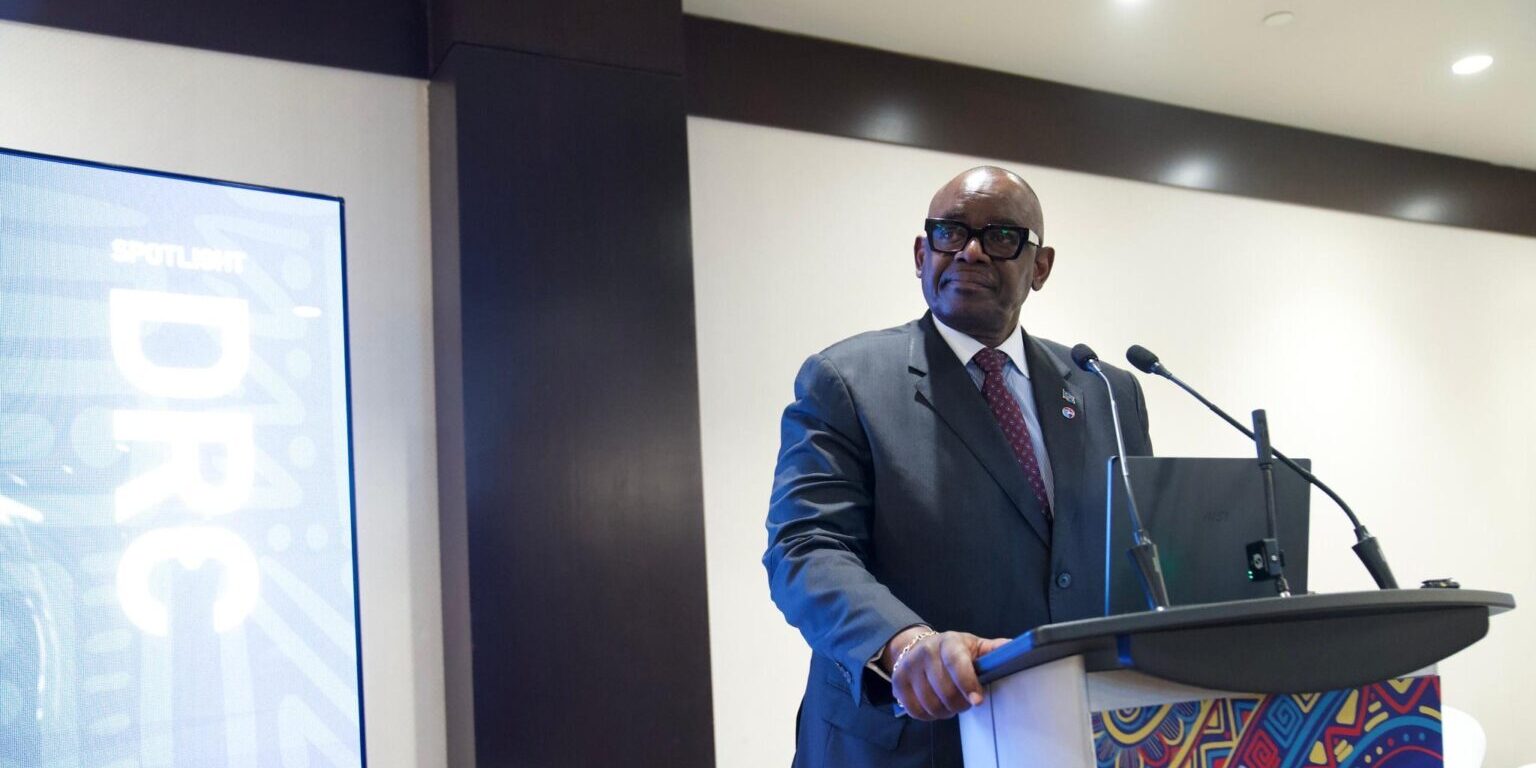
The Democratic Republic of the Congo used the global mining forum Prospectors & Developers Association of Canada Convention 2026 (PDAC 2026) in Toronto to highlight its strategy of transforming mineral wealth into a catalyst for industrial development and economic sovereignty.
During the “Spotlight on DRC” session, the Congolese delegation led by Minister of Mines Louis Watum Kabamba outlined the government’s ambition to move beyond raw mineral exports and accelerate local processing, industrialisation and value creation within the country.
Strong Production Performance
Despite ongoing security challenges in eastern regions, the DRC’s mining sector continues to deliver strong production results.
The country now produces more than 3 million tonnes of copper annually, reinforcing its position as one of the world’s leading producers of the metal, which is essential for global electrification and renewable energy infrastructure.
In the cobalt market a critical mineral for electric vehicle batteries prices have surged from around US$20,000 per tonne to nearly US$55,000 per tonne, reflecting strong global demand for energy transition materials.
Expanding into New Strategic Minerals
The government also highlighted progress in diversifying the country’s mineral output. Initial lithium production in Tanganyika province is expected to begin in the second quarter of the year, potentially positioning the DRC as an emerging supplier of another key mineral for battery manufacturing.
In addition, authorities announced plans to establish a gold refinery, aimed at strengthening local processing capacity and improving traceability across the gold value chain.
Major Infrastructure and Mining Investments
A central project presented during the conference was the MIFOR (Iron Mines of the Great East) initiative, an integrated mining and logistics corridor valued at approximately US$29 billion.
The project is designed to develop large-scale iron ore deposits alongside the necessary transport and infrastructure networks required to support long-term production and export capacity.
Policy Reforms and Investment Climate
The government emphasised that these initiatives align with the economic vision of President Félix Tshisekedi and are being coordinated by Prime Minister Judith Suminwa.
Authorities highlighted ongoing reforms aimed at improving governance, strengthening transparency, stabilising fiscal policies and enhancing investment security within the mining sector.
A key component of these reforms includes the digitalisation of the mining cadastre, which is expected to streamline licensing procedures and improve regulatory oversight.
The development of special economic zones (SEZs) is also being promoted as a mechanism to attract industrial investors and support downstream mineral processing activities.
Positioning the DRC in the Energy Transition
With its vast reserves of copper, cobalt, lithium and other strategic minerals, the DRC aims to remain a pivotal player in the global energy transition.
However, the government’s current strategy focuses increasingly on capturing greater value from its resources through domestic processing, industrial development and job creation.
For Congolese authorities, the future of the mining sector is no longer defined solely by extraction volumes but by its capacity to drive industrial transformation and long-term national development.