

Glencore Reaffirms Commitment to Human Rights and Tackles Child Labor in the DRC
In a press release issued earlier this week, Anglo-Swiss commodities giant Glencore reaffirmed its commitment to the United Nations Guiding Principles on Business and Human Rights.
The company also reiterated its support for the Universal Declaration of Human Rights and the International Labour Organization’s (ILO) Declaration on Fundamental Principles and Rights at Work.
This commitment is reflected in Glencore’s community initiatives in Kolwezi, located in Lualaba Province, Democratic Republic of Congo (DRC), where the company is working to improve access to quality education for local children.
“Glencore takes a zero-tolerance approach to child labor, forced, compulsory or bonded labor, human trafficking, and all other forms of modern slavery.
We actively work to identify and eliminate these practices from our supply chain,” the company stated in a release.
Glencore owns two major copper and cobalt operations in the DRC—Kamoto Copper Company (KCC) and Mutanda Mining (MUMI).
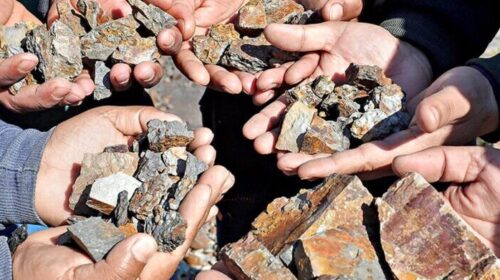
The company operates in a region where artisanal and small-scale mining (ASM) is often linked to child labor concerns.
“While KCC and MUMI do not process, purchase, or trade minerals from artisanal or small-scale mining, we recognize that ASM can play a constructive and sustainable role in the DRC’s economy if conducted responsibly and transparently,” the statement added.
In partnership with various organizations, Glencore is ramping up efforts to address the root socio-economic drivers of child labor through targeted education programs and sustainable livelihood initiatives.
Mark Davis, Head of Glencore Copper Africa, acknowledged the severity of the issue: “Child labor is a widespread and serious problem in the DRC.
Glencore is committed to being part of the solution by investing in community development and supporting broader industry initiatives to tackle its causes.”
According to its press release, Glencore has contributed to the construction and renovation of schools, donated educational materials, and supported teacher training programs.
During school holidays, the company organizes summer camps in Lualaba Province, offering children school supplies, meals, recreational activities, and educational kits.
In addition to education, Glencore backs business development programs aimed at providing alternative livelihoods, such as farming, tailoring, livestock management, and carpentry.
These efforts are carried out in collaboration with local NGOs and faith-based organizations to help prevent children from engaging in ASM activities.
“By addressing the underlying socio-economic factors and expanding opportunities for education and skill-building, we aim to help host communities diversify their local economies,” Davis added.
Glencore is also a founding member of the Fair Cobalt Alliance (FCA), an initiative that unites industry stakeholders to promote responsible cobalt production.
The FCA supports the professionalization of ASM site management and actively works to eliminate child labor from the supply chain.
Through these efforts, Glencore continues to demonstrate a commitment not only to ethical business practices, but also to the long-term development and well-being of the communities in which it operates.