

Global Cobalt Market Jolted by Congo’s Surprise Export Ban Extension
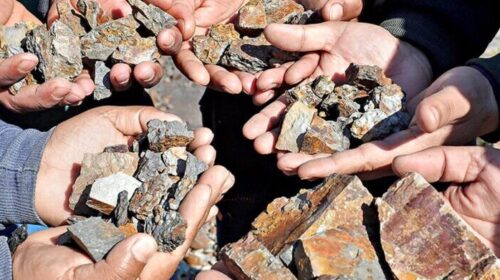
Cobalt futures in China soared on Monday to levels not seen since mid-March, following the Democratic Republic of Congo’s decision to extend its ban on cobalt concentrate exports.
Initially implemented in February, the ban has now been prolonged by another three months, significantly disrupting global supply.
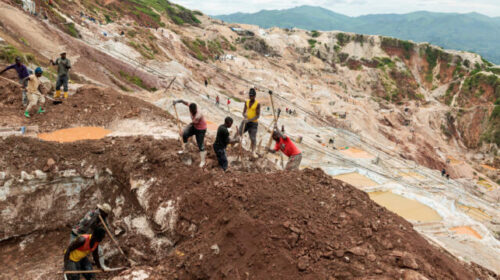
As the source of over 80% of the world’s cobalt—a key component in electric vehicle (EV) batteries—the DRC’s move is expected to remove more than 100,000 tonnes of cobalt from the global market over a seven-month span, according to industry estimates.
Futures contracts for cobalt on China’s Wuxi Stainless Steel Exchange rose more than 9% to 254 yuan ($35.34) per kilogram, marking the highest price since March 14, according to Reuters.
Despite the tightening supply, CMOC Group (SHA: 603993), a leading cobalt producer, stated that operations at its Tenke Fungurume and Kisanfu mines in Congo would not be significantly affected by the extended ban.
The export restrictions have also rippled through financial markets. Earlier in June, investment firm Cobalt Holdings abandoned plans for an initial public offering on the London Stock Exchange. The listing would have been the largest mining IPO in London since 2022.
Cobalt Holdings had planned to raise up to $230 million, primarily to purchase 6,000 tonnes of discounted cobalt from Glencore (LON: GLEN), the world’s second-largest cobalt producer.
However, Glencore recently declared force majeure on some cobalt deliveries following the export ban, further complicating market dynamics.
Earlier this year, cobalt prices had plummeted to record lows due to oversupply and sluggish demand from the EV sector, which has surpassed aerospace and aviation as the leading consumer of cobalt.
In January, the average price of cobalt sulphate used in Chinese battery production dropped to just $3,556 per tonne.
Prices rebounded sharply following the Congolese export ban, climbing 80% to average $6,394 per tonne by May.
While this marks a significant recovery, prices remain far below the 2022 peak of $19,000 per tonne.
Meanwhile, Indonesia is ramping up cobalt production as a byproduct of its booming nickel exports. The DRC is reportedly in discussions with Indonesia to coordinate cobalt supply strategies, including the possible implementation of export quotas.
As the world scrambles to secure battery materials for the energy transition, the DRC’s export policy has once again demonstrated its outsized influence on the cobalt market—and the ripple effects are being felt from commodities exchanges to corporate boardrooms.