

Ivanhoe Mines Reports 112,009 Tonnes of Copper Produced by Kamoa-Kakula in Q2 2025
Vancouver, Canada – July 8, 2025 — Ivanhoe Mines (TSX: IVN, OTCQX: IVPAF) has announced robust second-quarter 2025 production results and provided updates on key project developments at its flagship operations: Kamoa-Kakula, Kipushi, and Platreef.
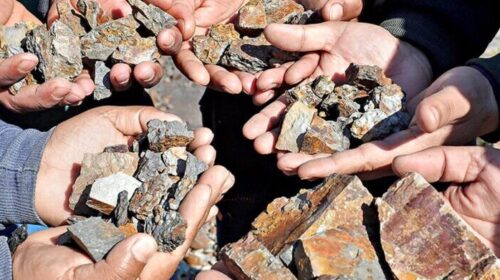
During Q2 2025, the Kamoa-Kakula Phase 1, 2, and 3 concentrators processed a combined 3.62 million tonnes of ore, producing 112,009 tonnes of copper.
This marks an 11% increase compared to the same period in 2024. Copper production for the first half of 2025 now totals 245,127 tonnes.
Phase 1 and 2 concentrators are currently operating at around 85% capacity, with approximately 45% of the feed sourced from the western section of the Kakula Mine.
In June alone, 28,147 tonnes of copper were produced, with about 15,000 tonnes attributed to Phases 1 and 2, processed at an average grade of 3.3% copper and 79% recovery.
Mining operations on the western side of the Kakula Mine resumed on June 7, with rates reaching 300,000 tonnes per month by mid-June.
Ore grades from these areas range between 3% and 4%, with plans to reach higher-grade zones—approximately 5% copper—by the end of the year.
Underground development has begun on a new high-grade mining area on the far eastern side of Kakula.
Access drives from existing infrastructure are under construction, and ore production from this zone is expected by Q2 2026.
The Phase 3 concentrator set a quarterly milling record, processing 1.63 million tonnes of ore and producing 40,608 tonnes of copper.
This output exceeds its 5.0 million tonne annual design capacity by 30%, with an average feed grade of 2.92% copper.
Going forward, the feed grade is expected to average 2.5% as the cut-off grade is reduced to support higher throughput.
Ore from the Kamoa and Kansoko mines will continue feeding Phase 3, with up to 100,000 tonnes per month of excess ore to be directed to Phases 1 and 2.
Stage One dewatering of the Kakula Mine has been operational since June 2, 2025. Water levels on the eastern side have receded, paving the way for Stage Two, which begins in August.
Five high-capacity submersible pumps are being assembled in China and will be air-freighted to site in the coming weeks.
These pumps, each rated at 650 liters per second, will be installed in pairs down two deep shafts. The total cost for both dewatering stages, including installation and contingency, is estimated at $70 million.
The on-site, direct-to-blister copper smelter at Kamoa-Kakula is scheduled for heat-up in September, with first anode production expected in October.
The smelter will process up to 250,000 tonnes of copper per year, with surplus concentrate treated at the nearby Lualaba Copper Smelter.
Project 95, which aims to increase recovery rates to 95% for Phases 1 and 2, is now 50% complete and on track for Q1 2026 completion.
Meanwhile, a 60 MW solar plant with battery storage has entered early construction and is expected online by mid-2026.
Revised 2025 C1 cash cost and capital expenditure guidance will be provided with the Q2 financial results on July 30.
Ivanhoe expects capital spending for 2025 to remain within the previously guided range of $1.42 to $1.67 billion.
In June, an offtake agreement was signed with Trafigura Asia Trading Pte Ltd for the remaining 20% of anode production from the smelter.
This agreement includes a $200 million offtake-linked advance payment facility. Additionally, Ivanhoe has extended a $200 million loan with Standard Bank by 12 months, ensuring financial flexibility.
Kipushi Sets Zinc Production Records
The Kipushi concentrator processed a record 153,342 tonnes of ore in Q2 2025, producing 41,788 tonnes of zinc—nearly matching the record set in Q4 2024.
In May, Kipushi set new monthly records with 60,182 tonnes of ore processed and 18,305 tonnes of zinc produced.
A planned shutdown in June allowed for the successful integration of the first phase of the debottlenecking program and upgrades to the dense media separation (DMS) circuit.
These upgrades significantly improved DMS availability, reducing downtime and boosting throughput.
The second phase of the debottlenecking initiative—set to complete in Q3 2025—will increase concentrator throughput by 20%, from 800,000 to 960,000 tonnes per annum.
Kipushi’s 2025 zinc production guidance remains unchanged at 180,000 to 240,000 tonnes.
Looking Ahead
Ivanhoe Mines remains focused on executing its recovery and expansion strategy across its key assets.
As copper and platinum group metal prices continue to strengthen, the company is well-positioned to deliver exceptional returns through operational excellence and timely project delivery.
“With Platreef nearing first production and major expansions progressing at Kamoa-Kakula and Kipushi, Ivanhoe is entering a new era of growth.
Our world-class teams continue to prioritize safety, innovation, and value creation as we scale up to meet the growing global demand for critical metals.”