Kabuswe Hands Over Mines Ministry to Tambatamba, Urges Continuity in Sector Reforms
Paul Kabuswe Hands Over Mines Ministry to Brenda Tambatamba as Zambia Pursues 3 Million-Tonne Copper Goal
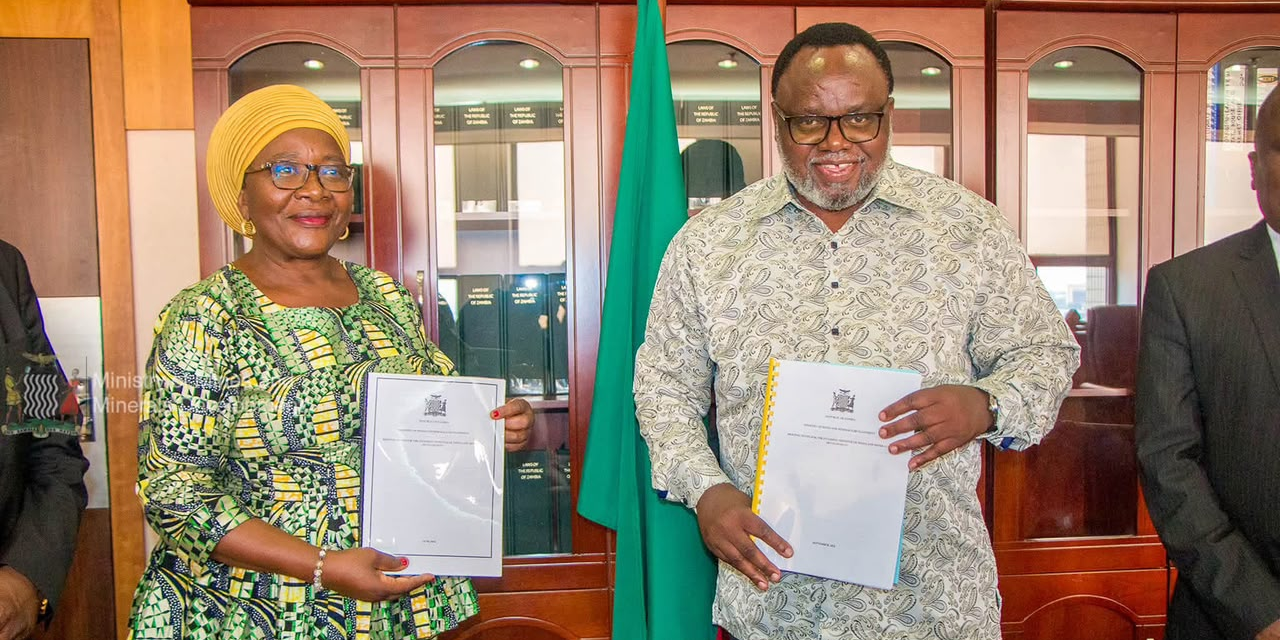
Former Minister of Mines and Minerals Development, Paul Kabuswe, has formally handed over the Ministry to his successor, Brenda M. Tambatamba, outlining key achievements recorded during his tenure and urging continuity in the implementation of strategic mining reforms.
Speaking during the handover ceremony, Mr. Kabuswe said the Ministry had made significant progress in addressing longstanding challenges in the mining sector, particularly through efforts to revitalise brownfield mining operations and create a more enabling environment for investment and growth.
Among the milestones highlighted was the formalisation and training of artisanal miners, a programme aimed at promoting safe, legal and productive mining activities while reducing illegal mining.
Mr. Kabuswe said training initiatives had been conducted in Kikonge, Choma and Mpika, laying the groundwork for a more organised artisanal mining subsector.
He noted that expanding training programmes across the country would help bring more miners into the formal economy, improve compliance with mining regulations and create sustainable livelihoods in mining communities.
Mr. Kabuswe also pointed to the nationwide geological mapping programme as one of the Ministry’s most significant achievements.
The exercise, which is approximately 97 percent complete, is expected to provide vital geological data to support mineral exploration and investment decisions across the country.
According to preliminary findings, the mapping programme has identified promising mineral potential in areas not traditionally known for large-scale mining activities, including parts of Western Province.
He said the information would help guide future exploration and unlock new opportunities for sector growth.
The former minister further highlighted developments in Zambia’s manganese industry, noting that power constraints in Luapula Province had previously forced some producers to transport ore to Serenje for processing, increasing operational costs and placing additional pressure on road infrastructure.
However, he said growing solar generation capacity in the province presents new opportunities for local processing and value addition.
In the gold sector, Mr. Kabuswe cited the establishment of gold marketing centres in Mumbwa and Rufunsa as an important step toward improving traceability, accountability and transparency in gold trading. He revealed that government had also initiated work on establishing a Gold Trade Agency to strengthen oversight and ensure that gold produced in Zambia is properly accounted for.
He added that the implementation of the Three Million Tonnes Strategy and the Critical Minerals Strategy had been central to Zambia’s efforts to expand copper production and position itself as a key supplier of minerals that will support the global energy transition.
Mr. Kabuswe thanked the Ministry’s Permanent Secretary, directors and staff for their support and dedication during his tenure, describing them as a committed team that contributed significantly to the progress made in the sector.
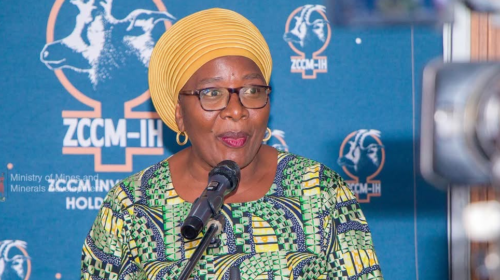
Taking over the Ministry, Ms. Tambatamba pledged to build on the foundations laid by her predecessor while intensifying efforts to formalise artisanal mining and tackle illegal mining activities across the country.
She commended Mr. Kabuswe for his leadership and contribution to the recovery of Zambia’s mining industry, particularly during a period when Konkola Copper Mines and Mopani Copper Mines were facing significant operational and ownership challenges.
Ms. Tambatamba described the establishment of the Minerals Regulation Commission as a landmark reform, noting that it creates a clear distinction between the Ministry’s policy-making role and the regulatory oversight of the mining sector.
She also stressed the importance of integrated land-use planning as artisanal mining expands, noting that mining activities must coexist with agriculture, tourism and environmental conservation.
Citing Kikonge as an example, she said careful planning would be required in areas that serve both economic and ecological purposes, including wildlife migration corridors.
On illegal mining, the new minister warned that government would not tolerate the unlawful exploitation of the country’s mineral resources and called for a coordinated response involving law enforcement agencies and relevant ministries responsible for home affairs, defence, agriculture and tourism.
Ms. Tambatamba said the protection of Zambia’s mineral wealth is critical because revenues from the sector support key national development programmes, including the Constituency Development Fund, Social Cash Transfer schemes, education, school feeding programmes and infrastructure development.
She also expressed interest in the findings of the airborne geophysical survey, saying the data would provide valuable insights for mineral exploration and long-term national planning.
Looking ahead, she reaffirmed government’s ambition of establishing at least one mine in every province while advancing Zambia’s goal of producing three million metric tonnes of copper annually before 2031.
Addressing opportunities in the manganese sector, Ms. Tambatamba reiterated the need to develop local processing capacity in Luapula Province, in line with government policy and growing global demand for minerals used in electric vehicle batteries and other clean-energy technologies.
She further urged citizens to help combat illegal gold trading, describing the practice as economic sabotage that deprives the country of revenue needed for development.
Ms. Tambatamba concluded by pledging to maintain an open-door policy and said she would continue to seek guidance from Mr. Kabuswe as she assumes leadership of one of Zambia’s most strategic ministries.
“The progress achieved must be sustained and expanded to ensure Zambia fully benefits from its mineral wealth while creating opportunities for citizens and future generations,” she said.