DRC Pushes for Stronger Congolese Participation in Mining Sector Through Financing and Local Content Reforms
DRC Mines Minister Louis Watum Calls for Stronger Local Mining Companies, Financing and Greater Congolese Ownership
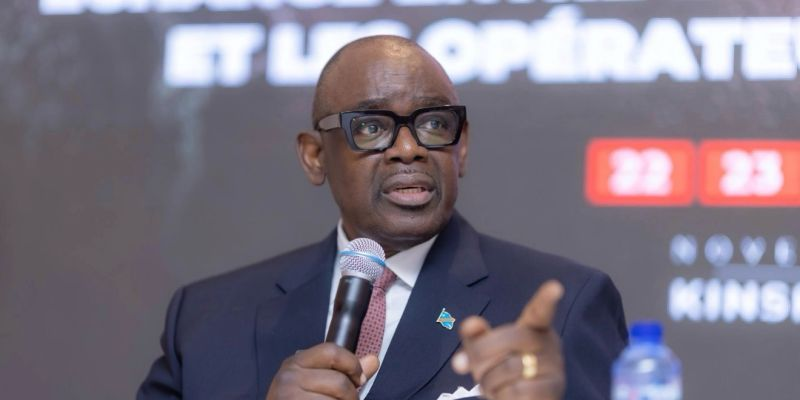
KINSHASA, November 23, 2026 – The Democratic Republic of Congo (DRC) is stepping up efforts to strengthen the participation of Congolese-owned businesses in its mining industry, with Mines Minister Louis Watum Kabamba calling for improved access to financing, stronger local content policies and greater investment in the development of competitive national mining enterprises.
Speaking during a closed-door meeting with Congolese mining operators on the sidelines of Makutano Mining 2026 at the Pullman Hotel in Kinshasa, Watum emphasised the need to move beyond simply awarding contracts to local companies and instead develop businesses capable of investing, producing and maintaining a sustainable presence throughout the mining value chain.
The meeting, held under the theme “Building National Champions,” focused on strengthening the capacity of Congolese entrepreneurs to participate more meaningfully in one of Africa’s largest mineral-producing industries.
Watum highlighted the economic importance of the DRC’s mining sector, which has attracted more than US$40 billion in cumulative investments and generated approximately US$1.26 billion in mining royalties in 2025.
He stressed that the country’s substantial mineral wealth should translate into greater opportunities for domestic businesses, stronger national capital formation and the emergence of competitive Congolese companies capable of operating beyond the country’s borders.
Government Outlines Measures to Support Local Mining Businesses
As part of efforts to increase Congolese participation, the Minister presented several measures intended to strengthen local businesses and improve their ability to compete for opportunities in the mining industry.
Among the initiatives discussed was the proposed “Leopards of the Mining Sector” programme, alongside financing and guarantee mechanisms designed to support Congolese entrepreneurs seeking to expand their operations.
Watum also emphasised the implementation of a minimum 30% advance payment on subcontracting contracts, a measure intended to ease financial pressures on local contractors and enable them to mobilise the resources required to execute projects.
Access to working capital remains a significant challenge for many Congolese suppliers and contractors, particularly those seeking to secure large contracts with established mining companies.
The Minister further highlighted provisions requiring at least 10% participation by Congolese individuals in the share capital of mining companies covered by the relevant legislation, reinforcing the government’s objective of increasing national ownership within the industry.
Another area of opportunity involves the allocation of 0.3% of mining companies’ turnover to community development projects, which could create additional business opportunities for local contractors and service providers involved in infrastructure and community development.
Access to Finance and Mining Contracts Remains a Priority
Discussions between the Minister and local mining operators also addressed several challenges affecting the growth of Congolese enterprises, including limited access to financing, difficulties securing contracts, delayed payments and the need for stronger enforcement of local content requirements.
These challenges have continued to limit the ability of some domestic companies to expand their operations and compete effectively with established international suppliers.
The government believes that addressing these constraints will help local businesses move beyond basic subcontracting activities and develop the technical, financial and operational capacity required to participate in more specialised segments of the mining industry.
Watum reaffirmed the government’s commitment to pursuing reforms that create a more favourable business environment while encouraging private-sector investment, innovation and entrepreneurship.
He also stressed that government intervention alone would not be sufficient to build successful national enterprises, highlighting the responsibility of the private sector to establish financially sustainable businesses capable of competing in regional and international markets.
DRC Seeks Greater Economic Benefits From Mineral Resources
The initiative forms part of the government’s broader strategy to ensure that the DRC’s mineral resources contribute more directly to domestic industrial development, employment creation and the growth of locally owned enterprises.
Despite its position as a leading global producer of copper and cobalt, the country continues to face challenges in ensuring that domestic companies capture a greater share of the economic opportunities generated by mining operations.
Strengthening local ownership, improving access to finance and expanding participation in mining supply chains are therefore central to the government’s efforts to retain more economic value within the country.
The latest discussions align with the development priorities of President Félix Tshisekedi’s administration, under the coordination of Prime Minister Judith Suminwa Tuluka.
By supporting the emergence of stronger Congolese mining businesses, the government aims to establish a more competitive domestic private sector capable of contributing to long-term industrial development and participating more effectively in international mineral value chains.
The success of these efforts will depend on the effective implementation of financing mechanisms, subcontracting regulations and policies that provide local businesses with meaningful opportunities to grow.