
Rio Tinto Reaffirms Organic Copper Growth Strategy After Glencore Talks Collapse
Rio Tinto Prioritises Shareholder Value as Glencore Merger Talks End, Highlights Oyu Tolgoi Copper Growth and $650m Cost-Cut Plan
After merger discussions with diversified miner and trader Glencore failed to reach agreement on valuation, diversified mining major Rio Tinto has underscored that its copper growth strategy is being delivered organically.
Speaking during a results call, CEO Simon Trott confirmed that discussions covered the “full perimeter” of Glencore’s business. However, negotiations ultimately stalled over valuation concerns.
“We went under the hood with a singular focus on whether we could create value for shareholders,” Trott told analysts, noting that the assessment examined asset quality across all commodities, including coal, and evaluated whether a combined portfolio could generate incremental value.
While describing the discussions as constructive, Trott said the companies were unable to agree on terms that would deliver sufficient value for Rio Tinto shareholders.
“As outlined at our Capital Markets Day, we approach M&A opportunities through a disciplined lens. Strategic rationale alone is not enough any transaction must deliver clear cash accretion for shareholders,” he said.
Organic Growth Driving Copper Expansion
Trott emphasised that Rio Tinto’s copper growth trajectory is already evident without the need for transformational acquisitions.
He highlighted the ramp-up at Oyu Tolgoi in Mongolia, which is contributing 8% copper-equivalent growth. The company maintains a project pipeline capable of supporting more than 3% compound annual copper-equivalent growth through 2030, with additional options extending into the 2030s.
Copper remains a central strategic priority, with management focused on advancing existing development options into value-accretive projects rather than pursuing high-risk, large-scale mergers.
Productivity Gains and Cost Discipline
Executives also indicated that productivity improvements are gaining momentum across the portfolio. Rio previously announced a $650 million annualised cost reduction target by the end of the first quarter. Management now expects 2026 cash delivery to be materially above that run-rate target.
Trott explained that the optimisation programme followed a systematic, asset-by-asset review to unlock “full potential” efficiencies. The initiative is expected to span multiple years, with additional benefits likely extending into 2027 and 2028.
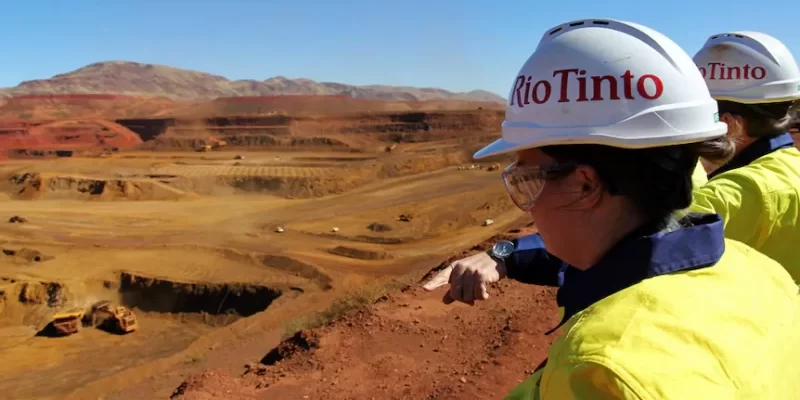
The cost-reduction drive encompasses all divisions, including iron-ore operations in the Pilbara. Unit cost guidance of $23.50 to $25 per tonne reflects productivity gains that are partially offsetting currency headwinds.
Management noted that recent quarters have demonstrated the operational strength of the iron-ore system when volumes flow through replacement projects and logistical bottlenecks are resolved.
Capital Allocation Remains Value-Focused
Rio Tinto reiterated that it retains multiple pathways to unlock capital across its portfolio, including strategic reviews of select businesses, infrastructure monetisation options and potential streaming arrangements. However, any such initiatives will be assessed systematically and prioritised strictly on value creation.
The company’s message was clear: disciplined capital allocation, operational performance and organic copper growth remain the core pillars of its strategy, even as large-scale M&A opportunities are evaluated.