
Uncertainty Deepens at Kamoa-Kakula After Seismic Flooding Disrupts Key Copper Mine
More than a week after seismic activity triggered severe flooding underground, the status of one of the world’s most significant copper mines—Kamoa-Kakula in the Democratic Republic of Congo (DRC)—remains unclear, casting uncertainty over global copper supply.
The mine, operated by Canada’s Ivanhoe Mines and co-owned by China’s Zijin Mining and CITIC Metal, had been on track to become the world’s third-largest copper producer this year.
However, recent flooding and infrastructure damage have jeopardized those plans. Conflicting reports from Ivanhoe and its Chinese partners have only added to the confusion.
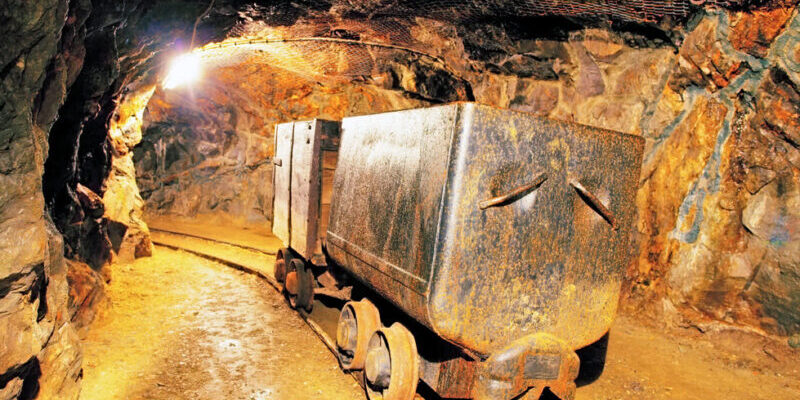
Ivanhoe confirmed that electrical infrastructure and pumping systems at the Kakula underground mine were damaged, and water levels have since risen. Efforts to deploy high-capacity pumps are underway, with support from Zijin and CITIC. Kakula alone accounts for at least 70% of the Kamoa-Kakula complex’s current production, according to Citigroup.
Citi analysts warned the flooding could halt operations at Kakula until at least the fourth quarter of 2025, although they noted that output could resume quickly once dewatering is complete, without significant cost overruns.
While Ivanhoe has stated it is assessing the extent of the damage and the causes of the seismic event, it has withheld further comment, promising an update next week. Observers on site reported extensive water ingress, and that workers are currently barred from entering affected areas.
The disruption highlights the fragility of global copper supply chains. Copper is vital to the energy transition, used in electric vehicles, renewable energy systems, and electrical infrastructure. Yet production has increasingly struggled to keep pace with demand.
Over the past 18 months, the copper industry has faced multiple setbacks. First Quantum Minerals shut its Panamanian copper mine due to protests, and Anglo American has reduced output due to operational issues. Now, Kamoa-Kakula—previously hailed as a mining success story—is facing its most serious operational challenge.
The project, discovered by Ivanhoe chairman and billionaire Robert Friedland, has transformed the DRC into the world’s second-largest copper producer.
Following the seismic event on May 18, Ivanhoe temporarily suspended operations at Kakula. Zijin later reported a roof collapse and warned of a full-year production impact, but Ivanhoe quickly rejected this, saying there was no evidence of structural collapse.
However, just days later, Ivanhoe withdrew its 2025 production guidance of 520,000 to 580,000 tonnes, signaling deeper concern. Analysts now estimate potential production losses of between 84,000 and 275,000 tonnes—enough to significantly dent the International Copper Study Group’s projected 289,000-tonne global surplus for 2025.
“There is high uncertainty on the timing of a restart and the level of remediation or mine redesign which may be needed,” Goldman Sachs said in a note.
Currently, the Kakula concentrator is processing surface stockpiles, preventing an immediate supply disruption. Ivanhoe reported on Monday that it is pumping 1,000 liters of water per second from the western section of the mine and aims to triple that rate to stabilize water levels. No update has been provided for the eastern section, where Zijin noted possible structural damage.
Ivanhoe maintains that the Kamoa underground mine and processing facilities remain operational, and that Kakula’s surface infrastructure is unaffected.
Kamoa-Kakula is jointly owned by Ivanhoe Mines and Zijin Mining (each holding 39.6%), with the DRC government holding a 20% stake. CITIC is Ivanhoe’s largest shareholder, while Zijin also owns over 10% of the Canadian firm.
As the global energy transition accelerates, any prolonged disruption at Kamoa-Kakula could have far-reaching implications for the copper market.