
US-Brokered Peace Deal May Open Legal Trade Route for Congolese Minerals via Rwanda
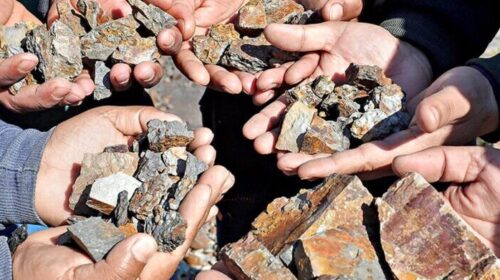
Congolese minerals such as tungsten, tantalum, and tin—long at the center of tensions between the Democratic Republic of Congo (DRC) and Rwanda—could soon be exported legally to Rwanda for processing under a US-backed peace initiative, according to three sources cited by Reuters.
Kinshasa has accused Kigali for years of illegally exploiting its mineral wealth, alleging that tens of millions of dollars’ worth of minerals are smuggled across the border each month.
These accusations are closely tied to the ongoing conflict in eastern Congo, where Rwanda-backed M23 rebels have escalated hostilities since January.
The United States is pushing for a peace agreement to be signed this summer, one that would be coupled with mineral trade deals aimed at unlocking billions of dollars in Western investment for the region.
Massad Boulos, a senior adviser to former President Donald Trump and a key figure in the negotiations, confirmed earlier this month that both countries had received a draft agreement. The contents remain confidential.
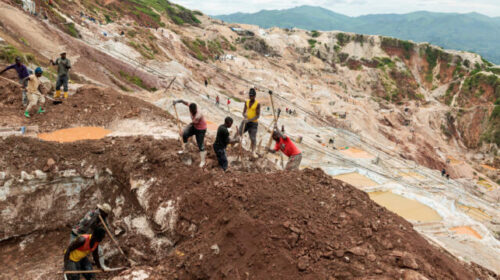
According to diplomatic and UN sources briefed by US officials, the proposal includes legalizing the export of minerals from eastern Congo’s artisanal mining zones to Rwanda, where they would be refined and marketed.
“The US perspective is straightforward: if Rwanda can benefit legitimately from Congolese minerals through processing, it will be less inclined to occupy its neighbor and exploit its resources,” said one diplomat.
“For Congo, this would support industrialization, increase revenues, improve traceability, and weaken the armed groups that currently rely on mining for funding.”
While the Congolese government has long sought to add value locally rather than exporting raw materials, a spokesperson referred questions to the foreign ministry, which did not respond.
A Congolese official, speaking anonymously, said no cooperation would be possible without the withdrawal of Rwandan troops and proxies such as the M23 rebels.
“Rwanda must also respect our sovereignty, including over our mineral resources,” the official emphasized.
For Rwanda, formalizing mineral processing could legitimize a sector often marred by allegations of smuggling and illicit trade.
For the US, the deal presents an opportunity to reduce Chinese dominance in Congo’s critical mineral assets and strengthen supply chains for Western economies.
A US State Department spokesperson noted that both countries had signed a declaration in Washington last month, committing to establish “transparent, formalized, and licit end-to-end mineral value chains (from mine to processed metal)” in partnership with the US government and investors.
While the scope of investment remains unclear, Boulos revealed that US officials have been in talks with up to 30 American investors interested in Rwanda’s mining and mineral processing sectors.
He added that the US International Development Finance Corporation would fully support these transactions.
Despite the ambitious scope of the plan, the region’s history of instability presents significant risks.
One diplomat cautioned that a mining deal alone cannot resolve a conflict rooted in decades of political and ethnic turmoil following the 1994 Rwandan genocide.
“These projects could take three, five, or even ten years,” the diplomat said. “There are immediate problems and underlying causes that still need to be addressed.”
Previous efforts to foster cooperation between the two nations have faltered. A 2021 deal between Congo’s state-owned Sakima and Rwanda’s Dither Ltd. to jointly exploit and market Congolese gold was suspended in 2022 after Kinshasa accused Rwanda of supporting M23 rebels who had captured the key town of Bunagana.
Rwanda denied supporting the group, though it acknowledged defensive operations in eastern Congo targeting Rwandan Hutu militias.
Analysts now suggest that the most commonly cited militia, the Democratic Forces for the Liberation of Rwanda (FDLR), no longer poses a serious threat. Still, trust between the two countries remains low.
“Neither country trusts the other,” said William Millman, an independent consultant on the tantalum-niobium sector. “Unless a major power like the US is involved as an enforcer, any deal risks falling apart.”