
USA Eyes DRC’s Coltan as Key to Peace, Investment, and Supply Chain Security
A recent peace agreement signed in Washington between the Democratic Republic of the Congo (DRC) and Rwanda is raising eyebrows—not only for its geopolitical implications but also for its economic undercurrents.
The lengthy document includes a significant clause that effectively ties U.S. private investment to mineral-rich regions in eastern DRC.
In particular, the provinces of North Kivu and South Kivu—bordering Rwanda—are known for their abundant reserves of cobalt, coltan (tantalum), tin, lithium, and gold.
Reports suggest that American investors have expressed strong interest in the Rubaya coltan mine, currently under the control of the M23 rebel group.
The plan is to transform the Rubaya site into a large-scale mining operation under U.S. oversight and investment.
The DRC-Rwanda peace accord is being framed as a “minerals-for-security” deal, granting American companies preferential access to critical minerals in exchange for commitments to peace, security, and economic stability in the region.
According to the Financial Times, the United States is supporting a major bid by Gentry Beach—a close ally of former President Donald Trump—to acquire the Rubaya coltan mine.
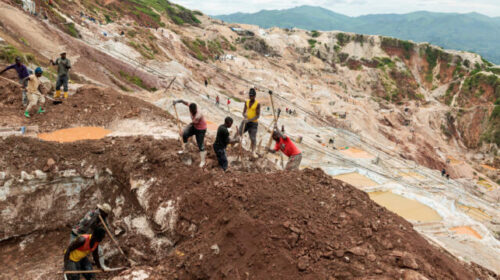
Locally known as the Bibatama Mining Concession, Rubaya is a cluster of open-pit mines located in Masisi Territory, North Kivu, near the town of the same name.
It is situated about 105 kilometers from Alphamin Resources’ prolific Bisie tin mine, one of the world’s highest-grade tin operations, which already benefits from U.S. backing.
Bisie alone supplies nearly 6% of the world’s tin, underscoring the strategic value of the region’s mineral wealth.
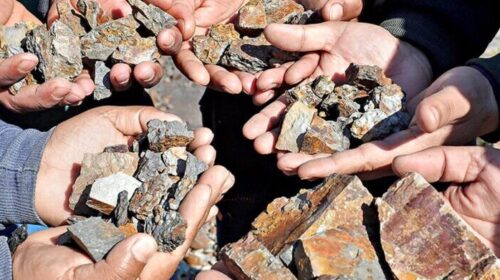
Coltan is essential for producing capacitors and high-performance electronics, particularly in military, aerospace, and medical sectors.
The United States currently does not produce any tantalum (derived from coltan) and relies almost entirely on imports—making access to sites like Rubaya economically and strategically vital.
The White House reportedly sees the Rubaya coltan cluster—which yields more than 50% of the DRC’s coltan—as central to its strategy to end decades of violence in eastern Congo through economic investment.
The U.S. plan would channel over $500 million in private capital toward mining and infrastructure, aiming to reduce China’s dominant position in the critical minerals supply chain.
Washington also hopes its investments will incentivize M23 rebels to withdraw from contested areas, creating a more stable environment for both regional peace and foreign investment.