
Zimbabwe’s Lithium Export Ban Jolts China’s Battery Supply Chain
Zimbabwe Halts Lithium Exports, Disrupting China’s EV Battery Supply Chain and Driving Global Price Surge
China’s battery manufacturers are feeling the impact of Zimbabwe’s sudden suspension of lithium concentrate exports, a move that has unsettled global commodity markets and raised fresh concerns across the electric vehicle (EV) supply chain.
On February 25, the Government of Zimbabwe announced an immediate halt to all lithium concentrate shipments, including cargo already in transit.
The policy forms part of Harare’s broader strategy to expand domestic mineral processing and capture greater value from its large lithium reserves.
By restricting exports of raw lithium concentrate, authorities aim to compel investors to accelerate in-country refining and beneficiation.
The policy underscores Zimbabwe’s push to transition from a raw material exporter to a producer of higher-value processed minerals.
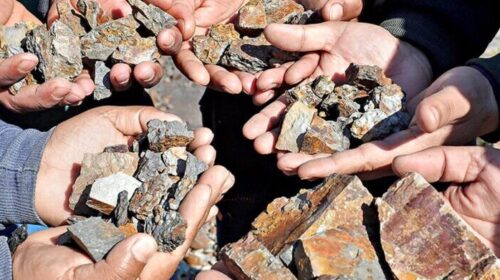
According to The Africa Report, the abrupt suspension intended to force more local processing and value addition has exposed how dependent Chinese refiners and battery manufacturers are on Zimbabwean spodumene feedstock, despite China’s dominant position in global lithium conversion.
Zimbabwe has quickly become an important supplier to China’s lithium ecosystem. Recent market data indicates that about 19% of China’s imported lithium concentrate came from Zimbabwe in the most recent reporting year, making the Southern African country one of Beijing’s key upstream partners before the ban.
Customs data also shows that in certain months Zimbabwe accounted for between 10% and 15% of China’s lithium concentrate imports, depending on trade flows and reporting cycles.
Overall, Zimbabwe’s share has hovered in the high-teen percentages representing significant exposure for an industry that relies heavily on stable feedstock supplies.
A supply shock for China’s refiners
For China, which dominates global lithium processing and battery manufacturing, the suspension represents a direct supply shock.
Despite its midstream dominance, the country still depends on imported hard-rock spodumene concentrate mainly from Africa and Australia to feed its extensive refining capacity.
The announcement triggered an immediate reaction in global markets. Lithium prices surged on futures exchanges as buyers adjusted to the prospect of tighter raw material supplies.
Analysts warned that short-term disruptions could ripple through global battery supply chains.
Chinese battery manufacturers, already dealing with price volatility and moderating EV demand growth, may now face higher input costs and pressure on profit margins.
Smaller refiners could also encounter temporary supply shortages if alternative sources are not secured quickly.
Chinese investments in Zimbabwe under scrutiny
Several Chinese companies have invested heavily in Zimbabwe’s lithium sector in recent years, including Zhejiang Huayou Cobalt and Sinomine Resource Group.
In 2024, Zhejiang Huayou Cobalt partnered with Tsingshan Holding and a Zimbabwean state company on a lithium project valued at around $250–300 million.
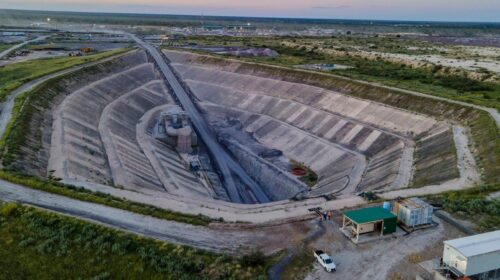
The facility is expected to produce roughly 500,000 tonnes of lithium concentrate annually.
Zimbabwe’s new export restrictions could prompt these companies to accelerate plans for local processing facilities to align with the country’s evolving resource-nationalism policies.
A shift in the global critical minerals race
The episode highlights a broader shift in the global energy transition. While China remains dominant in refining and battery production, countries that control critical mineral resources are increasingly asserting greater leverage.
Zimbabwe’s policy signals its intention to move beyond raw material exports and become an industrial participant in the battery value chain a strategy that could reshape supply dynamics across the critical minerals sector.
For China’s battery industry, the disruption may ultimately be temporary. However, it underscores a growing reality in the EV era: even the most integrated global supply chains remain vulnerable when strategic minerals become tools of national industrial policy.