

DRC Struggles to Absorb External Financing as $8.3 Billion Remains Undisbursed
DRC Disburses Just 24.3% of $10.7 Billion in External Financing, Leaving $8.3 Billion Unused
The Democratic Republic of Congo (DRC) is facing challenges in converting external financing commitments into actual development projects, with only 24.3% of a $10.7 billion portfolio having been disbursed, according to an assessment by the Inspectorate General of Finance (IGF).
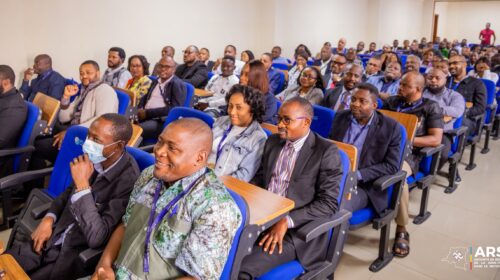
The findings were presented to President Félix-Antoine Tshisekedi Tshilombo during the 96th Council of Ministers meeting held on August 14, 2026.
The active portfolio of projects financed through external resources exceeds $10.7 billion, but more than $8.3 billion remains available but undisbursed.
The low absorption rate means a significant portion of funds secured from development partners has yet to translate into infrastructure, public services and other planned investments.
Administrative delays slow implementation
The IGF identified several factors contributing to the low disbursement rate, including administrative and procedural bottlenecks, delays in providing national counterpart funding, and weaknesses in project management and monitoring.
These challenges can delay project implementation and reduce the economic and social impact expected from external financing.
The issue also raises concerns about the DRC’s ability to effectively utilise resources already secured from international development partners, rather than focusing solely on mobilising additional funding.
Government ordered to accelerate disbursements
Following the IGF assessment, President Tshisekedi directed the government to make improving the absorption of external financing a priority.
Prime Minister Judith Suminwa was tasked with preparing a government recovery plan aimed at accelerating disbursements and improving the implementation of externally financed projects.
The Ministries of Budget, Planning and Finance are expected to play a central role by ensuring the availability of counterpart funding, reviewing procedures that may be slowing project execution and advancing the digitalisation of administrative processes.
The government is also expected to strengthen coordination with development partners and improve monitoring of projects.
Focus shifts from mobilisation to execution
The DRC’s challenge is increasingly shifting from securing external financing to effectively deploying the funds already committed.
A stronger monitoring mechanism is expected to provide project-by-project visibility on disbursements, implementation progress, obstacles and corrective measures.
With more than $8.3 billion still undisbursed, improving the absorption rate could unlock significant resources for development projects across the country.
For the government, the priority is to ensure that external financing translates into completed infrastructure, improved public services, investment and job creation, rather than remaining largely unused within the project portfolio.