
DRC Mining Sector Contributes US$1.1 Million to Ebola Response
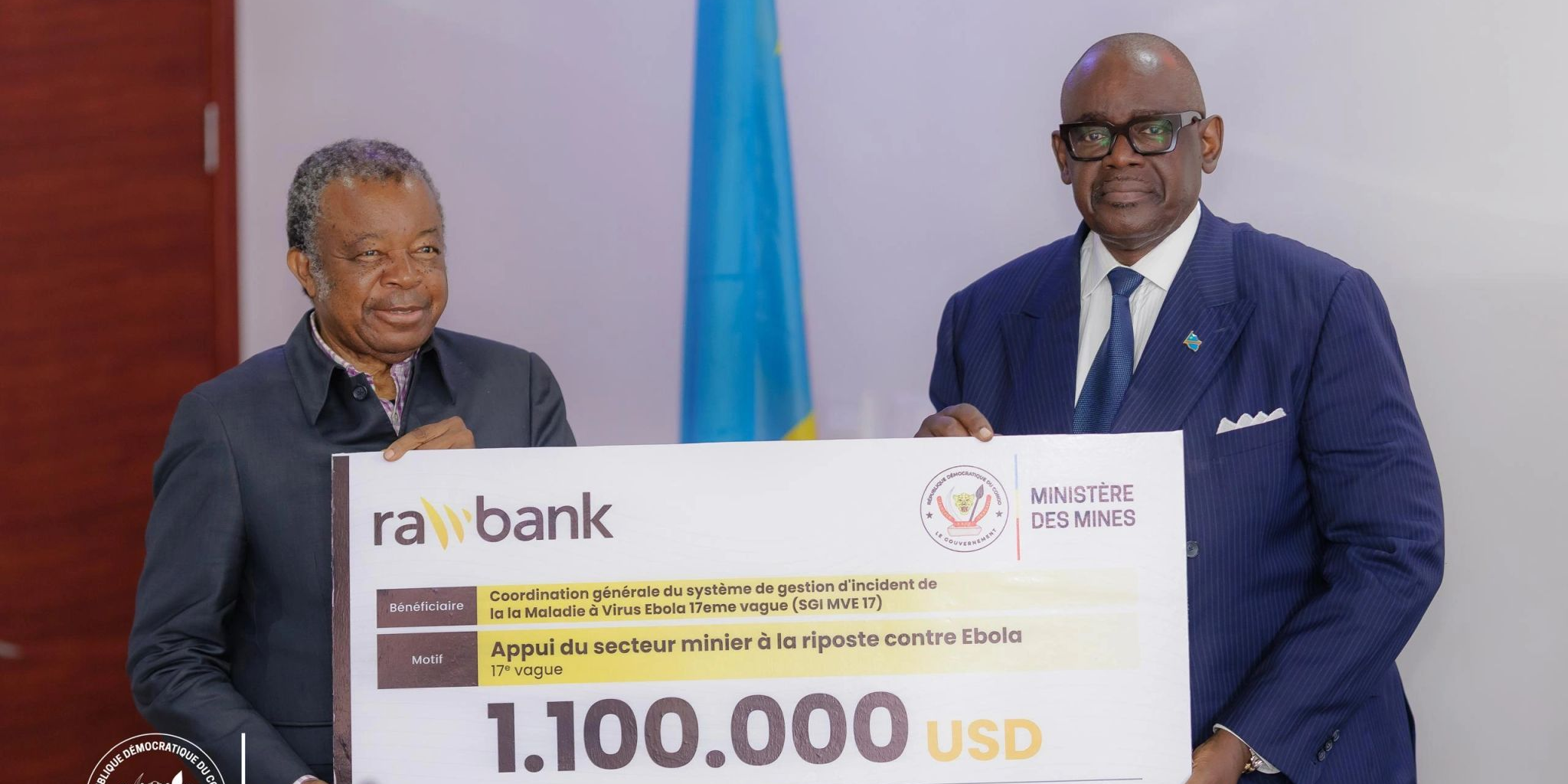
DRC Mines Minister Louis Watum Kabamba Presents US$1.1 Million for Ebola Response
The Democratic Republic of Congo’s mining sector has contributed US$1.1 million to the national response to the country’s 17th Ebola outbreak.
Mines Minister Louis Watum Kabamba handed over the cheque in Kinshasa on 17 November 2026.
Dr Jean-Jacques Muyembe received the contribution on behalf of the national team coordinating the Ebola response.
National Assembly members and senators from Grande Orientale attended the handover, alongside officials from the minister’s office.
Watum called for a collective response to the outbreak, while Muyembe and a representative of Grande Orientale welcomed the support.
The Ministry of Mines said the contribution forms part of a national effort led by President Félix Tshisekedi and coordinated by Prime Minister Judith Suminwa Tuluka.
Its announcement did not name the companies behind the cheque or specify how the money would be allocated.
Mining companies had already provided cash and equipment
On 19 August, Watum appealed to mining operators to support the response. On 5 September, the Union of Chinese-funded Mining Companies in the DRC announced a US$1 million contribution, presented at the Mines Ministry in the presence of China’s ambassador to the DRC, Zhao Bin.
The ministry has yet to clarify whether that contribution is part of the US$1.1 million handed over in November.
In Haut-Uélé, Kibali Gold Mine provided two ambulances, protective equipment and supplies for checkpoints in September.
The mine delivered another consignment of medical and logistical equipment on 16 October to support patient transport, power supply and temporary care facilities.
Outbreak response faces access challenges
Congolese authorities declared the outbreak in May 2026. The World Health Organization reported 11,504 confirmed cases and 5,630 deaths among confirmed cases in the DRC as of 16 November.
In a separate update, WHO and its partners said the response had slowed transmission in some of the earliest hotspots, while conflict and displacement continued to hamper access to affected communities.