Sakombi and Mabolia Discuss Mining Rights-Backed Financing for Hydropower Projects in DRC
DRC Considers Mining Rights-Backed Financing for Hydropower Projects as Energy and Mining Maps Align
The Democratic Republic of Congo is exploring innovative ways to accelerate the development of energy infrastructure by potentially linking the construction of power projects to mining rights, as the government seeks stronger synergies between the country’s mining and electricity sectors.
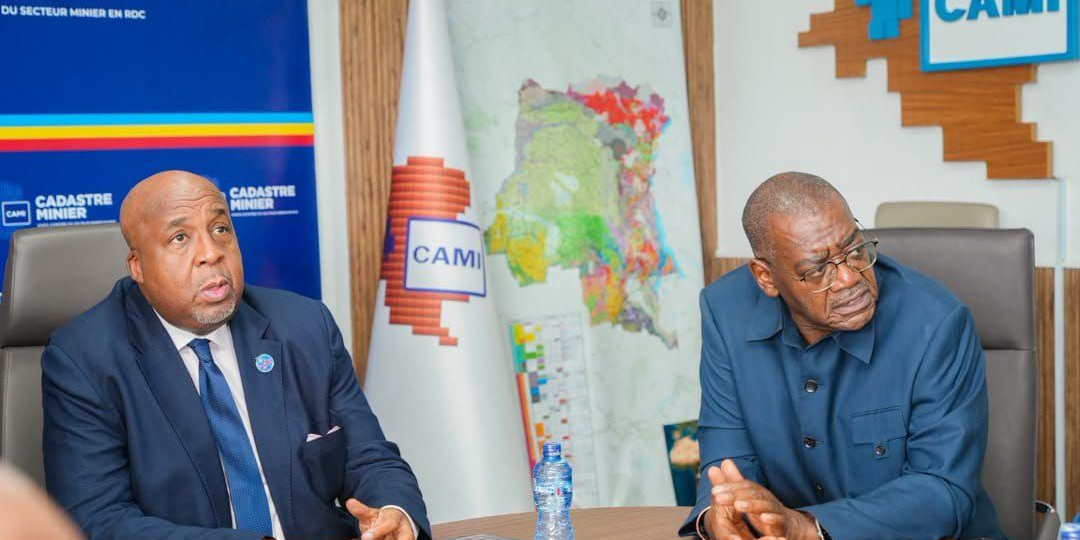
The initiative was discussed during a high-level meeting held in Kinshasa between Minister of Hydroelectric Resources and Electricity Aimé Sakombi and Cadastre Minier (CAMI) Director General Popol Mabolia.
The discussions focused on implementing recommendations arising from the 77th Council of Ministers meeting held in February 2026, particularly regarding the integration of the country’s energy and mining development plans.
At the centre of the discussions was a strategic mapping exercise that overlays the DRC’s energy resources and mining operations.
Authorities believe this integrated planning tool can help identify where future hydroelectric infrastructure should be developed to meet the growing power demands of the mining industry while supporting broader national electrification goals.
Officials also reviewed alternative financing models aimed at accelerating investment in power generation projects.
Among the proposals being considered is a mechanism that would allow the development of energy infrastructure in exchange for mining rights or mining-related concessions, provided such arrangements comply with the country’s legal and regulatory framework.
The government views the approach as a way to unlock capital for critical electricity projects while supporting the expansion and modernization of the mining sector, one of the DRC’s most important economic drivers.
By aligning energy infrastructure planning with mineral development corridors, authorities hope to address longstanding power shortages that have constrained industrial growth.
The mapping initiative was first presented to the Council of Ministers in February 2026 as part of a broader strategy to strengthen engagement with investors, development finance institutions and independent power producers.
The framework is intended to provide greater visibility on where energy investments can generate the greatest economic impact, particularly in mineral-rich regions.
One project illustrating the scale of the government’s ambitions is the proposed Kinsuka hydropower development near Kinshasa.
The project is expected to add significant generating capacity to the national grid, with a substantial portion of the electricity earmarked for mining operations and industrial users.
The initiative forms part of the DRC’s wider National Energy Compact, which seeks to expand electricity access, support industrialisation and strengthen economic value creation from the country’s vast mineral resources.
By bringing together energy and mining planning, policymakers aim to create a more coordinated development model capable of attracting investment while delivering long-term infrastructure benefits.