Zimbabwe’s Lithium Exports Surge 230% as Value Addition Gains Momentum
Zimbabwe Lithium Exports Jump 230% to $782 Million in First Half of 2026
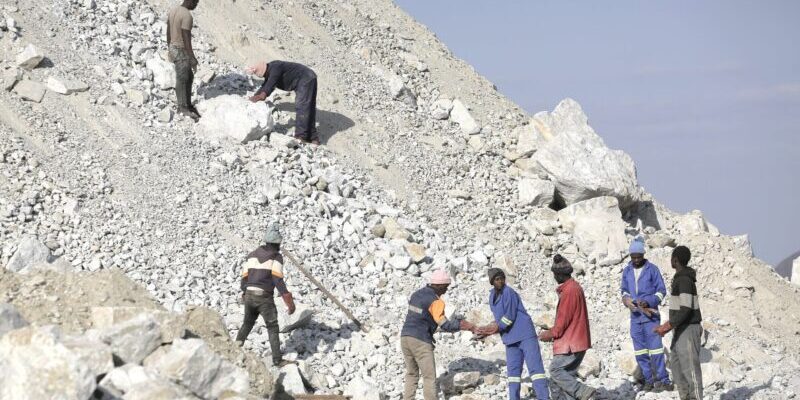
Zimbabwe’s lithium exports surged by 230% in the first half of 2026, generating about $782 million in export earnings and strengthening the mineral’s contribution to the country’s mining sector.
The increase highlights Zimbabwe’s growing importance as a lithium producer while reflecting efforts to move beyond the export of raw minerals and expand domestic processing.
According to figures from the Minerals Marketing Corporation of Zimbabwe (MMCZ), lithium exports rose from $237 million during the first half of 2025 to approximately $782 million in the same period this year.
The growth comes as Zimbabwe continues to implement policies aimed at increasing mineral beneficiation and retaining more value from its resources within the country.
Spodumene concentrate remains the dominant lithium export, although Zimbabwe has also begun exporting lithium sulphate, signalling the gradual expansion of domestic processing capacity.
Earlier figures from the MMCZ put first-half lithium export earnings at $746 million, including $672.8 million from spodumene concentrate and $73.2 million from lithium sulphate.
The government has been tightening restrictions on exports of unprocessed lithium as it seeks to encourage miners and investors to establish processing facilities locally. A broader ban on unprocessed lithium concentrate exports is scheduled to take effect in January 2027.
Zimbabwe’s push for greater beneficiation is aimed at increasing export earnings, creating jobs and strengthening the country’s position in the global battery-minerals supply chain.
The country has attracted significant investment into lithium mining and processing, particularly from Chinese companies. Investment in the sector has reached about $2 billion since 2021, supporting the expansion of production and processing infrastructure.
The government’s strategy is increasingly focused on ensuring that rising lithium production translates into greater domestic economic value rather than simply increasing shipments of concentrates.
The latest export performance also comes as Zimbabwe improves its lithium logistics. In July, the country introduced a rail freight route linking lithium production to Mozambique’s Maputo port, offering an alternative to road transport and potentially reducing logistics costs and bottlenecks.
With lithium playing an increasingly important role in battery and energy-storage supply chains, Zimbabwe’s ability to expand processing capacity while maintaining competitive production and logistics will be critical to sustaining the sector’s growth.
The sharp increase in export earnings demonstrates the growing economic importance of lithium to Zimbabwe, while the expansion of domestic processing could determine how much of the mineral’s long-term value the country is able to capture.