
DRC Economy Remains Resilient Despite Security Challenges, AfDB Projects Growth Above 5%
African Development Bank Forecasts Strong DRC Economic Growth as Mining Exports Drive Recovery
The Democratic Republic of Congo (DRC) is expected to maintain economic growth above 5% over the next two years despite ongoing security challenges in the eastern part of the country, according to the African Development Bank’s latest economic outlook.
The report highlights the resilience of the Congolese economy, with growth continuing to be supported by the mining sector, rising exports and sustained investment, even as conflict and humanitarian pressures weigh on development efforts.
Economic growth slowed to 5.5% in 2025 from 6.1% in 2024, largely due to a moderation in mining activity.
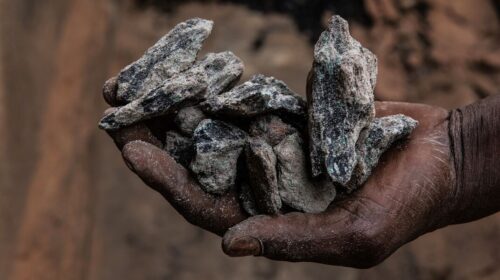
The extractive sector, which remains the backbone of the Congolese economy, recorded growth of 8.2% in 2025 compared with 11.9% the previous year. Despite the slowdown, exports and investment continued to provide important support to overall economic performance.
One of the country’s most notable achievements was a significant reduction in inflation. Consumer price growth fell to 8.0% in 2025 from 17.7% in 2024, supported by prudent monetary policies, a more stable Congolese franc and lower food prices.
The improvement helped strengthen macroeconomic stability and ease some pressure on households and businesses.
The report also points to progress in public finances and external balances. Although the budget deficit widened to 2.6% of GDP due to increased security spending, public debt remained at a sustainable level of 18.1% of GDP.
Meanwhile, the current account deficit narrowed from 4.1% of GDP in 2024 to 3.3% in 2025, driven by strong mineral exports and improved foreign exchange reserves.
The financial sector continued to expand its role in supporting economic activity, with lending to the economy increasing by 20% during the year.
Asset quality also improved as non-performing loans declined, reflecting greater stability within the banking sector.
Despite these gains, significant social and economic challenges remain. The African Development Bank notes that approximately 67% of the population continues to live in extreme poverty, while weak job creation and persistent inequality limit the broader benefits of economic growth.
Ongoing insecurity has also increased humanitarian needs and displaced vulnerable communities, placing additional pressure on public resources.
Looking ahead, the AfDB expects economic growth to remain above 5% in 2026 and 2027, supported by continued investment in mining, expansion of non-extractive sectors and ongoing structural reforms.
Inflation is projected to remain under control at around 6.5%, while stronger domestic revenue mobilization and improved spending efficiency are expected to help stabilize public finances.
The report identifies development financing as one of the country’s most pressing challenges.
The DRC is estimated to require approximately US$16.7 billion annually through 2030 to meet its development objectives.
To bridge this gap, the country will need to strengthen domestic revenue collection, improve governance and transparency, expand financial markets and attract greater private-sector and climate-related investment.
According to the African Development Bank, improvements in security, governance and institutional reforms will be critical to unlocking investment, accelerating economic diversification and ensuring that the country’s abundant natural resources translate into broader and more inclusive economic development.