Beyond Generation: Petrodex’s Integrated Energy Model Powering Southern Africa
The region’s energy gap will not be closed by generation alone. It calls for a more integrated approach, one that moves electrons across borders, builds the lines that carry them, and generates new supply where it counts.
Across the Copperbelt and Haut-Katanga, the binding constraint on growth is no longer the ore in the ground. It is the electricity needed to extract and process it.
The region sits atop some of the world’s richest copper and cobalt deposits, and global demand for both is climbing as electrification, electric vehicles and AI-driven data centres reshape the metals market.
The pressure on the grid, however, is not coming from industry alone. The Democratic Republic of Congo and Zambia have two of the fastest-growing populations in the world, and both are urbanising rapidly.
More people, more cities and more enterprise mean a demand curve that climbs relentlessly.
Yet the same operations positioned to meet that demand routinely find their output capped not by geology or markets, but by an unreliable power supply.
The roots of this are structural rather than accidental. Much of Southern Africa’s grid was built around hydropower, especially in Zambia’s case, where it constitutes over 80 percent of installed capacity.
It is a clean and low-cost foundation in a normal year, but it leaves the system dangerously exposed to drought.
The 2024-2026 dry spell made this painfully clear: water levels at Kariba fell so far that national generation was cut by close to a third, and at the worst of it load-shedding stretched beyond twenty hours a day. The shock rippled across the region.
The Southern African Power Pool was carrying a capacity deficit of around 4,200 MW by late 2025, and in the DRC, where barely one in five people has access to electricity, the mining grid in the south is estimated to fall short by around 1,000 MW, a gap that could double before the decade is out.
This deficit is a function of structural realities that no single government budget cycle can resolve.
State utilities across the region carry heavy debt and have long sold power below the cost of supplying it, which leaves little capital to reinvest when tariffs are only now being brought toward cost-reflective levels.
The legacy single-buyer model, in which one state utility purchased and resold all power, was never designed for the scale or speed of today’s industrial demand.
Building new capacity takes years transmission lines longer still, given the land, permitting and environmental work involved.
The consequence is a problem that is easy to describe and hard to fix: even where bulk power exists somewhere in the system, it frequently cannot be offtaken by factories or mines, because the distribution network in between is congested, ageing or simply absent.
The region’s governments recognise this and have responded by opening the door, deliberately, to private partners. Zambia’s Electricity (Open Access) Regulations, enacted in 2024, began dismantling the single-buyer model, allowing independent producers and large consumers to move power across the network for a fee.
The Ministry of Energy cut the approval time for solar projects from more than six months to forty-eight hours, and the government set a target of adding 1,000 MW of solar to the grid. This is an invitation by the state to share the load.
The investment required is simply beyond what public balance sheets can carry alone; the International Energy Agency puts Africa’s annual energy investment need at over US$200 billion by 2030, with close to half of it expected to come from the private sector.
This is where the nature of the problem matters. The energy gap facing a mine or an industrial plant is not one problem but four, layered on top of one another: not enough generation, not enough transmission to move it, a last-mile distribution network that cannot deliver it reliably, and cross-border supply that swings with the rains.
A company that addresses only one of these layers leaves its clients exposed to the other three.
A pure independent power producer can build a plant but cannot guarantee the electrons reach the gate.
A pure trader can source power but cannot fix the line that keeps tripping. Closing the gap, in practice, means working across all four layers at once.
Petrodex: An Integrated Model in Action
That integrated approach is the model a small number of energy companies are now pursuing in the region, and Petrodex offers a clear illustration of how this works in practice.
As one of the most active traders in the region, the company moves around 230 MW daily across Mozambique, Zambia, Zimbabwe and the DRC, drawing on a mix of solar and hydro to keep supply flowing to industrial clients even when any single source falls short, a direct answer to the volatility that drought and seasonality impose.
But Petrodex recognised early that trading alone does not solve the last-mile problem. So through its Zambian subsidiary, Zampower, it designs, builds, and operates dedicated distribution lines, or reinforces existing ones, that run power straight to a client’s site, bypassing the congested shared network that is so often the real point of failure.
To date this dedicated solution has been implemented with more than twenty-five industrial and mining clients, including several fully dedicated lines, with more in construction.
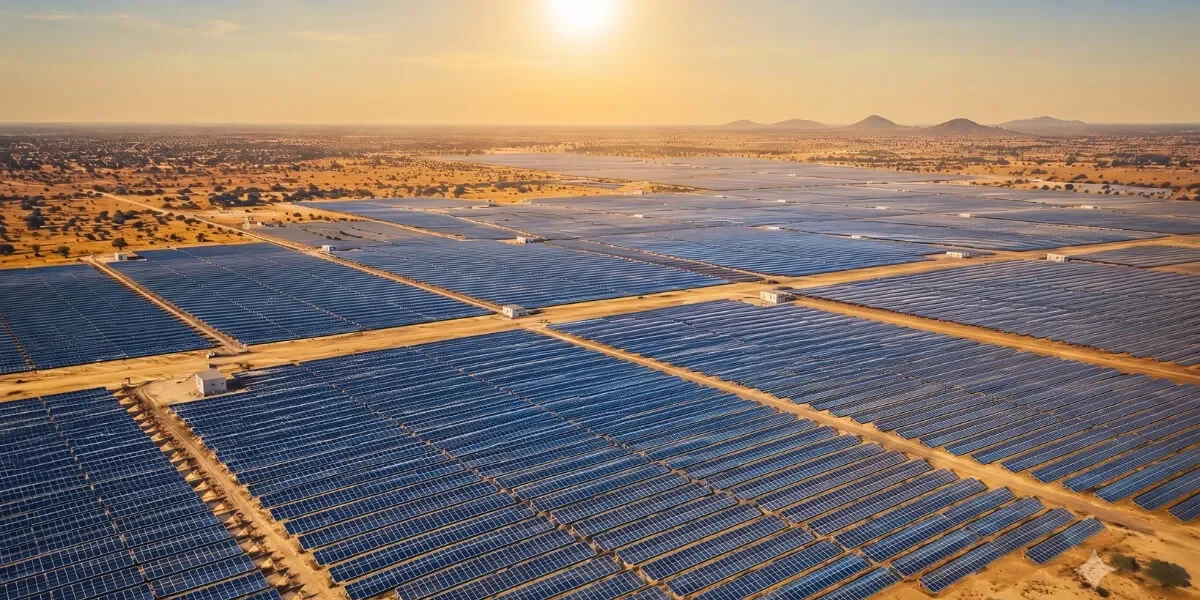
The third layer is generation. Under a Memorandum of Understanding with ZESCO to develop 400 MWac of solar capacity, Petrodex energised the first 25 MWp phase of its Mailo Solar plant in Serenje in 2025, to be followed by Phases 2 and 3, to reach a total 108 MWp capacity planned for end of 2026.
Its significance lies less in the megawatts than in the speed of execution, with first power flowing less than a year after the agreement was signed, in a market where many projects stall at the financing stage.
None of this substitutes for the work that governments and state utilities are doing to reform their power sectors; it complements it.
The reforms open the market, and integrated private players step into the gaps the state cannot close quickly enough on its own, such as moving power across borders, building the lines that carry it the final stretch, and adding new generation where the grid is thin.
As copper demand accelerates and the region presses toward its production ambitions, the partnership between reforming governments and private players like Petrodex willing to work across the whole chain is, increasingly, what will determine whether the lights stay on. For the region, that is no longer a question of comfort. It is the question of growth.