DRC’s Power Demand Boom Underscores Need for Massive Energy Investment
DRC Electricity Demand Surges 18.2% Despite Supply Constraints, Highlighting Urgent Need for Power and Infrastructure Investment
Electricity demand is rising rapidly in the Democratic Republic of the Congo, signaling an economy in motion but also exposing deep structural constraints in the country’s energy system.
In 2024, electricity consumption increased by 18.2%, driven largely by expanding industrial activity, particularly in the Maluku Special Economic Zone.
The surge represents a significant milestone for a country where access to reliable energy remains limited.
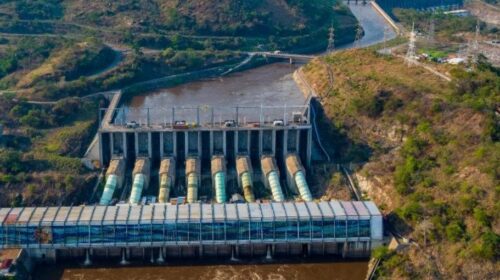
However, the growth in demand was not matched by supply. Electricity production declined slightly by 0.4%, primarily due to the technical shutdown of the G25 unit at the Inga II Hydropower Plant.
These figures, reported in the latest annual report from the Central Bank of the Congo, highlight a persistent imbalance between consumption and generation capacity.
This widening gap between rising demand and constrained supply underscores a structural tension within the Congolese economy: energy consumption is growing faster than the country’s ability to produce electricity reliably.
The imbalance reflects both a positive transformation marked by increased economic activity and the limitations imposed by aging infrastructure and insufficient investment.
Importantly, the increase in electricity consumption itself is a strong indicator of economic expansion.
It reflects intensifying activity across key sectors, particularly services and industry. The service sector continues to play a central role in driving growth.
Transport and telecommunications expanded by 3.6% in 2024, up from 3.0% the previous year, contributing significantly to overall economic performance.
The trade sector also recorded growth of 2.8%, compared to 2.0% in 2023, while transport and telecommunications activity accelerated further to 6.4%, reinforcing the sector’s position as a key engine of economic momentum.
Yet this progress must be viewed within a broader regional context. Across sub-Saharan Africa, average electricity consumption remains extremely low approximately 200 kilowatt-hours per capita per year, according to the World Bank roughly equivalent to a single 50-watt light bulb operating continuously throughout the year.
Within this landscape, the Democratic Republic of the Congo illustrates both the continent’s energy deficit and its vast untapped potential.
Some African economies, such as Libya and South Africa, record significantly higher electricity consumption levels, reflecting more developed infrastructure and industrial capacity. At the continental level, electricity demand is projected to grow by approximately 5.2% annually between 2025 and 2027, according to the African Development Bank.
Against this backdrop, the DRC’s 18.2% increase stands well above the regional average, underscoring the pace of its economic transformation.
Experts interpret this trend as carrying a dual message. On one hand, the surge in demand signals a revitalizing economy, expanding productive capacity and strengthening domestic consumption.
On the other hand, it exposes a critical vulnerability: the country’s infrastructure is not keeping pace with economic growth.
Infrastructure deficits remain significant. Less than 20% of the population in the Democratic Republic of the Congo had access to electricity as of 2020.
Transport connectivity also remains limited. The country requires approximately 20,000 kilometers of paved roads to link its provinces effectively, yet less than 10% of that network has been completed.
These infrastructure gaps across energy, transportation and water systems continue to constrain private investment and slow economic development.
The African Development Bank has emerged as a key partner in addressing these challenges.
Nearly 30% of the institution’s commitments in the Democratic Republic of the Congo approximately $1.6 billion are directed toward transport infrastructure to improve national connectivity.
This includes financing for the rehabilitation of major corridors such as National Route 1, as well as broader infrastructure development initiatives.
For the 2025–2026 period, the bank is supporting reforms designed to attract private-sector investment while financing integrated development projects spanning urban roads, healthcare and agriculture.
Nevertheless, closing the country’s infrastructure gap will require tens of billions of dollars in investment, making blended financing models increasingly important.
In this context, an electricity system heavily dependent on aging equipment and vulnerable to technical disruptions cannot sustain long-term economic expansion. Analysts warn that persistent supply constraints could slow industrialization, increase production costs and weaken the competitiveness of domestic industries if not addressed.
The central challenge now is to transform rising electricity demand into a catalyst for sustainable development. Achieving this will require large-scale investment in power generation and distribution networks, diversification of energy sources and stronger governance across the energy sector.
More broadly, the energy challenge reflects a fundamental economic reality: sustained industrial transformation depends on reliable productive capacity. Without stable electricity supply, long-term growth and industrial competitiveness remain difficult to achieve.
In many ways, the Democratic Republic of the Congo illustrates an economy that is awakening yet still constrained by its structural foundations.
Electricity demand is rising, signaling genuine potential. The task ahead is to build the infrastructure capable of sustaining that momentum.