
Rome Resources Reports Strong Tin Intercepts at Kalayi Prospect, Expanding Resource Potential
Rome Resources Reports Widest Tin Intercept Yet at Kalayi in DRC, Boosting Confidence in Large-Scale Resource Expansion
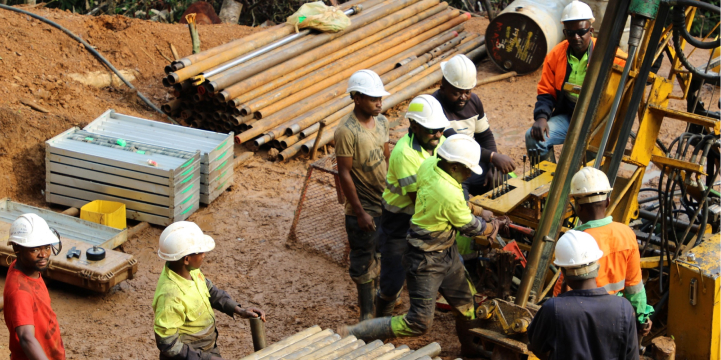
Rome Resources has announced encouraging drilling results from its Kalayi prospect, located within the Bisie North project area in the Democratic Republic of the Congo.
The latest findings continue to confirm the presence of high-grade tin mineralisation and strengthen the company’s confidence in the project’s long-term development potential.
The standout result comes from drill hole KBDD033, which delivered the widest tin-bearing intercept recorded at the Kalayi prospect to date.
Initial on-site X-ray fluorescence (XRF) readings indicate 20 metres grading an average of 1% tin from a depth of 144 metres, including several higher-grade zones within the interval.
Additional shallower intercepts were also identified, further supporting the continuity of mineralisation across the prospect.
These results reinforce the company’s geological interpretation that the mineralised system at Kalayi may broaden and strengthen with depth.
The broader interval encountered in KBDD033 was drilled beneath earlier high-grade intersections from previous holes, suggesting the potential for a more extensive and laterally continuous mineralised zone as exploration progresses.
Further drilling has continued to demonstrate consistent high-grade tin mineralisation across multiple holes.
Notably, drill hole KBDD032 intersected 5 metres grading 1.8% tin, including a higher-grade section of 2 metres at 4.0% tin, while drill hole KBDD031 returned 4 metres grading 1.1% tin.
Earlier drilling at hole KBDD025 delivered an especially strong intercept of 11 metres at 3.4% tin, highlighting the robust nature of the mineralised system within the project area.
The style of mineralisation observed at Kalayi shows similarities to that found at the nearby Mpama operation, owned by Alphamin Resources, where tin-bearing zones are known to widen at depth.
This geological comparison provides additional confidence that the Kalayi system could evolve into a larger and more economically significant deposit with continued drilling.
To further assess the scale and continuity of the mineralisation, the company is currently drilling a follow-up hole, KBDD034, beneath the KBDD033 intersection.
The objective of this hole is to test the extension of tin mineralisation at greater depths, specifically between approximately 125 metres and 225 metres below surface. As of the latest update, drilling has reached a depth of about 100 metres.
Rome Resources noted that the reported intercept widths are not yet true geological widths due to the steep dip of the mineralised zones and the angle of the drill holes. Determining accurate true widths will require additional drilling and geological modelling as the exploration programme advances.
According to Chief Executive Officer Paul Barrett, the latest drilling results materially strengthen the company’s view that Kalayi has the potential to host significantly larger volumes of tin mineralisation than previously indicated by shallower drilling.
The results are expected to feed into an updated Mineral Resource Estimate (MRE), which could deliver a meaningful increase in the project’s resource base and support the next phase of development at the Bisie North project.