
DRC Strengthens Mining Sector Oversight With New Provincial Tax Agreements
DRC Mining Registry Signs New Deals With Provinces to Boost Revenues and Transparency
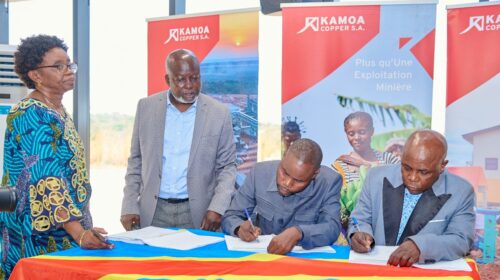
Reforms in the Democratic Republic of Congo’s (DRC) mining sector continue to gain momentum, particularly in the area of mining remediation and transparency. On Friday, September 19, 2025, the Mining Registry (CAMI) signed a memorandum of understanding (MoU) with the province of Maniema to regulate the surface area tax on mining concessions.
Under the agreement, CAMI will support Maniema in collecting this tax, while also providing technical expertise, shared databases, and training for local staff to strengthen both fiscal and cadastral management.
Strengthening Provincial Partnerships
That same day, CAMI’s Director General, Popol Mabolia Yenga, met with the Governor of Nord-Ubangi, Jean-Bosco Kotondoanfio, to discuss the mining potential of the province. The Governor welcomed the availability of cadastral and cartographic data, noting that it enhances Nord-Ubangi’s attractiveness to investors.
This initiative follows a similar protocol signed on September 12, 2025, between CAMI and Kasai, also aimed at improving the management of surface area mining taxes and ensuring that provincial governments directly benefit from increased revenues.
Key Results of CAMI’s Clean-Up Operations
Recent reforms build on CAMI’s August 2025 cadastral clean-up report, which highlighted major progress in restructuring the mining sector:
594 mining and quarry titles were reclaimed by the State, covering 37,253 mining squares.
210 mining rights under prolonged force majeure were regularized, representing 18,709 mining squares.
CAMI temporarily suspended new mining title applications for four weeks to carry out a technical closure, allowing for the cleaning, updating, and securing of the national mining file.
Additionally, CAMI continues to publish reports identifying companies that fail to start exploration, development, or construction within the timeframe prescribed by the Mining Code. Holders who remain non-compliant risk forfeiture of their rights.
Toward Greater Transparency
These reforms demonstrate the government’s commitment to improving governance, increasing transparency, and maximizing provincial revenues from the mining sector.
By combining regulatory enforcement with capacity building at the local level, CAMI is positioning itself as a central actor in the modernization of Congo’s mining administration.