
Middle East Conflict Threatens DRC Copper and Cobalt Sector Amid Sulfuric Acid Shortage
China’s Sulfuric Acid Export Suspension Threatens DRC Copper Production Amid Global Supply Crunch
The Democratic Republic of Congo’s (DRC) copper and cobalt sector is facing growing pressure following China’s decision to suspend sulfuric acid exports amid escalating tensions in the Middle East, a move that is tightening global supply chains and raising production costs across the mining industry.
According to an analysis by Goldman Sachs cited by Jeune Afrique, the DRC could lose up to 125,000 tonnes of copper production in 2026 if logistical disruptions and supply shortages persist.
Copper prices are currently trading at around $12,300 per tonne, highlighting the strategic importance of maintaining stable production in one of the world’s largest copper-producing nations.
Sulfuric acid critical to global copper production
Approximately 20% of global copper production depends on sulfuric acid-based leaching processes used to extract copper from oxidized ores.
However, disruptions affecting nearly half of the world’s seaborne sulfur supply particularly around the Strait of Hormuz have placed significant strain on sulfur and sulfuric acid markets.
China, which accounts for roughly 45% of global sulfuric acid production, suspended exports in early May to prioritize domestic demand as geopolitical tensions intensified.
As a result, prices for sulfuric acid and related mining chemicals have surged sharply on international markets.
Prices surge as supply tightens
Sulfuric acid prices have reportedly increased by between 50% and 100% globally since late February, while sodium metabisulfite a chemical widely used in mining operations has risen by nearly 70%.
According to Jeune Afrique, global sulfur imports fell to approximately 368,500 tonnes during the first quarter of 2026, down from 414,000 tonnes during the same period in 2025.
Sulfuric acid imports recorded an even steeper decline, dropping from 113,000 tonnes to just 29,200 tonnes year-on-year.
Potential advantage for Kamoa-Kakula smelter
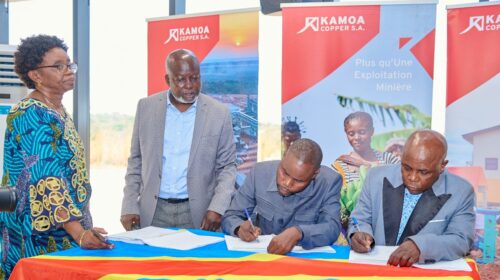
Despite broader market disruptions, the Kamoa-Kakula copper complex in Lualaba could benefit from the tightening sulfuric acid market due to its growing in-house production capacity.
According to Canadian mining company Ivanhoe Mines, the Kamoa-Kakula smelter was producing high-strength sulfuric acid at an average rate of 1,350 tonnes per day at the start of 2026.
This represents an annualized production rate of about 480,000 tonnes, with the facility expected to eventually reach steady-state capacity of 700,000 tonnes per year.
The increased local production of sulfuric acid could provide Kamoa-Kakula with a strategic cost advantage at a time when global supply shortages are affecting mining operations worldwide.