Louis Watum Joins Suminwa at UN to Advance DRC’s Critical Minerals Agenda
Louis Watum and Judith Suminwa Present DRC’s Critical Minerals and Industrialisation Agenda at UN
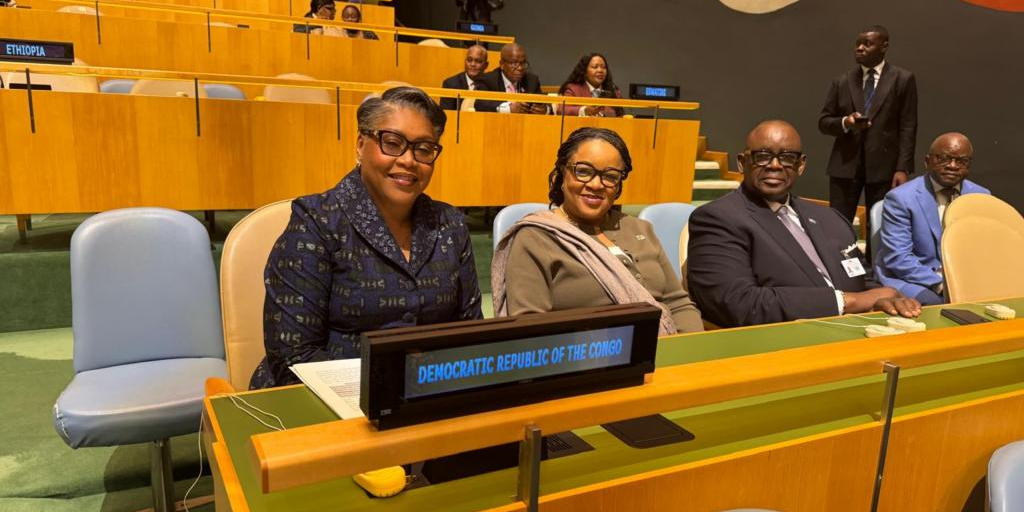
Democratic Republic of Congo (DRC) Mines Minister Louis Watum Kabamba accompanied Prime Minister Judith Suminwa Tuluka to the 81st session of the United Nations General Assembly in New York, where the government presented its vision for using the country’s critical minerals to drive economic and industrial development.
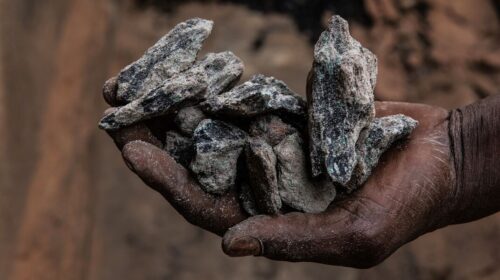
Speaking at the UN, Suminwa highlighted the DRC’s position as the world’s leading cobalt producer and a major copper producer, placing the country at the centre of the global energy transition, electric mobility, energy storage and the expansion of digital infrastructure and artificial intelligence.
The Prime Minister said the DRC wanted to move beyond its traditional role as a supplier of raw materials and become an active participant in global mineral value chains.
“We do not want to be merely the subsoil of the global economy; we intend to become a workshop, a laboratory and a sovereign partner,” Suminwa said.
The government’s strategy includes increasing the processing of cobalt and copper within the DRC, developing battery precursors and industrial components, training engineers, supporting researchers and integrating Congolese companies into international value chains.
Suminwa also called for the development of competitive regional value chains with African and international partners, saying these should generate employment, strengthen skills and create greater value within Africa.
Strengthening mining governance
Mining-sector governance was another key part of the government’s message at the UN.
Suminwa said the DRC was continuing to modernise the sector through greater transparency in mining contracts, extractive revenues and beneficial ownership, as well as strengthening the mining cadastre, mineral traceability systems and measures to combat fraud.
The government also intends to accelerate the formalisation of artisanal mining, strengthen the regulation of mineral traders, organise cooperatives and secure artisanal mining areas.
The issue of child labour was also highlighted, with Suminwa reaffirming the objective of achieving zero children in mines.
The government plans to work with organisations including the International Labour Organization and UNICEF to strengthen inspector training, support children’s access to education and provide economic alternatives for affected families.
Lobito Corridor as an industrial platform
The DRC also presented the Lobito Corridor as an important component of its broader industrialisation strategy.
Suminwa said investment in rail links, infrastructure, trade facilitation and energy could help open up the country’s territories, reduce logistics costs and stimulate regional commerce.
However, she stressed that the corridor should not simply provide a faster route for exporting raw minerals.
The government wants the Lobito Corridor to become a platform for investment, mineral processing, infrastructure development and energy projects, supporting industrialisation across the region.
Watum separately reinforced this position during the “Financing Africa’s Future” forum in New York, where he presented the DRC’s vision of transforming the Lobito Corridor from a mineral transport route into a broader economic and industrial corridor capable of attracting investment and creating jobs.
The DRC’s participation at the UN therefore placed critical minerals, local processing, responsible mining and infrastructure development at the centre of its international economic agenda.
The government is seeking to use its copper and cobalt resources not only to supply global markets, but also to support domestic industrialisation, strengthen local companies and increase the share of value retained within the country.