Zambia’s Manganese Ambition Gains Momentum as Lobito Corridor Expands
Zambia’s Manganese Potential Offers New Opportunity to Maximise the Lobito Corridor
Zambia’s growing role in the Lobito Corridor is closely associated with its copper ambitions, but the country’s manganese resources could offer another significant opportunity to reshape mineral supply chains and expand the corridor’s economic value.
While copper remains central to Zambia’s mining sector and the country targets a substantial increase in production, manganese presents a different geological and commercial opportunity.
Its deposits are spread across several regions, creating the potential for a broader mining and processing industry if the necessary infrastructure and investment framework are developed.
Beyond Zambia’s Copper Focus
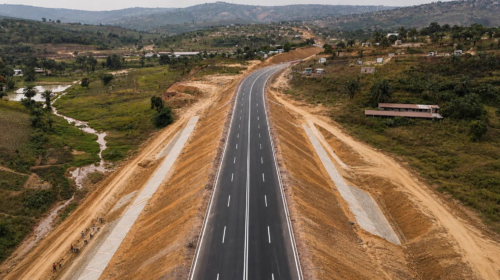
The Lobito Corridor has emerged as an important alternative export route for critical minerals from the Copperbelt, connecting the mineral-rich interior of Africa to Angola’s Atlantic port of Lobito.
Much of the attention has focused on copper and cobalt from the Democratic Republic of Congo and Zambia.
However, a broader mineral strategy could allow the corridor to support additional commodities, including manganese.
This matters because manganese is essential to steel production and is increasingly being considered within the wider critical-minerals supply chain.
Demand for the mineral is closely linked to infrastructure, construction, manufacturing and energy-transition technologies.
For Zambia, developing manganese alongside copper could diversify its mineral economy and create additional opportunities for domestic processing, logistics and industrial development.
A Logistics Opportunity
One of the biggest challenges facing Zambia’s manganese sector has historically been logistics.
Developing economically viable mines is only one part of the equation. Producers also require reliable transport infrastructure capable of moving large volumes of ore and processed products to international markets at competitive costs.
The Lobito Corridor could help address that constraint.
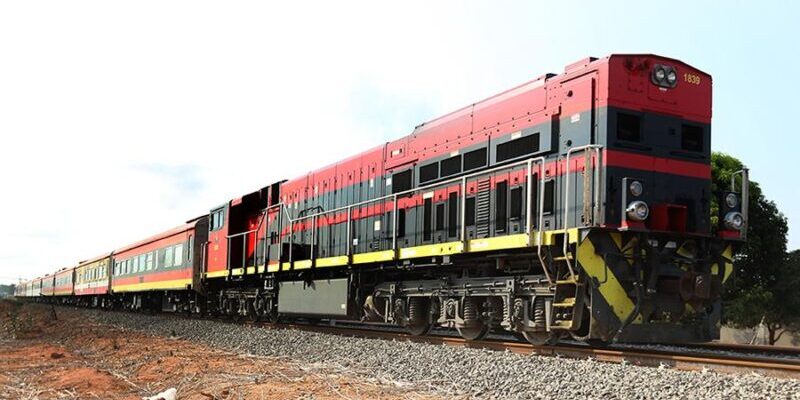
Improved rail connectivity towards Angola could provide Zambian producers with an alternative route to export markets, reducing dependence on traditional southern and eastern transport corridors.
For manganese projects, where margins can be heavily influenced by transport costs, access to an efficient rail-and-port system could be particularly important.
From Ore Exports to Processing
The larger opportunity, however, lies beyond simply exporting manganese ore.
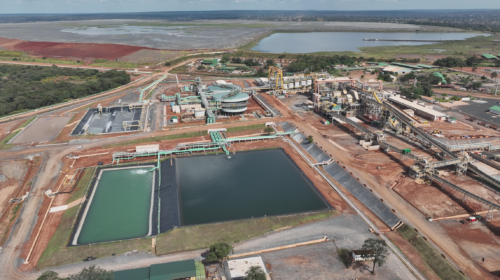
Zambia could use growing transport connectivity to develop a more integrated manganese value chain, including beneficiation and potentially the production of higher-value manganese products.
Such investment would create opportunities across mining services, engineering, processing, logistics and manufacturing while allowing Zambia to retain more economic value from its mineral resources.
A stronger manganese industry could also complement the country’s copper ambitions rather than compete with them.
Building a Broader Critical-Minerals Strategy
Zambia’s mineral potential extends well beyond copper. A strategy that combines copper, manganese and other critical minerals could strengthen the country’s position as a diversified supplier to global markets.
The key question is whether infrastructure development, investment incentives, geological knowledge and processing capacity can advance quickly enough to capture that opportunity.
The Lobito Corridor provides an important piece of that equation. But infrastructure alone will not create a manganese industry.
Zambia will also need investment in exploration, mine development, beneficiation, energy and supporting infrastructure.
If those elements come together, manganese could become an important part of Zambia’s next phase of mining development.
The opportunity is therefore not simply to move more minerals through the Lobito Corridor.
It is to use the corridor as a catalyst for a broader industrial strategy one in which Zambia exports more value, develops new mineral supply chains and reduces its reliance on a single dominant commodity.
With global competition for critical minerals intensifying, overlooking Zambia’s manganese potential could ultimately prove more costly than developing it.