

DRC’s FEC and ARSP Push for Stronger Dialogue on Subcontracting Rules
DRC’s FEC and ARSP Seek Stronger Dialogue to Improve Subcontracting and Local Content Compliance
The Federation of Enterprises of the Congo (FEC) and the Regulatory Authority for Subcontracting in the Private Sector (ARSP) have called for stronger and more structured cooperation to improve the implementation of subcontracting and local-content regulations in the Democratic Republic of Congo (DRC).
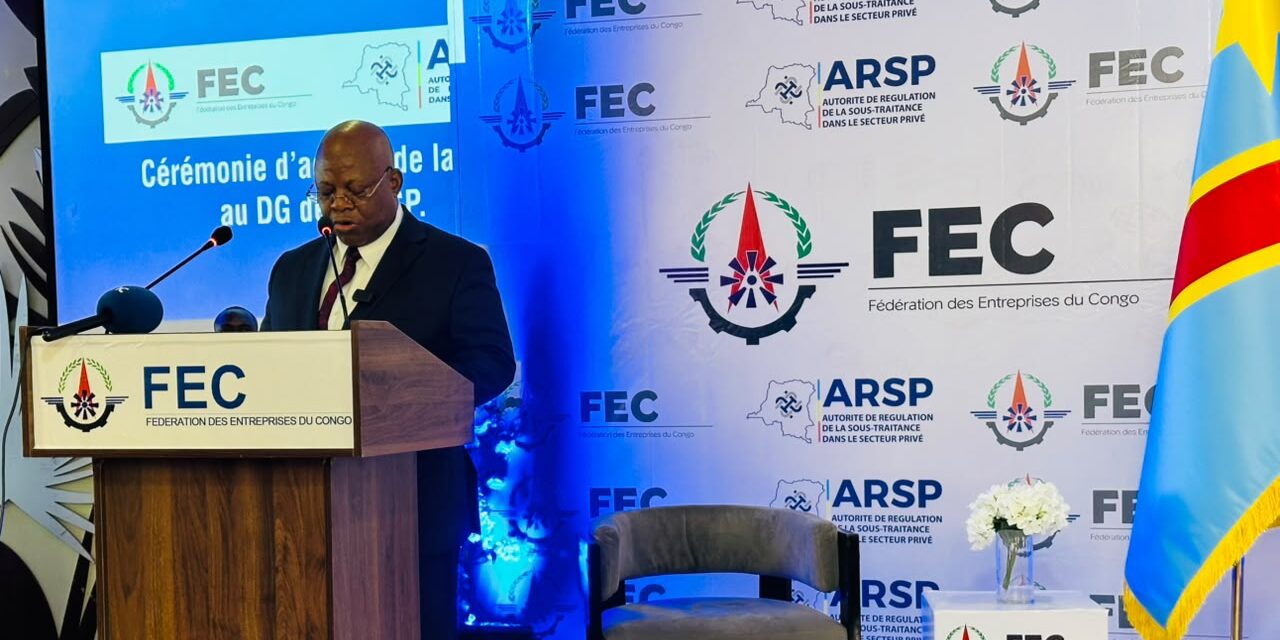
The call followed a meeting between representatives of the FEC and the ARSP in Kinshasa, where both sides reviewed their working relationship and discussed ways to improve regulatory compliance while providing greater legal certainty for businesses.
ARSP Director General Juan Ted Beleshayi said closer cooperation between the regulator and the private sector would make the scope of the law clearer, promote consistent practices and improve compliance across economic sectors.
“When the regulator and the private sector work together, the scope of the law becomes clearer,” Beleshayi said, adding that the FEC should be regarded as a natural partner in the ARSP’s regulatory mission.
He said the Law on Subcontracting and the country’s local-content framework provide the legal basis for increasing the participation of Congolese businesses in economic activity, with the ARSP responsible for implementing and monitoring these requirements.
Beleshayi also outlined measures introduced by the ARSP to simplify compliance. Registration of subcontracting companies has been digitalised, while the authority has introduced electronic issuance of registration certificates and a mechanism for reporting and managing complaints.
The ARSP is also preparing an electronic system through which principal companies will be able to declare their subcontracting activities remotely.
According to Beleshayi, the authority has recorded significant growth in the number of registered subcontracting companies.
Around 7,000 companies had been registered since the ARSP was established, with another 7,000 registrations recorded during 2026.
The regulator has also been conducting awareness campaigns on the subcontracting law across Kinshasa and the provinces to improve understanding of the legal requirements among businesses.
The FEC, however, has called for a return to permanent consultation between the private sector and the regulator, particularly in relation to inspections and enforcement.
The business federation said greater involvement of the private sector would help ensure that regulatory measures are implemented transparently and consistently. It stressed that its position should not be interpreted as opposition to inspections or an attempt to shield companies from enforcement.
Instead, the FEC called for controls to be conducted in accordance with established procedures, including the principles of due process, proportionality and legal certainty.
The two institutions’ renewed engagement comes as the DRC seeks to increase the participation of locally owned businesses in economic activity and ensure that subcontracting generates greater opportunities for Congolese companies.
The ARSP is also preparing a campaign to raise awareness of the country’s local-content requirements ahead of the December 31, 2026 compliance deadline.
The campaign will focus on provisions including employee shareholding and Congolese participation in company capital.
For businesses, the closer cooperation between the FEC and ARSP could help clarify regulatory requirements while reducing uncertainty around compliance.
For the government, stronger collaboration with the private sector could support more effective implementation of subcontracting and local-content policies.
The two institutions are therefore expected to continue working together to strengthen regulatory understanding, improve compliance and expand opportunities for Congolese enterprises across the economy.