
Bank of Zambia Builds Yuan and Gold Reserves as Foreign Assets Reach Strong Levels
Bank of Zambia Holds US$191 Million in Yuan Reserves While Expanding Gold Holdings and Strengthening Foreign Exchange Buffers
The Bank of Zambia (BoZ) has accumulated approximately CNY1.3 billion (US$191 million) in Chinese yuan reserves, marking a significant step in the central bank’s strategy to diversify its foreign exchange holdings and strengthen the country’s external financial position.
The development follows Zambia’s decision to begin accepting payments in Chinese yuan, also known as the renminbi (RMB), from mining companies operating in the country.
Zambia became the first nation to publicly confirm the adoption of yuan-denominated payments by mine operators, with the system having commenced in October last year.
Speaking during a recent monetary policy briefing, BoZ Director of Financial Markets Emmanuel Pamo disclosed that the central bank currently holds around CNY1.3 billion in yuan reserves, equivalent to approximately US$191 million.
The move reflects Zambia’s growing economic ties with China, one of its largest trading partners and a significant source of investment in the mining sector.
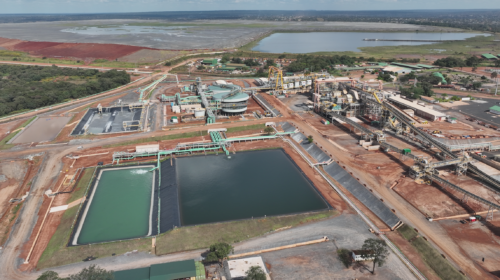
Chinese mining companies maintain a substantial presence in the country, with China Nonferrous Mining Corporation, the operator of Luanshya Copper Mines, among the largest Chinese investors in Zambia’s mining industry.
According to the central bank, holding part of the country’s reserves in yuan provides strategic advantages, including facilitating trade settlements and enabling Zambia to service Chinese-denominated debt obligations more efficiently and at lower transaction costs.
The BoZ has progressively increased its role in foreign exchange management within the mining sector. In 2018, regulations were introduced requiring mining companies to sell foreign currency to the central bank to meet royalty obligations, and these measures were expanded in 2020 to include all mining-related tax payments.
The policy was designed to support reserve accumulation and strengthen Zambia’s ability to manage external debt commitments.
To further support the use of the Chinese currency, the central bank began publishing a daily renminbi-kwacha exchange rate in November, providing greater transparency and facilitating yuan-based transactions.
The internationalisation of the yuan has also gained momentum globally. Several major financial institutions, including Stanbic Bank Zambia, part of Africa’s largest banking group by assets, have joined China’s Cross-Border Interbank Payment System (CIPS), expanding access to yuan-denominated transactions across international markets.
Gold Reserves Continue to Grow
Alongside its yuan holdings, the Bank of Zambia has continued to expand its gold reserves as part of a broader reserve diversification strategy.
The central bank purchased 62.1 kilograms of gold in July, valued at approximately US$8.2 million, bringing total gold holdings to 3,620.43 kilograms, or about 3.6 tonnes. The portfolio is currently valued at approximately US$468.7 million.
Governor Denny Kalyalya said the accumulation of gold forms part of a long-term strategy to strengthen Zambia’s international reserves while reducing exposure to fluctuations in any single asset class.
Reserves Support Debt Obligations and Exchange Rate Stability
Despite significant external payments during the first half of the year, Zambia’s reserve position has remained relatively resilient.
Gross international reserves declined to US$5.8 billion at the end of June, down from US$6.2 billion recorded at the end of March.
The decline was largely driven by a sovereign bond buyback programme and external debt servicing commitments.
According to the central bank, approximately US$514.8 million was utilised to support the bond buyback, while a further US$453.4 million was allocated to external debt repayments.
The buyback programme also benefited from US$600 million in financing from the African Development Bank (AfDB).
Despite these substantial outflows, policymakers noted that earlier reserve accumulation helped cushion the impact on the kwacha and maintain foreign exchange stability.
The country’s reserve position subsequently improved, recovering to approximately US$6 billion in July, equivalent to around 4.5 months of import cover.
Mining tax revenues were identified as one of the main contributors to the recovery.
The Bank of Zambia believes stronger reserve buffers, easing inflationary pressures and improving economic conditions are creating a supportive environment for sustained growth.
The economy expanded by 7.2% in the second quarter of 2026, following robust performance earlier in the year.
The central bank forecasts economic growth of 5.3% in 2026, rising to 6% in 2027 and 7.1% in 2028.
Governor Kalyalya identified agriculture, mining, manufacturing, construction, transport and storage as key sectors expected to underpin future growth.
He also highlighted tourism as an increasingly important contributor to economic expansion, noting the government’s ambition to attract five million visitors annually.
The continued accumulation of yuan and gold reserves signals Zambia’s commitment to strengthening its financial resilience, diversifying reserve assets and positioning itself for long-term economic stability amid an evolving global financial landscape.