DRC Moves to Reclaim and Digitise Geological Archives in Major Mining Sector Modernisation Push
DRC Advances Mining Modernisation Through Belgian Talks on Digitising Geological Archives
The Democratic Republic of Congo (DRC) has taken a new step in its broader strategy to modernise and strengthen its mining sector through the restitution and digitisation of geological archives held in Belgium.
During an official mission to Brussels on June 9, 2026, the Minister of Mines, Louis Watum Kabamba, led discussions aimed at recovering and digitising historical geological data relating to the Congolese subsoil.
These archives are considered a critical scientific resource for improving national knowledge of mineral potential and supporting future exploration activities.
The meeting brought together Congolese authorities, representatives responsible for the geological archives preserved in Belgium, as well as officials from the Kingdom of Belgium and the European Union, which are supporting partners in the digitisation process.
Strategic Economic Importance of Geological Data
For the Congolese government, the initiative goes beyond archival preservation. It is viewed as a strategic economic lever that could significantly enhance the attractiveness of the country’s mining sector, which remains the backbone of the national economy in terms of exports and foreign exchange earnings.
The archives contain decades of geological surveys, exploration results, technical reports, and detailed maps.
This information is essential for identifying new mineral deposits and reducing risks associated with exploration investment.
In the mining industry, access to reliable geoscientific data is a key factor in investment decision-making.
By improving access to high-quality geological information, the DRC aims to accelerate exploration activities and attract greater private investment into underexplored regions of the country.
The initiative is also part of a broader effort to reinforce the DRC’s sovereignty over strategic national resource data.
According to the Ministry of Mines, digitisation will enable faster and more efficient access to geological information for Congolese researchers, public institutions, and international investors, improving planning and transparency across the sector.
Discussions in Brussels also addressed the PANAFGEO+ programme, launched in Kinshasa in March 2026. Supported by the European Union, the programme aims to strengthen African geological institutions through digital transformation, capacity building, and improved technical infrastructure.
Following the talks, all parties agreed to develop a joint roadmap and establish a dedicated task force to oversee the restitution and digitisation process.
Cooperation With the Royal Museum for Central Africa
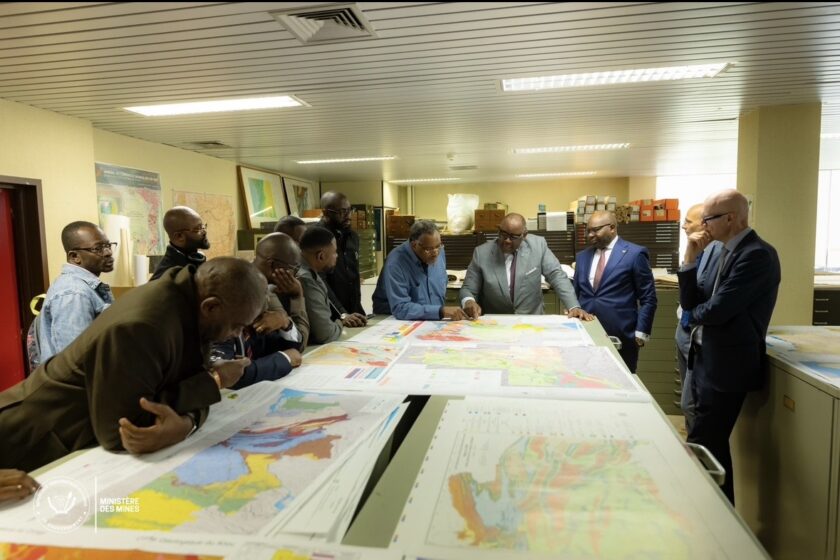
As part of the mission, the Congolese delegation also visited the geological archives and map collection of the Royal Museum for Central Africa, which houses extensive historical documentation on the DRC’s geology.
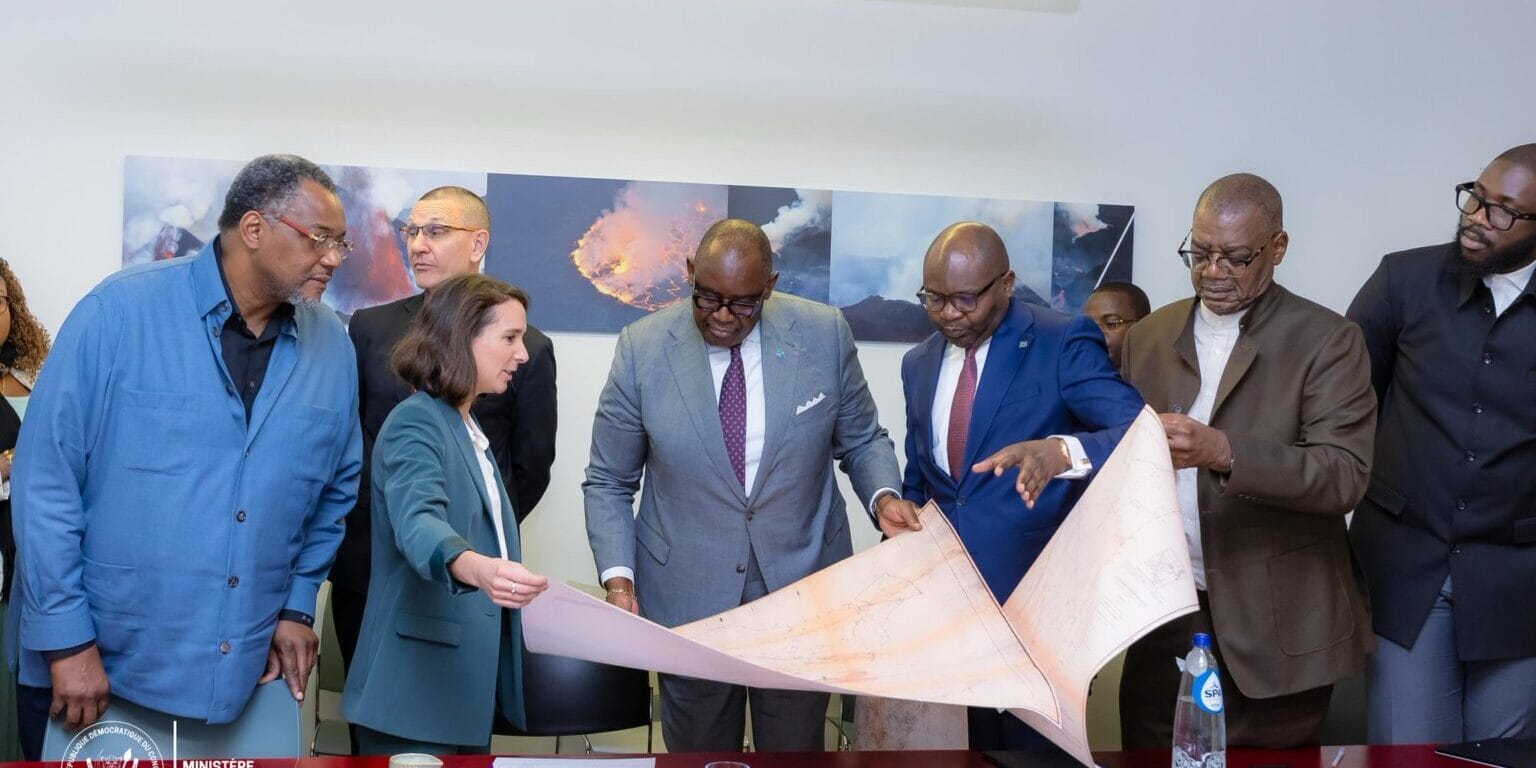
During the visit, museum officials presented the Minister of Mines with a historical map of Congo dating back to 1952, symbolising long-standing scientific cooperation and the shared interest in preserving geological heritage.
While the DRC is globally recognised for its copper and cobalt reserves, authorities believe that improved access to historical geological data will help refine national mineral mapping and support exploration of additional strategic resources.
In the context of rising global demand for critical minerals used in the energy transition, access to reliable geological data is increasingly viewed as a competitive advantage.
For Kinshasa, the restitution and digitisation of these archives could significantly enhance the value of the country’s mineral wealth while strengthening its ability to negotiate with investors based on more accurate and comprehensive geological knowledge.